End To End · Wandsworth
Deep Cleaning Wandsworth
Deep cleaning works best when attention follows the material and the type of build-up. Use this Wandsworth guide to describe kitchen and bathroom priorities, identify specialist tasks and prepare accessible surfaces without expecting cleaning to repair a damaged finish.
- Explain residue and materials together
- Choose specific rooms and reachable details
- Plan additions and preparation before confirming
What makes a deep-cleaning brief useful?
Describe the areas that have accumulated dirt or residue beyond the work you normally arrange. Explain whether storage is full, whether furniture remains and which surfaces you can clear before the visit. A long room list is less helpful than a clear account of the actual priorities.
The main deep-cleaning service uses an agreed scope. It should identify the kitchen, bathroom and other reachable work accepted for your property. Do not assume a universal checklist includes inaccessible surfaces, heavy furniture movement or every specialist treatment associated with a room.
Kitchen materials change the cleaning conversation
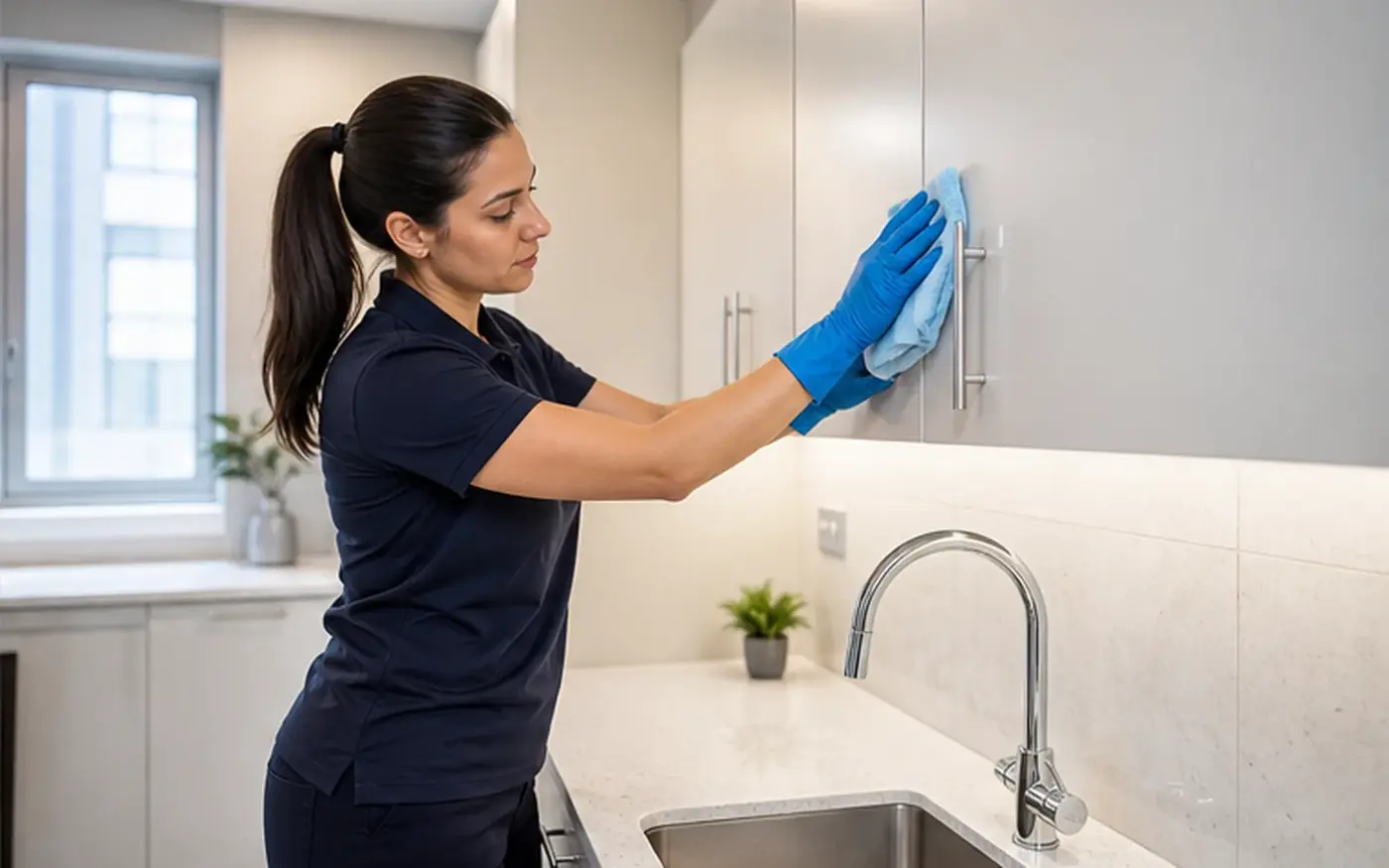
State whether worktops are stone, timber or another finish and share care information where available. Explain grease around hob surfaces, cupboard fronts, splashbacks and handles. If interiors are requested, empty the accepted storage before arrival so shelves and corners can be reached.
Record swelling, loose edges and damaged finishes separately. Focused cleaning cannot restore every surface to its original condition. For a detailed appliance treatment, request oven cleaning with the type, condition and required components listed; it is not implied by a general kitchen request.
Bathrooms need a distinction between residue and deterioration
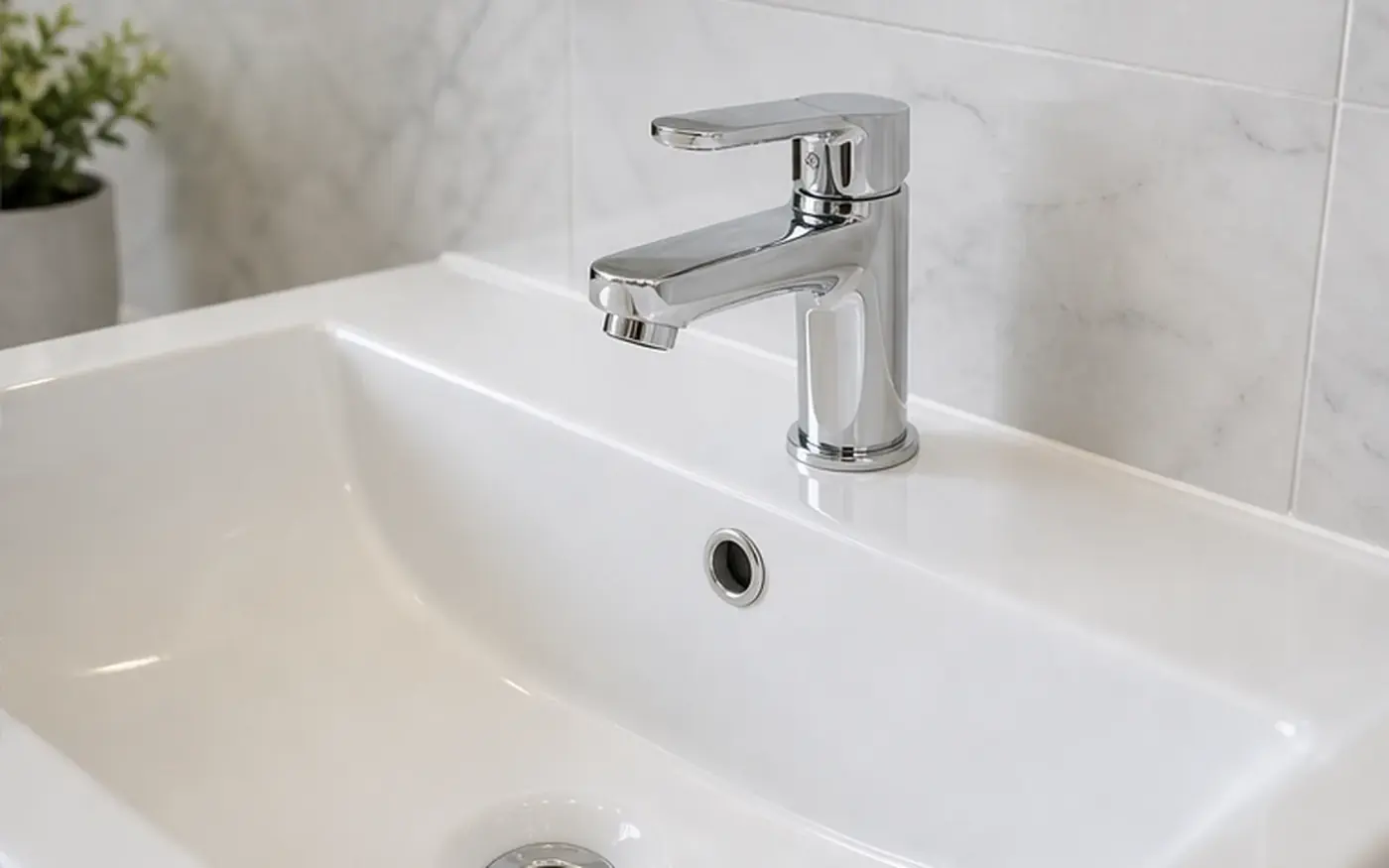
Soap residue and suitable removable deposits can be discussed around taps, basin, toilet, bath or shower and accessible tiles. Tell us about delicate finishes and any existing etching or damaged coating. Choosing a method requires that context rather than an assumption that stronger treatment is always better.
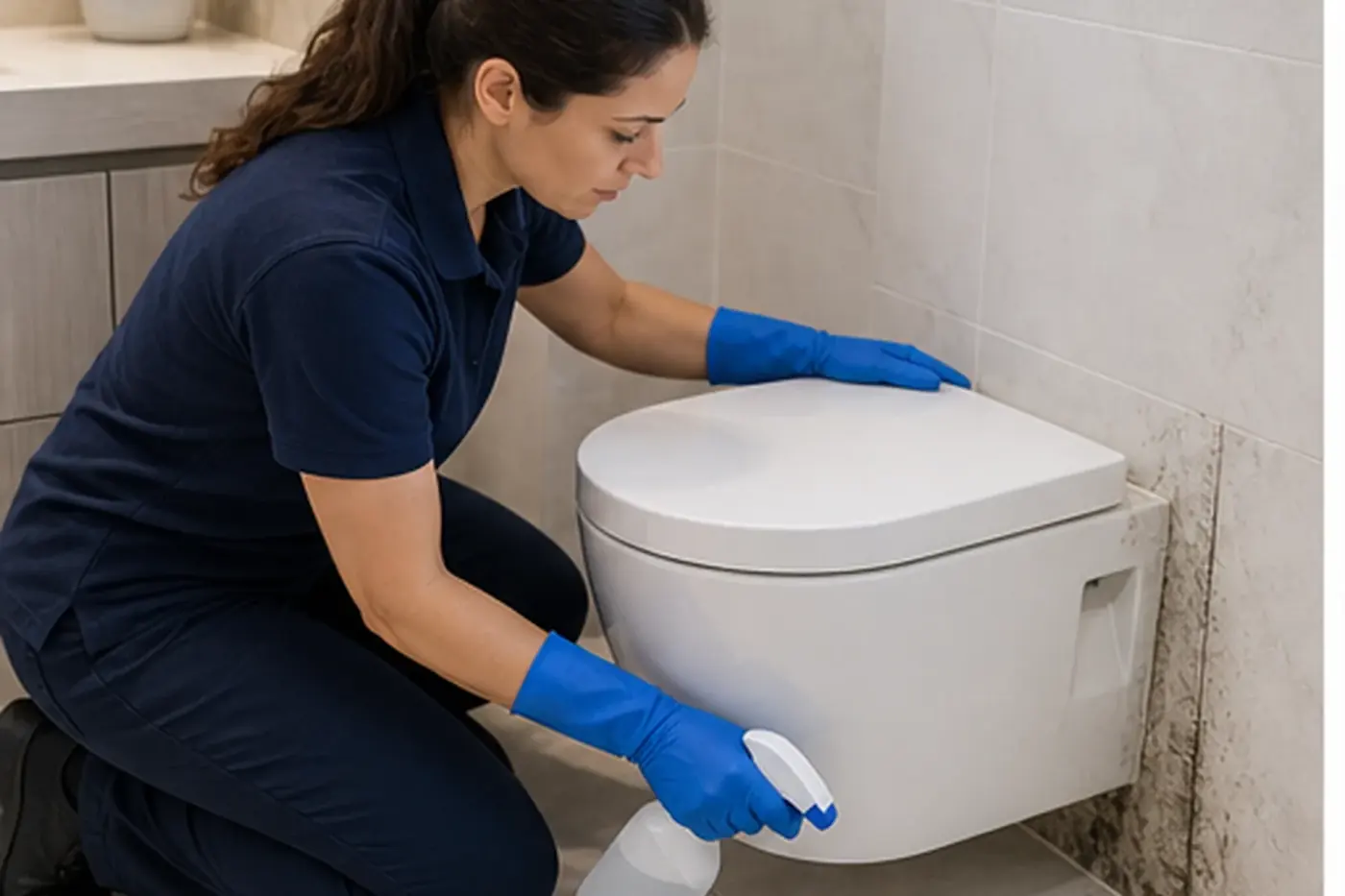
Failed sealant, damaged grout and a leaking fitting need attention beyond cleaning. Identify suspected mould separately and consider an assessed mould-removal enquiry. Surface treatment cannot diagnose or resolve every moisture cause, and a bathroom clean does not certify that hidden layers are unaffected.
| Material concern | Information to share |
|---|---|
| Stone or timber | Available care instructions |
| Coated fittings | Wear or previous product damage |
| Bathroom finishes | Existing etching, cracks or failed seals |
Living areas: define access before adding detail
Agree reachable shelves, ledges, doors, switches, skirting and exposed floor surfaces. Remove small possessions and explain any larger furniture that remains. If a surface cannot be safely reached, the scope needs to acknowledge that instead of assuming the team will improvise access.
Carpet extraction and upholstery treatment are separate fabric tasks requiring assessment. Ask about carpet and upholstery cleaning if those are priorities, with room or item details and a drying plan. Ordinary vacuuming and suitable floor cleaning should not be confused with an extraction booking.
Prepare the property without pre-treating uncertainty
Clear included storage and work surfaces, remove personal products and keep the equipment route safe. Provide working water, electricity and lighting. If you have already used a product on a problem area, tell the team what it was and how the surface reacted.
Avoid experimenting on unfamiliar materials before assessment. Share photographs and any manufacturer or landlord care guidance instead. Keep a decision-maker reachable during the appointment and explain pets, alarms or building-entry restrictions so the team can concentrate on the accepted work.
Wandsworth access: confirm what permission covers
If a vehicle needs reserved space, consult Wandsworth Council’s parking-bay suspension guidance. It lists different purposes and requires approval; a previous contractor’s arrangement should not be assumed to cover a later cleaning visit. Read the actual conditions for the proposed date and vehicle.
Tell us the lawful unloading point, stairs, lift arrangements and distance to the entrance. These details help describe equipment access, particularly when rooms remain occupied. Check the full postcode through our coverage guide and clarify who can resolve an entry problem on the day.
Use the price list to begin an itemised discussion
The published prices provide starting figures, while your quote needs the rooms, condition, accepted tasks and additions. Ask for the total with applicable VAT and agreed access charges explained. If a treatment remains uncertain, discuss how suitability and cost will be confirmed.
For a full rental handover, compare end of tenancy cleaning and share the inventory requirements. The purpose of the visit affects preparation and review. Keep agreed limitations with the quote and inspect named areas at completion rather than relying on a broad promise of a perfect property.
Practical answers
Questions about methods and materials
Is every room treated in the same way?
No. Describe materials and residue so suitable work can be agreed for each area. A delicate worktop and a tiled surface can need different decisions.
What if I have used a strong product already?
Tell the team its name if available and explain any change to the surface. Earlier treatment is relevant information, not something to conceal before assessment.
Are high fittings included?
Identify them in advance. Safe access and the accepted scope determine feasibility; a room booking does not imply unlimited reach or specialist access equipment.
How do I review the result?
Use the agreed list and discuss a specific surface or residue promptly. Distinguish an omitted accepted task from permanent damage, inaccessible work or a separately priced treatment.
Nearby areas
These nearby guides describe the same service in surrounding locations.
See our coverage guide and confirm your full postcode when enquiring.
Your next step
Ask the right questions before treatment.
Explain the materials, condition and access when speaking to End To End.