End To End · Hampstead
Oven Cleaning Hampstead
Plan the oven as part of a working kitchen rather than an isolated dirty surface. For Hampstead, describe the appliance arrangement, nearby finishes and accepted accessories so the visit can be organised without confusing cleaning with appliance maintenance.
- Map cooking cavities and surrounding finishes
- List loose accessories and optional equipment
- Discuss operation faults before treatment
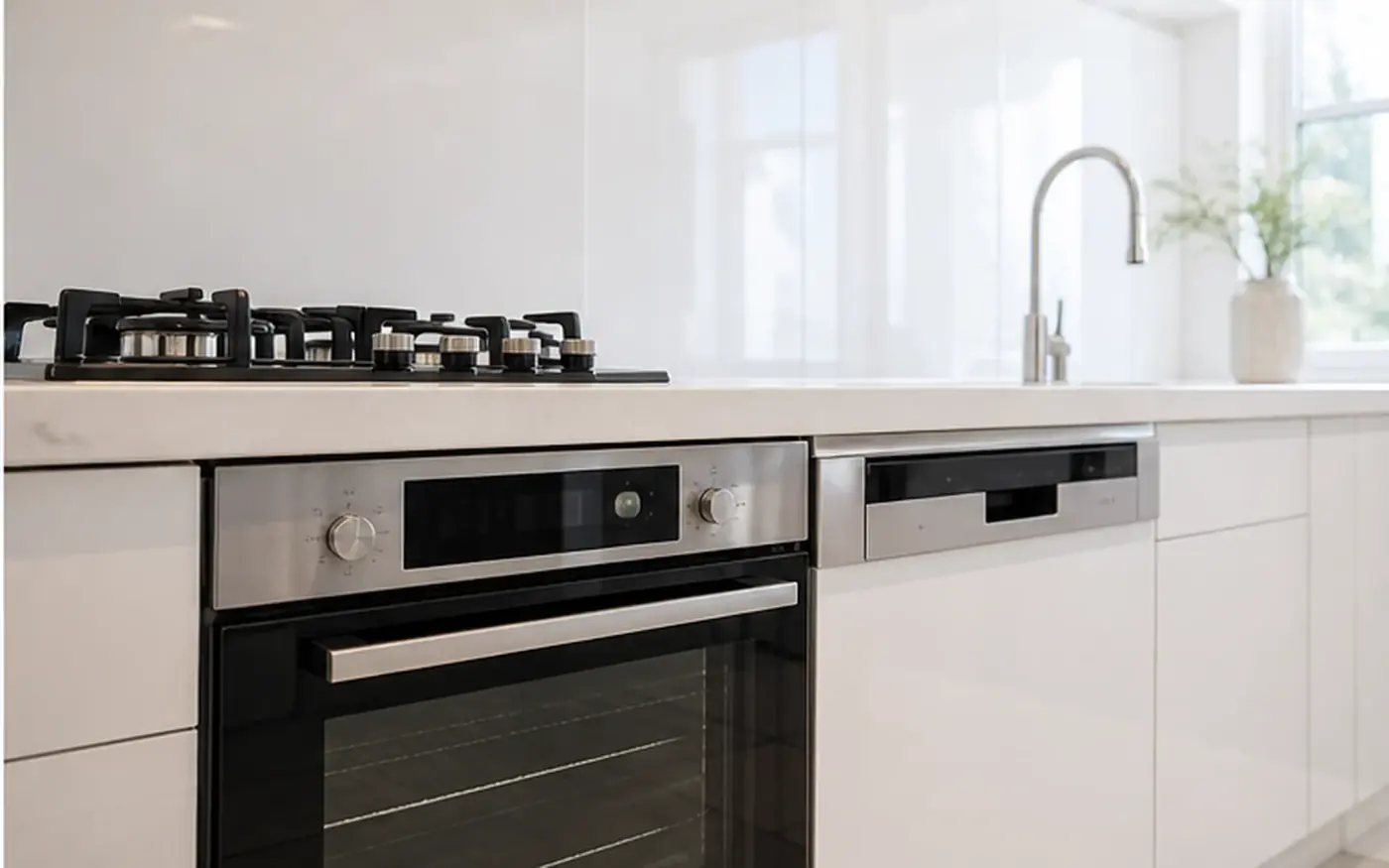
Begin with the kitchen layout
Show the oven in context: a photograph of the kitchen run can explain whether the unit is built into cabinetry, sits below a hob or forms part of a freestanding cooker. Add a closer view of the open cavity and describe the space available in front of it. There is no need to pull equipment out to supply these details.
The oven service addresses agreed accessible residue. It does not automatically include moving integrated units, disconnecting services or treating surrounding cupboards. Report delicate worktops, loose trim and damaged flooring that could affect the working area before agreeing the appointment.
Give each cooking compartment its own entry
| Part of the cooker | Information needed |
|---|---|
| Main cavity | Dimensions, finish, lining and visible deposits |
| Second cavity or grill | Separate photograph and requested surfaces |
| Door | Accessible glass faces and existing damage |
| Loose accessories | Named shelves, trays and their condition |
| Additional equipment | Hob or hood requested as an assessed addition |
Count accessories that are normally stored elsewhere as well as those inside the oven. State whether a tray has a non-stick coating or damaged plating; visually similar loose parts do not necessarily accept the same treatment.
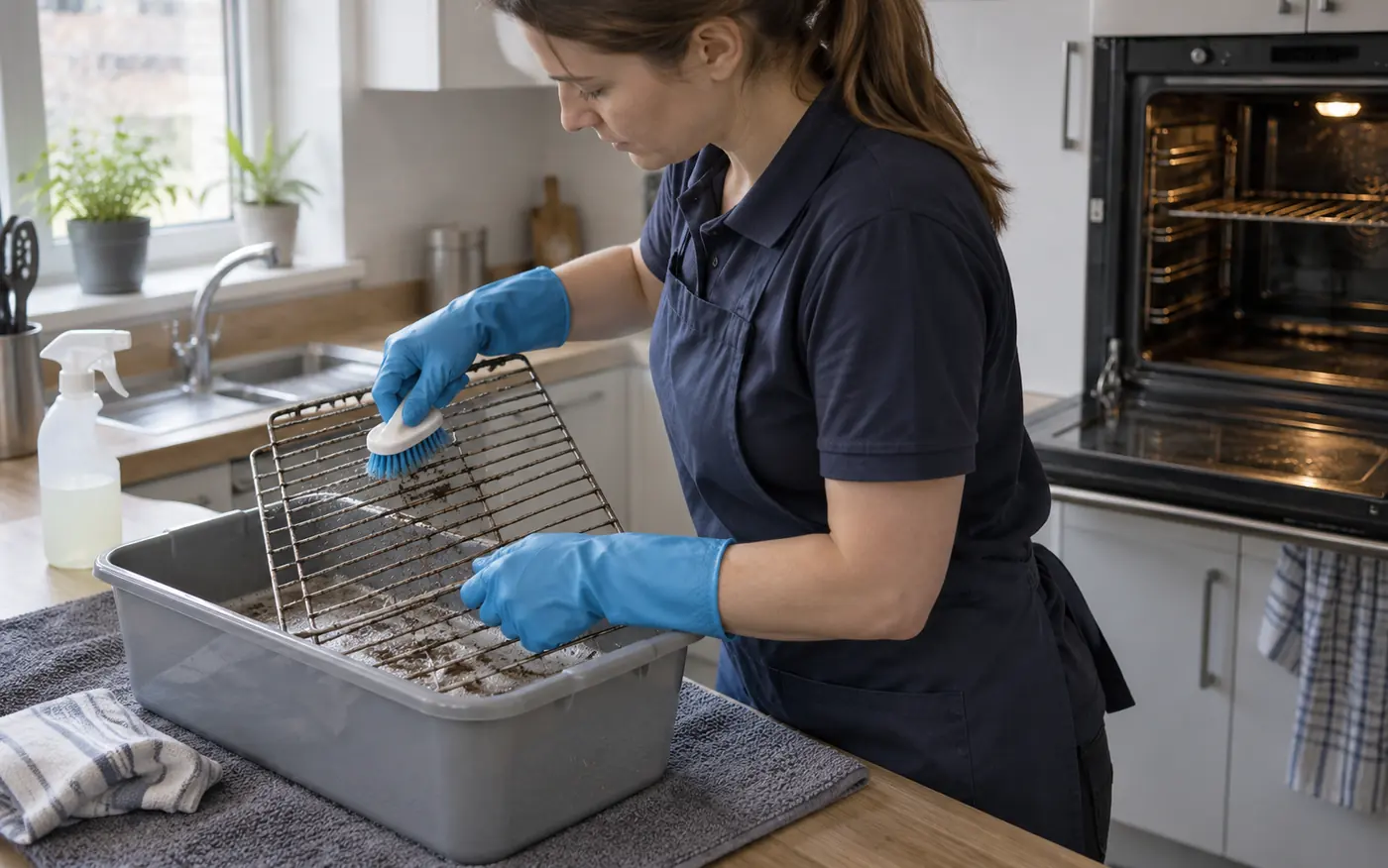
Prepare storage and surfaces around the appliance
Clear cookware, bags and food from the immediate working area. Remove breakable items from adjacent worktops and leave space for accepted accessories to be handled. Finish cooking with enough time for the appliance to cool, and tell other household members that it will be unavailable during the visit.
Keep the normal route through the kitchen open. If another person is decorating or assembling furniture nearby, avoid overlapping work that restricts access. For equipment in an empty property, check the agreed utility and key arrangements before arrival instead of discovering that the kitchen cannot be entered or used.

Read finish restrictions before tackling heavy deposits
Manufacturer guidance is particularly useful for specialist liners, coated cavities and self-cleaning appliances. Supply the manual or model details if available. Tell us about previous cleaners and any product left behind; an unknown chemical on the surface is relevant even when the original food mark is still visible.
A dark patch may be removable cooking residue, but damaged enamel, corrosion and a worn seal are different conditions. Cleaning cannot restore a missing coating or correct an operating fault. Agree what can be approached and which parts should remain untreated rather than expecting the strongest possible product everywhere.
Price the whole accepted appliance brief
The published oven-cleaning price begins at £69. That starting figure does not establish the total for two cavities, numerous accessories or extra equipment. Condition, construction and the components accepted all contribute to the final scope and quote.
Check the written amount, applicable VAT and agreed access charges. Ask whether a glass layer or specialist liner is excluded and whether requested hob or hood work has been separately accepted. If the available treatment changes following assessment, resolve the revised scope before proceeding rather than treating a general appliance description as unlimited permission.
Hampstead access: choose permission by the visit
For an address in Camden, the council distinguishes trade parking from visitor parking and bay suspensions. Identify the arrangement relevant to the vehicle and work rather than assuming a resident’s ordinary parking entitlement covers the appointment.
Explain the entrance, stairs and distance to the kitchen. If someone else holds the keys, make sure they understand the accepted appliance list and can reach an authorised decision-maker. For another property, consult our coverage information and give the actual postcode and access instructions rather than copying those from this booking.
Review the appliance and any wider kitchen requirements
Once cleaning is finished, compare the accepted cavities and components with your list. Ask about remaining marks before putting accessories away, and obtain guidance on subsequent oven use. Do not assume a universal immediate-use rule for every product and appliance arrangement.
Grease on cupboards and splashbacks can be considered under kitchen deep cleaning. A separate deep clean covers a wider agreed task list. For a property handover, include oven requirements explicitly within the tenancy-cleaning plan and retain time to review the finished work before access ends.
Practical answers
Questions about oven cleaning
Is the cupboard around a built-in oven included?
Only accepted surfaces are included. Describe surrounding cabinetry separately if it needs cleaning; an appliance appointment does not automatically cover the kitchen unit.
Can shelves stored in another room be added?
List their number, material and condition before confirming. Additional accessories should be priced explicitly rather than appearing unexpectedly during the visit.
Should I pull the integrated oven forward?
Do not move or disconnect it for an ordinary cleaning enquiry. Explain the layout with photographs and report any access limitation.
What if part of the oven cannot be treated?
Ask for the restriction and reason to be recorded in the accepted scope. Permanent finish damage and unsuitable access are not corrected by further cleaning.
Nearby areas
For another property nearby, choose the location where the work is needed.
See our coverage guide and confirm your full postcode when enquiring.
Your next step
Agree the work before the visit.
Share the surfaces or items needing attention so the booking can be assessed properly.