End To End · Hampstead
After Builders Cleaning Hampstead
Before a renovated Hampstead property changes hands, agree which marks belong on the contractor’s list and which need cleaning. A clear separation gives the final clean a defined purpose and makes the review easier for everyone managing the handover.
- Record defects before the cleaning review
- Finish dusty snagging before the appointment
- Keep keys and material guidance available
Give the handover a cleaning reference
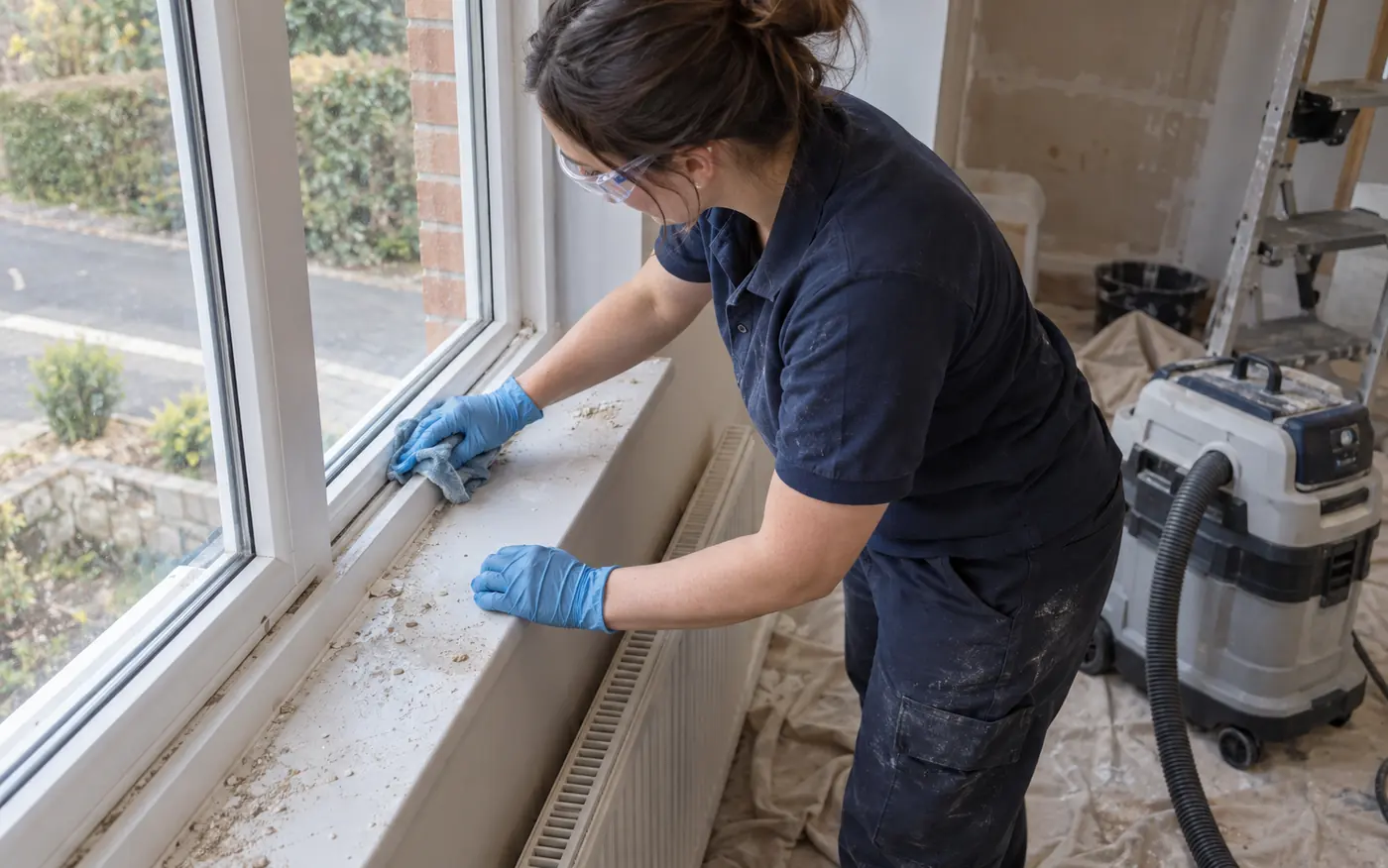
Create a short record of the condition after the contractor’s main work. Identify dusty accessible details, remaining materials and surfaces that still need protection. Share photographs taken at that stage rather than pictures from before the renovation.
Compare the accepted post-build scope with any other handover requirements. If this is also a rental checkout, explain the inventory-related cleaning tasks. The same appointment may need both kinds of work, but only where the requirements and practical limits have been agreed.
Separate the contractor’s return from the final clean
Ask what remains unfinished, who will do it and whether it will create more dust. A loose fitting or a scratched floor is not a cleaning omission. Keep those observations in a distinct list so the final review does not become a dispute about the meaning of a mark.
Plan the clean after relevant dusty activities and waste removal. If the schedule cannot follow that order, explain the conflict early. A staged visit needs specific rooms and boundaries; it cannot promise that dust from an active room will never reach a completed area.
Check what can be reached when the builders leave
List empty cupboards, reachable internal frames, ledges, skirting and exposed floors. Look at the accessible surfaces around new fittings as well as the broad centre of the room. Tell the team about installed units, appliances and any restricted access behind them.
Avoid requesting disconnection or heavy movement by implication. A newly fitted appliance may have connections or finishes that should remain undisturbed. Explain the exact area requiring attention and ask whether the proposed route and method are suitable before treating it as accepted work.
| Handover item | Who needs the information |
|---|---|
| Unfinished work | Contractor responsible for snagging |
| New material care | Cleaning contact and keyholder |
| Accepted room list | Person carrying out the final review |


Keep new-surface instructions with the keyholder
Provide the installer’s advice on flooring, grout, sealants, coatings and stone. Share restrictions on moisture or product use and identify any finish whose material is uncertain. Do not rely on a second-hand message that everything is dry when the relevant care instructions are available.
If another person opens the property, give them the same information and a contact who can answer questions. Photos of pre-existing defects and protected areas help establish the starting position. A careful clean respects those limits rather than attempting an aggressive treatment to satisfy an undefined handover expectation.
Hampstead permissions should cover the actual visit
For an address within Camden, use the council parking-service guide to check the relevant arrangement. It distinguishes parking for residents and visitors from trade work and keeping a particular bay clear. Match the choice to the vehicle and purpose.
Tell us whether the contractor’s access arrangement will still be valid, and confirm any building entry or lift instructions separately. A parking permission alone does not provide keys or access through communal doors. Check our coverage guide with the complete postcode when enquiring.
Set a budget against the final condition
The price list is a starting reference. Request a written quote using the current room list, residue photographs, materials and access. Ask what is included in the total, including applicable VAT and any agreed access costs.
Specify external glazing if required and arrange remaining clearance separately where accepted. If furniture is arriving afterwards, discuss move-in preparation. Each addition needs feasibility and scope agreement instead of being inferred from a request for a complete handover.
Review before the next appointment starts
Leave enough access to compare the accepted work with the room list. Examine a remaining concern in relation to the material: removable residue, a protected surface and installation damage require different responses. Report the exact location and keep clear photographs where helpful.
Pass any aftercare instructions to the next keyholder. If a contractor will return after cleaning, record what that visit may change. The clean addresses the agreed condition at the appointment; it cannot control later works or guarantee an inspection result simply because a deadline has been met.
Practical answers
Checkout planning questions
Should I combine the snagging and cleaning lists?
Keep them distinct but share both. The cleaning team needs to understand the work environment, while repairs and unfinished installation remain the contractor’s responsibility.
Is the builder’s confirmation that a surface is dry enough?
Ask for the care and curing guidance for the actual finish. Surface appearance and suitability for a proposed cleaning method are different questions.
Who should review if I cannot attend?
Choose someone with the accepted room list, material instructions and authority to raise specific concerns. Give the team a reliable contact during the appointment.
What if a new defect is noticed at completion?
Record it clearly and compare it with the starting condition. Do not treat every newly visible scratch or unfinished joint as removable dirt.
Nearby areas
Planning visits at more than one address? Check the page for each property.
See our coverage guide and confirm your full postcode when enquiring.
Your next step
Leave time for the final review.
Discuss the handover deadline and the accepted work before confirming your appointment.