End To End · Whitechapel
Mould Removal Whitechapel
Visible mould in a Whitechapel property needs a defined assessment, not a routine wipe added to a room clean. Share the affected materials, extent and known moisture concerns before discussing a suitable surface treatment.
- Visible extent and materials assessed
- Moisture concerns kept separate from cleaning
- No permanent-removal guarantee
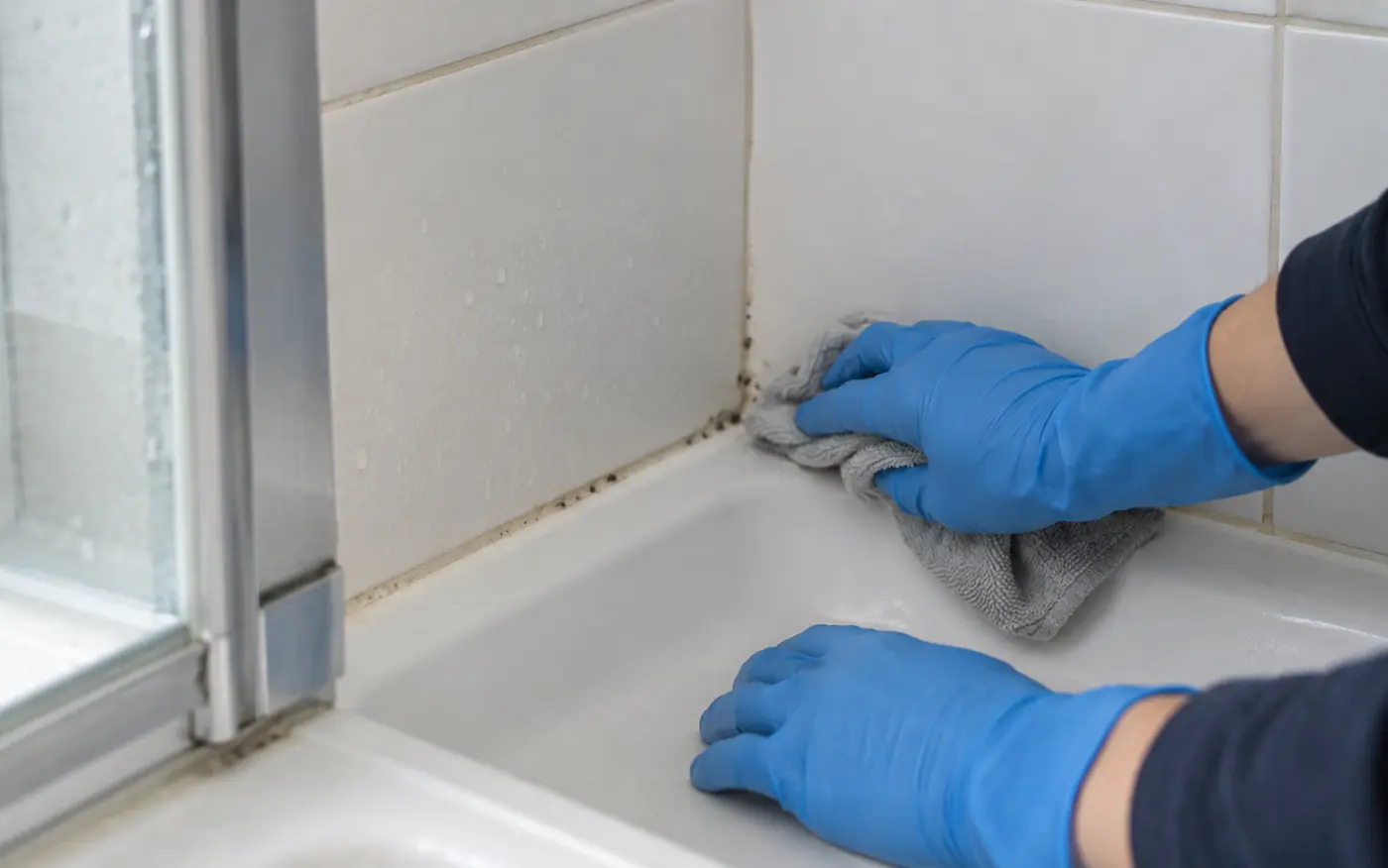
Describe the property and affected material
Begin with a wide photograph showing the room and closer images showing the visible growth. Give approximate dimensions, the surface material and when it first appeared. Explain whether the area has returned after earlier treatment and describe any leak or water damage already known. A photograph can help scope an enquiry, but it is not a building diagnosis.
The mould removal service is assessed around suitable reachable surfaces. Tile, painted plaster, silicone, timber and fabrics can need different responses. Hidden layers, unsafe access or deteriorated materials may require another professional assessment before a cleaning visit can be accepted.
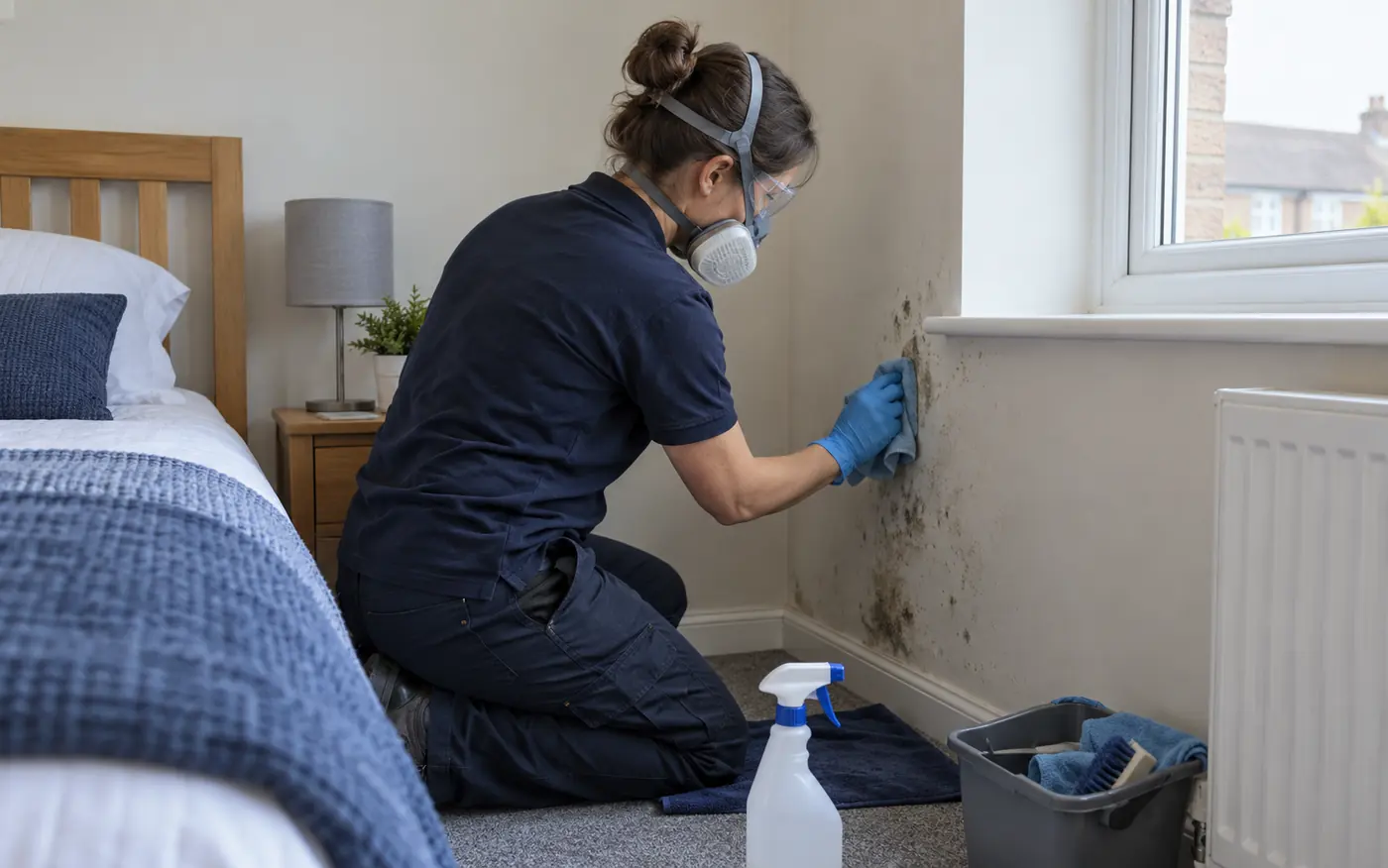
What can be included in the assessed scope
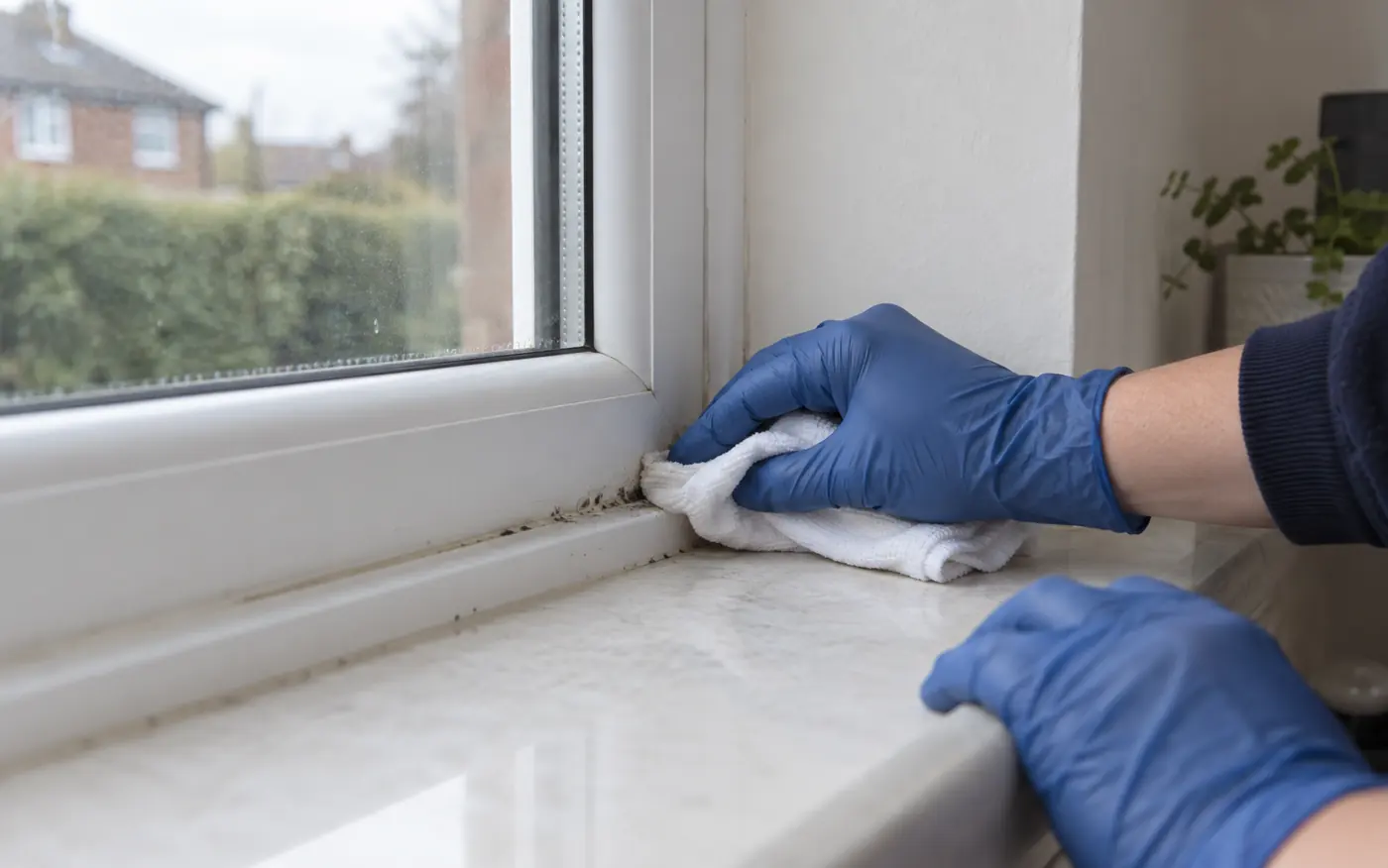
An accepted visit may address appropriate accessible affected surfaces, with materials and limitations agreed first. Identify bathroom tile edges, reachable window surroundings or other visible locations individually. Do not assume that cleaning a wall surface also inspects the cavity behind it. If the visible condition is extensive or unusual, provide that information before asking for a date.
Failed sealant, damaged plaster and deeply affected porous material may not be recoverable through cleaning. Replacement or building work is a separate matter. Any staining that remains should be discussed against the material’s condition rather than hidden behind an assurance that every surface can be made new.
Keep moisture investigation on its own track
The UK government’s damp and mould guidance treats the underlying moisture problem as something that needs attention alongside visible mould. Arrange an appropriate property professional where a leak, building defect or recurring damp is suspected. Cleaning is not a substitute for that investigation.
Tell the team what has already been checked and whether repair work is scheduled. Do not infer a cause from a single dark patch or assume an occupant is responsible. The cleaning quote should describe its own scope and limitations without making a structural finding or a promise that growth cannot return.
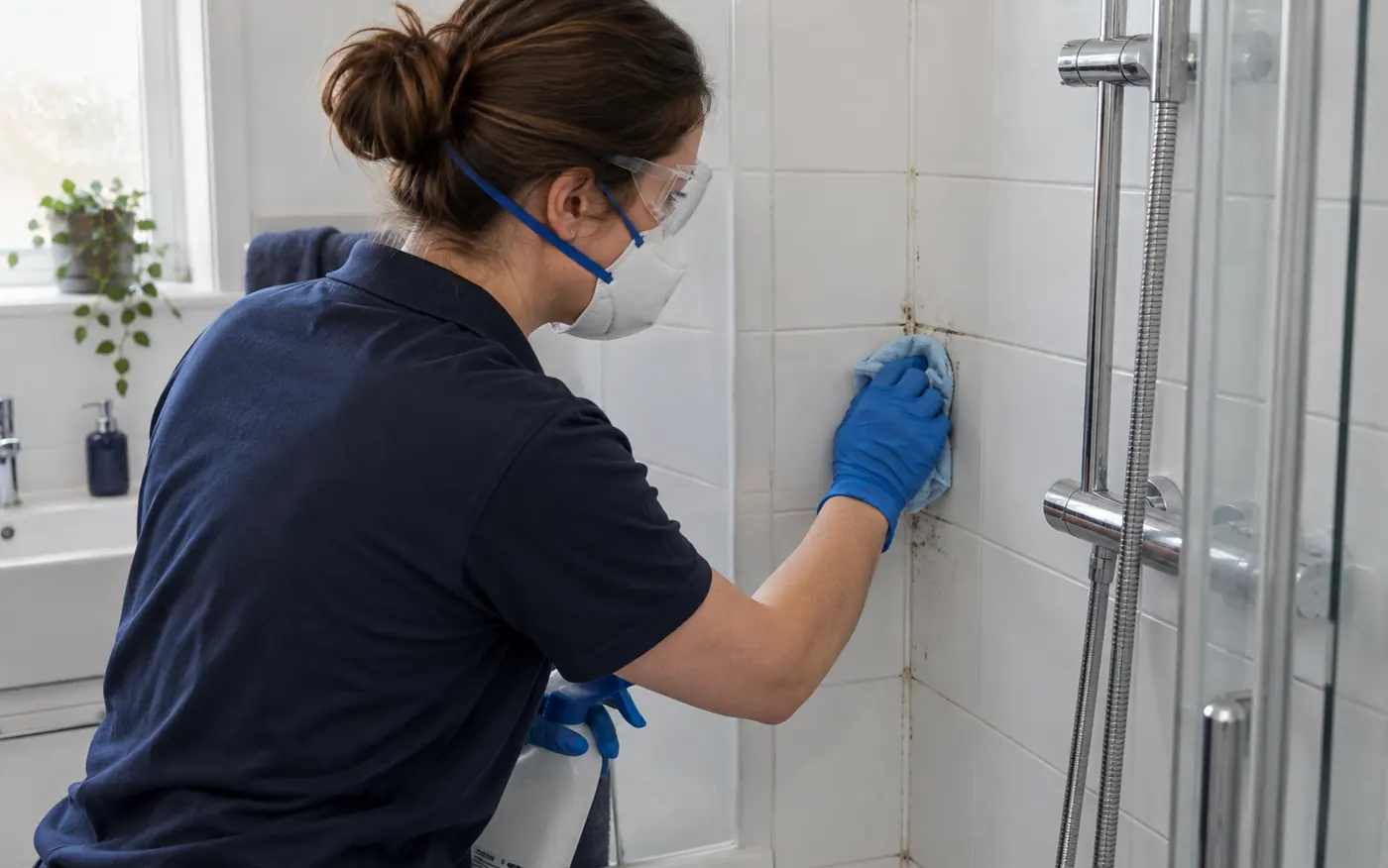
Prepare for assessment, not a DIY experiment
Keep people, pets and loose belongings away from the proposed work area as instructed. Report earlier products, sanding, repainting or other treatment. Do not mix cleaning chemicals or disturb affected material to make a photograph look better. Wait for the accepted preparation instructions rather than applying a succession of household products before assessment.
The contractor should determine suitable working methods, exposure controls and any PPE or respiratory protection needed for the assessed task. HSE’s respiratory protection guidance explains why equipment selection belongs within a risk assessment. This page does not prescribe a universal mask or treatment for every property.
Read the price with its limitations
The published mould-removal starting price is £120. This is not a confirmed charge for every Whitechapel room or an assurance that a photographed surface is suitable. Extent, materials, condition, access and the accepted method influence the quotation. Ask what is included, what cannot be assessed remotely and whether another professional needs to attend first.
Confirm applicable VAT and any agreed access charges in the written total. A separate bathroom clean may address ordinary soap residue on unaffected suitable surfaces, but it does not replace mould assessment. Likewise, deep cleaning must not be used as a catch-all for hidden damp or building repairs.
Describe affected belongings separately
If furniture, curtains or stored items also show a concern, include them in the enquiry as separate materials. Do not assume a surface-treatment visit covers every object in the room. Explain whether items can remain in place and wait for instructions about access or movement. This helps avoid an agreed tile or wall treatment being mistaken for a complete assessment of fabrics, possessions and concealed building surfaces.
Whitechapel access and the next appointment
If moving furniture is necessary to create access, plan it safely and agree what can be moved. Tower Hamlets’ bulky-waste collection guidance states that crews do not enter properties. Check accepted items directly and avoid placing objects in shared escape routes while preparing for a visit.
Where handover is approaching, keep tenancy cleaning and mould assessment clearly identified on the brief. Record treatment limitations and separate repair referrals. A completed visible surface treatment does not certify hidden areas, establish a medical conclusion or guarantee that an inspection will accept the property’s condition.
Practical answers
Questions about mould removal
Can you identify the cause from a photograph?
A photograph helps describe the visible extent and surface, but it cannot establish the underlying moisture cause or condition of hidden layers. Further property assessment may be needed.
Does £120 cover every affected room?
No. It is the published starting figure. The actual extent, access, material and suitability determine whether work can be accepted and the written quotation.
Should I scrub the area before sending pictures?
Describe the condition as it is and report previous treatment. Avoid disturbing affected material or mixing chemicals; follow preparation instructions agreed after assessment.
Is future recurrence ruled out?
No. Ongoing moisture and damaged materials can affect recurrence. Surface treatment is separate from repairs and does not provide a permanent-removal or hidden-mould guarantee.
Nearby areas and wider borough coverage
For another property nearby, choose the location where the work is needed.
See our coverage guide and confirm your full postcode when enquiring.
Your next step
Agree the work before the visit.
Share the surfaces or items needing attention so the booking can be assessed properly.