End To End · Balham
Mould Removal Balham
A checkout approaching does not turn a moisture concern into ordinary dirt. For a Balham tenancy, establish what has been reported, which surfaces are affected and who can approve access before agreeing any suitable treatment around the inspection timetable.
- Existing reports and current photographs kept together
- Inspection timing discussed without hiding the underlying issue
- Cleaning boundaries separated from repairs and deductions
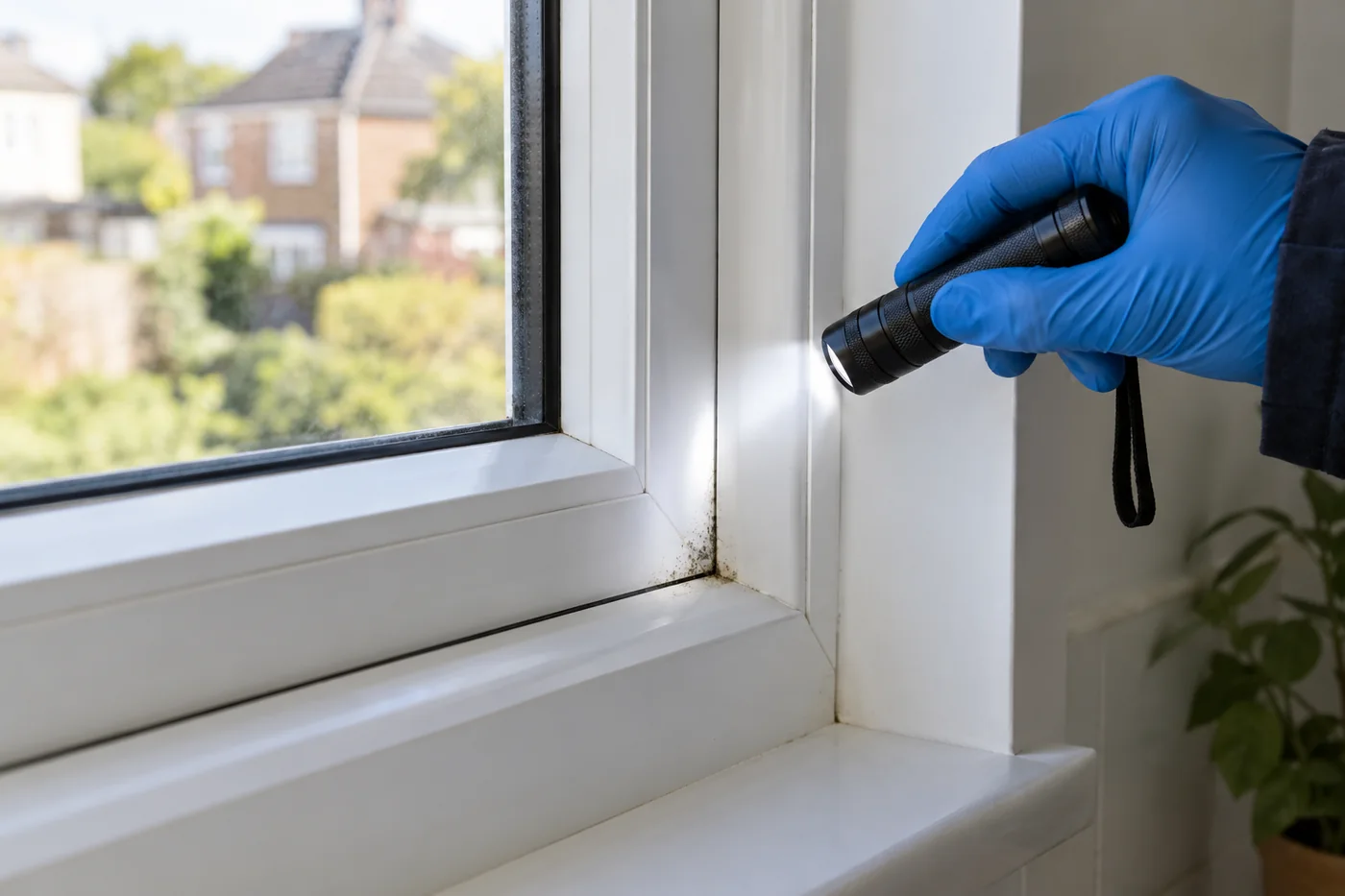
Begin with a record of the concern
Gather any messages already sent about the affected area and add current photographs where it is safe and practical to take them. Describe whether the marks have changed since the previous report. Use dates and observations instead of conclusions about fault: a cleaning enquiry should not assign responsibility for a leak or the condition of a rented home.
Our mould removal information outlines assessment of suitable surface work. Tell us that a checkout is planned and whether the property will still be occupied. The treatment discussion needs its own scope, rather than assuming that an inspection deadline makes every visible mark suitable for removal.
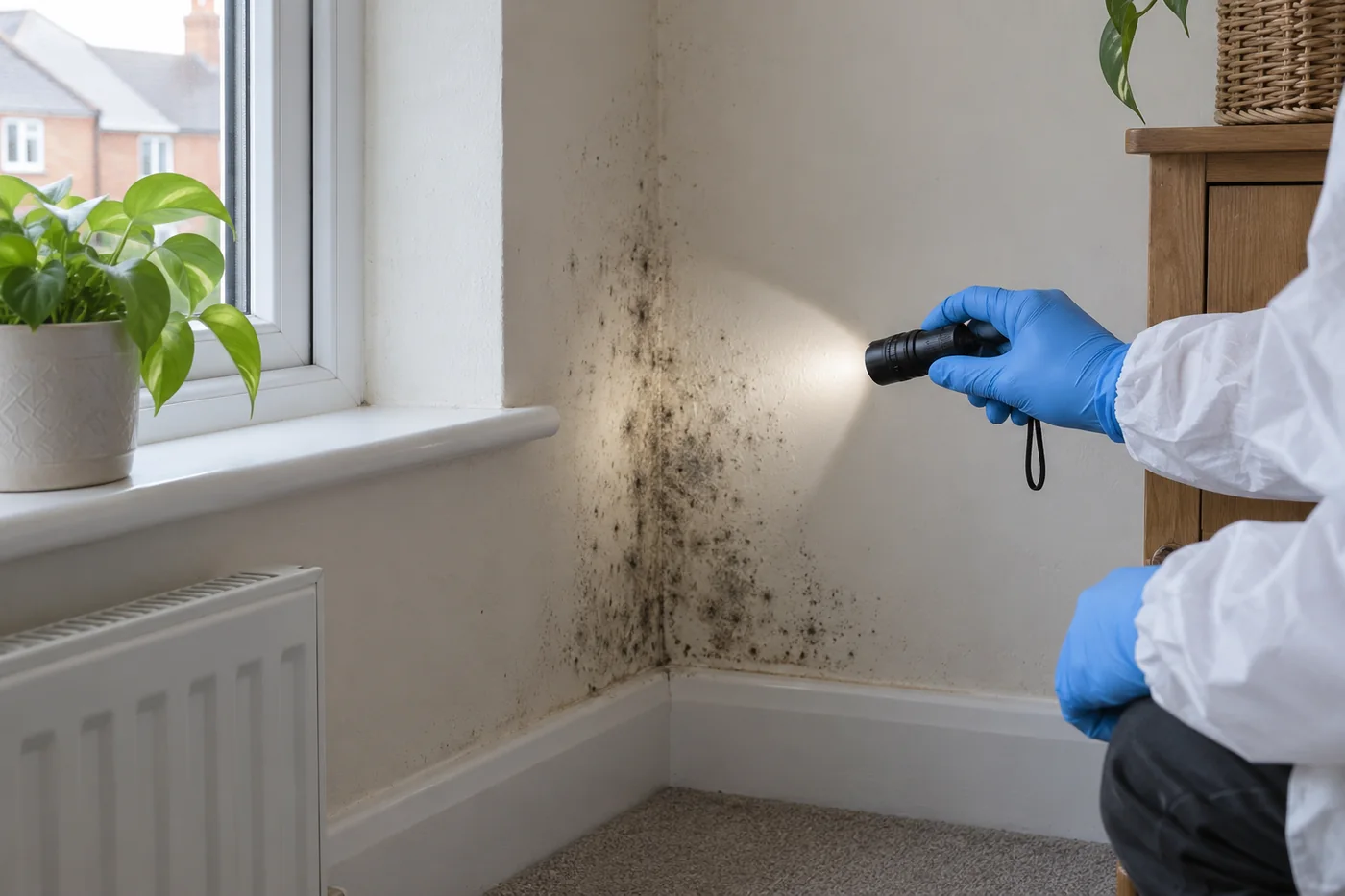
Contact the responsible housing person first
For a Wandsworth address, the council’s private rented damp and mould information describes reporting to the landlord or managing agent in writing. Keep a copy of what you send. Check the actual address and authority before relying on a local route, since the Balham name alone does not settle every administrative boundary.
Tell the responsible person if an independent cleaning visit is proposed. Agree entry and any restrictions on the work; do not assume a tenant can authorise repairs to fittings or the building. A documented report remains relevant even where suitable treatment changes the visible appearance before the checkout appointment.
Explain the checkout sequence honestly
State the intended moving date, when the affected surfaces can be reached and when the inspection takes place. Ask whether assessment and any suitable work can fit that sequence, allowing for the practical precautions explained for the task. Do not plan a last-minute visit on the assumption that every material can be treated and immediately presented for inspection.
If a repair or investigation is pending, include that information. A cleaner should not be expected to cover up evidence needed by another professional or describe an unresolved moisture issue as fixed. Where the sequence is unsuitable, agree a clearer division of work instead of compressing several responsibilities into one handover appointment.
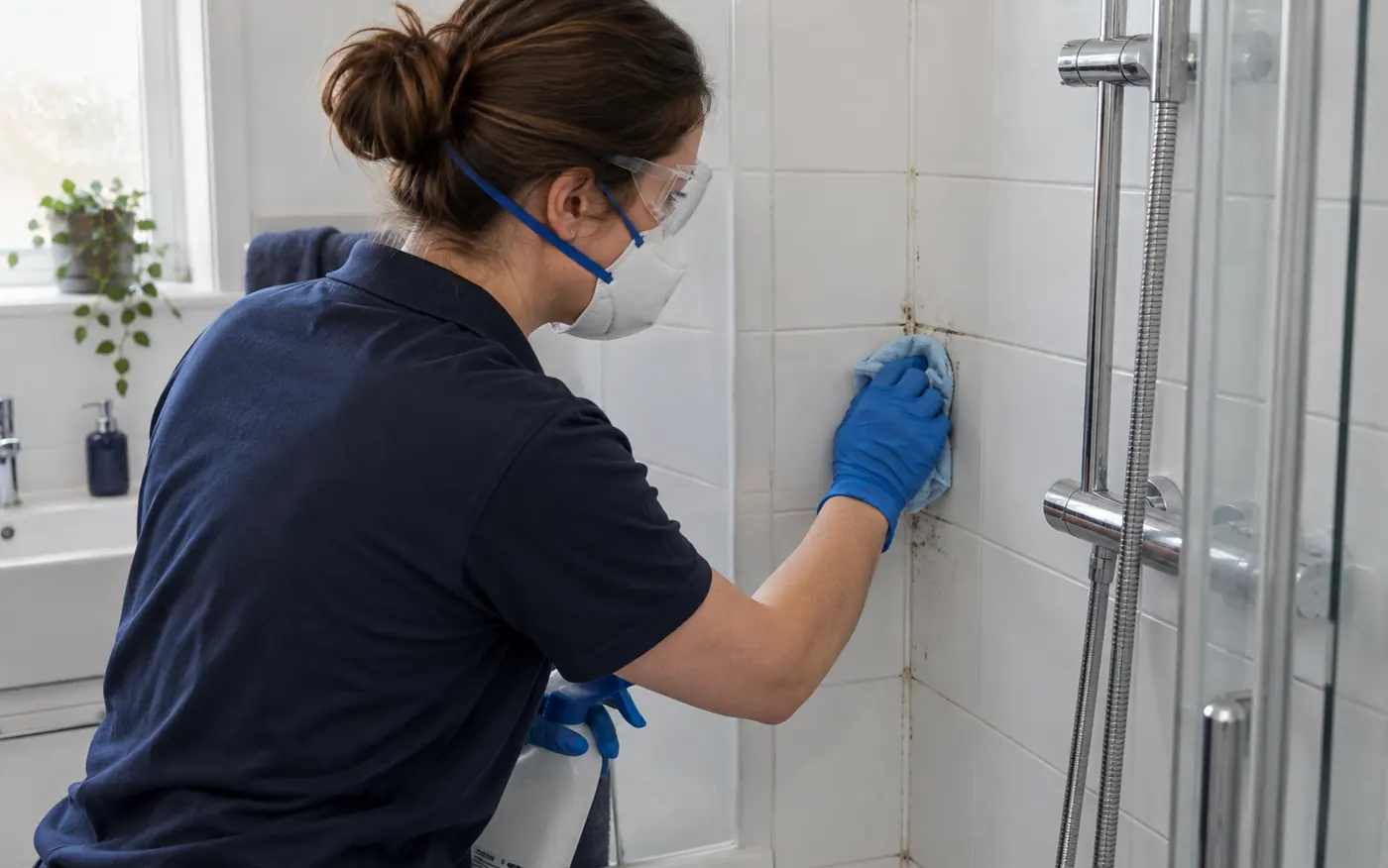
Check what the visible area actually includes
Describe the affected size, its material and surrounding condition. Window frames, adjacent decoration and flexible seals are different components even when the marks appear close together. Explain any loose finish, damaged joint or inaccessible rear surface. Photographs should show the wider position as well as the close view so the enquiry is not based on an isolated detail.
Suitable surface treatment does not establish what is happening behind a unit or within a wall. National damp and mould guidance supports addressing the underlying moisture source as well as visible growth. Any unresolved source needs the appropriate housing or repair response.
Order other handover work separately
Use end of tenancy cleaning to discuss the general empty-property clean, and identify the affected surface separately in the brief. A bathroom checklist should not silently absorb specialist work. Neither the general clean nor mould treatment guarantees acceptance by an inventory clerk or a particular tenancy outcome.
If relevant, describe the appliance condition for oven cleaning and identify carpets requiring fabric cleaning assessment. These are different tasks with their own suitability and access requirements. Confirm their inclusion and timing rather than expecting them to happen simply because an overall handover has been arranged.
Make the quotation match the approved task
Ask which surfaces, access arrangements and treatment activities the proposed price includes. Explain who may accept the quote and approve a change if the observed condition differs. A landlord, tenant and managing agent may all have information, but one clear decision route prevents conflicting instructions during the visit.
Professional protective measures and working arrangements depend on assessment. Raise questions about occupancy and access before booking; avoid trying a chemical mixture or disturbing damaged material to prepare the site. Work should proceed within the suitable accepted scope, with other concerns reported for a separate decision.
Preserve a useful handover record
Request a clear description of the work completed and any areas outside its scope. Keep it with the earlier reports and current condition information. A treatment record describes a service; it is not proof that the building has been repaired, that concealed surfaces are unaffected or that an occupier caused the original issue.
Confirm entry, a reachable contact and service availability for the full address using our coverage information. The aim is a transparent handover: suitable cleaning can be identified, limitations remain visible, and the responsible people retain the information needed to deal with moisture and tenancy matters separately.
Practical answers
Checkout planning questions
Can I arrange treatment just before the checkout?
Explain the dates, occupancy and access. Assessment must establish suitable work and practical timing; a last-minute slot or immediate handover cannot be assumed.
Does treatment decide who is responsible for the problem?
No. Surface work cannot assign tenancy fault or determine deductions. Keep reporting and condition information for the appropriate decision process.
Should the earlier damp report be retained?
Yes. Keep the messages and relevant photographs alongside the description of any treatment, including unresolved concerns.
Is mould included automatically in tenancy cleaning?
Identify it specifically. Suitable mould work needs its own assessment and accepted boundaries rather than an assumption based on a general cleaning checklist.
Nearby areas
Planning visits at more than one address? Check the page for each property.
See our coverage guide and confirm your full postcode when enquiring.
Your next step
Leave time for the final review.
Discuss the handover deadline and the accepted work before confirming your appointment.