End To End · Belsize Park
Deposit Return Cleaning Belsize Park
An inventory can be detailed without being easy to use as a cleaning list. For a Belsize Park handover, translate its descriptions into identifiable rooms, surfaces and suitable tasks while retaining the original record of condition.
- Translate observations into practical tasks
- Keep repairs and missing items separate
- Compare the same locations before review

Understand the record before selecting a service
Read the inventory’s room names, item descriptions and photographs together. An entry about a marked surface may describe dirt, staining, wear or damage; it is not automatically an instruction to scrub it. Locate the item in the property and explain its current condition before deciding which cleaning request to make.
Our deposit return cleaning overview explains why a brief should separate cleaning from an expectation about money. The team can discuss suitable accepted tasks, but cannot rewrite the check-in record, adjudicate a disagreement or promise that an agent will approve every aspect of the handover.
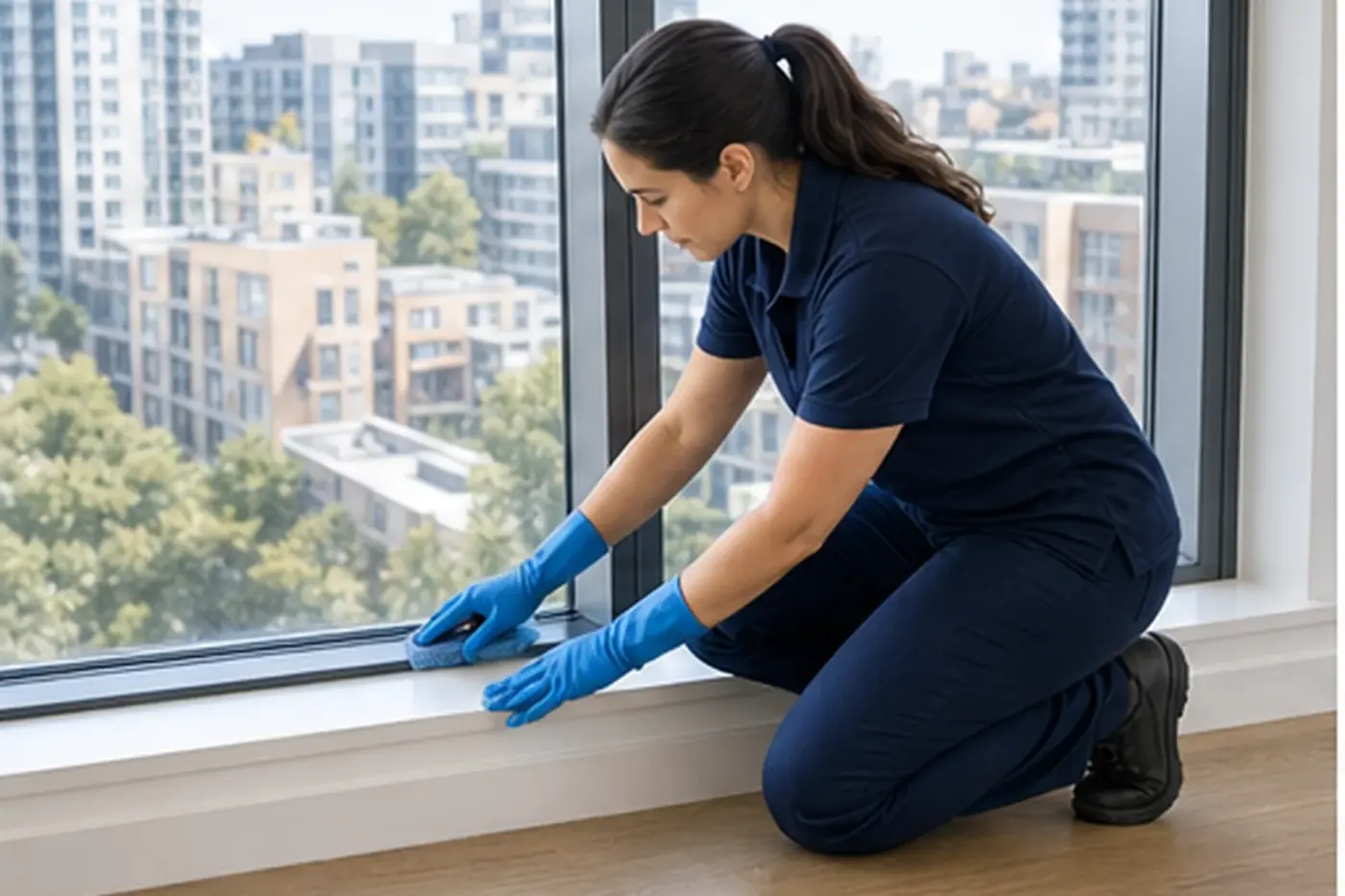
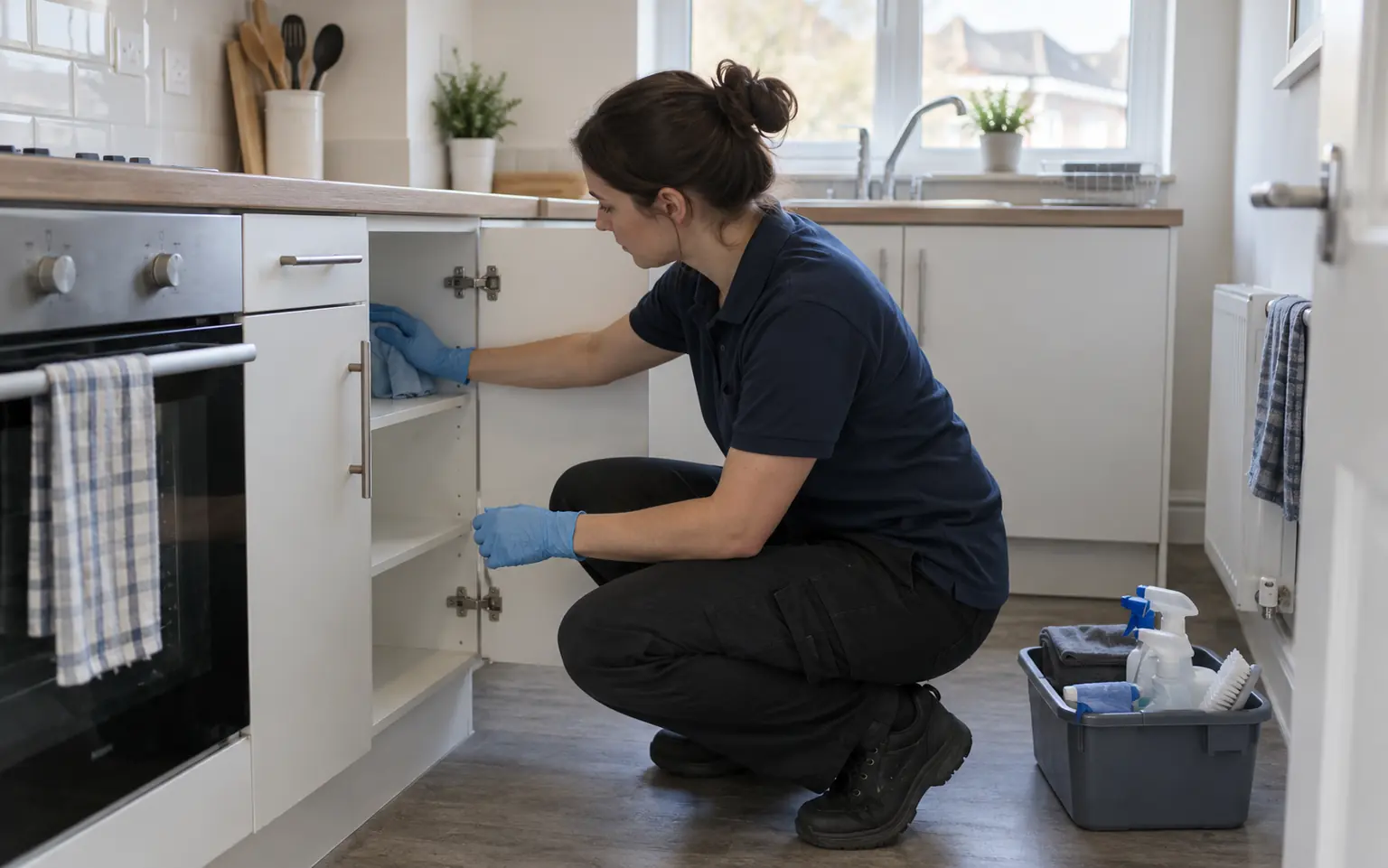
Compare like with like in the kitchen
An inventory photograph of cupboard fronts does not show the state of the interior shelves. Identify both if you want them assessed, and make sure included storage will be empty. Name worktops, sink, splashback and hob surfaces separately. Explain delicate finishes and photograph chips or loose edging before cleaning is commissioned.
Appliances need their own descriptions. If the oven has baked-on residue, request oven cleaning with its type and visible condition. Fridge or freezer interiors require explicit agreement and appropriate preparation. The phrase kitchen clean does not establish every internal component, specialist method or dismantling task.
Recognise the difference between residue and damage
Bathroom scale and soap deposits are different from etched glass, failed sealant or missing grout. Show the area in good light and explain what you know about the material. Avoid adding several strong products ahead of assessment; unknown previous treatment can make the surface condition harder to interpret.
Use the tenancy cleaning guide to frame ordinary accessible room tasks. If suspected mould or persistent moisture appears, flag it separately. A property-wide cleaning list is not a building survey, and a cleaning visit cannot correct damaged finishes or inspect every concealed space behind a fitting.
Match fabric descriptions to the actual item
Check whether the inventory describes carpets, rugs and upholstered furnishings individually. If a fabric concern needs treatment, give current photographs, care labels and information about previous spills or products. Carpet and upholstery cleaning requires a suitability assessment, not an assumption that every material responds to the same method.
Explain furniture that remains and the accessible area around it. Some staining, colour loss or wear can remain even after appropriate treatment. Arrange drying before the final review and keep the property available for any instructions given. Do not treat an inventory’s broad carpet description as proof that a fixed treatment will remove every visible mark.
Know which document you are asking for
A cleaning confirmation identifies a booked service, while an inventory records condition. If you need a separate formal record, discuss the property inventory service and its accepted scope. Ask what is supplied, when it is available and what the record covers rather than assuming one document performs both roles.
Keep copies of the accepted cleaning requests and relevant photographs together. When using room names that differ from the inventory, explain the match before the appointment. Clear references such as rear bedroom wardrobe shelf make a concern easier to discuss than a general statement that storage is still marked. Documentation supports communication without guaranteeing an inspection result.
Scope and price belong together
Request a quote using the present room details and the access expected after removals. Name the storage interiors and additions you want included, and ask how newly exposed condition would be assessed before extra work is accepted. Check applicable VAT and agreed access charges in the full total, with the preparation required to make those surfaces available stated clearly.
Reporting terms should be discussed before confirmation, including any potential return visit and the access it would require. Do not invent a universal re-clean window or assume an agent’s checklist overrides material limitations. Cleaning concerns, repairs and deposit decisions need to remain distinct throughout the booking.

Belsize Park preparations for the review
For an address in Camden, the council’s parking service guide can help identify the relevant arrangement for work at a property or keeping a bay clear. Check the actual vehicle and street requirements. Reliable unloading, entry and key instructions matter as much as the checklist inside the home.
Keep utilities available, clear belongings and retain access long enough to review the accepted tasks. Use comparable photographs where useful and explain a specific concern promptly under the booking terms. Consult coverage information for surrounding locations, with availability confirmed for your exact address rather than inferred from a nearby area name.
Practical answers
Questions about methods and materials
Can you interpret a disputed inventory entry?
You can share it to explain a cleaning request, but the team does not adjudicate tenancy disputes. Clarify the location and suitable task rather than asking for a liability decision.
Should cupboard interiors be listed explicitly?
Yes. Say which storage will be empty and accessible. A photograph of cupboard doors does not establish the work required inside.
Is an old carpet mark always removable?
No. Staining, colour loss and wear may remain. Identify the material and earlier treatments so a realistic fabric-cleaning assessment can be discussed.
Will the same angle of photograph help?
Comparable views can make a specific location easier to review. Include wider context as well as detail and keep the original condition records intact.
Nearby areas
These nearby guides describe the same service in surrounding locations.
See our coverage guide and confirm your full postcode when enquiring.
Your next step
Ask the right questions before treatment.
Explain the materials, condition and access when speaking to End To End.