End To End · Belsize Park
Oven Cleaning Belsize Park
Some dark oven surfaces are specialist linings, while others carry cooking residue. Before arranging oven cleaning in Belsize Park, identify the appliance design and the location of each concern so suitable work can be distinguished from damage or restricted access.
- Use model information to explain the finish
- Identify residue without dismantling panels
- Separate treatment from maintenance decisions

A model number can be more useful than a product guess
If the appliance label is visible in its normal position, photograph it and any care information you hold. Do not remove the oven to find identification. A manual can explain self-cleaning functions, liners and restrictions that are difficult to infer from the colour of the cavity alone.
When enquiring about oven cleaning, show each cooking chamber and describe the residue. Report whether a mark appeared after cooking or after a previous cleaning attempt, where known. Unknown history should be acknowledged rather than replaced with a confident diagnosis of the surface.
Different components need different questions
| Component | Question to resolve |
|---|---|
| Cavity lining | Which finish and manufacturer restrictions apply? |
| Door assembly | Which glass faces are accessible without unaccepted dismantling? |
| Shelves | How many, and is the surface damaged? |
| Cooking trays | Are coatings present and suitable for treatment? |
| Controls | Are there loose parts or known operating faults? |
Describe a separate grill or smaller cavity explicitly. Its presence changes the brief even if you use it infrequently. Accessories stored away from the cooker also need naming before the quote is accepted.
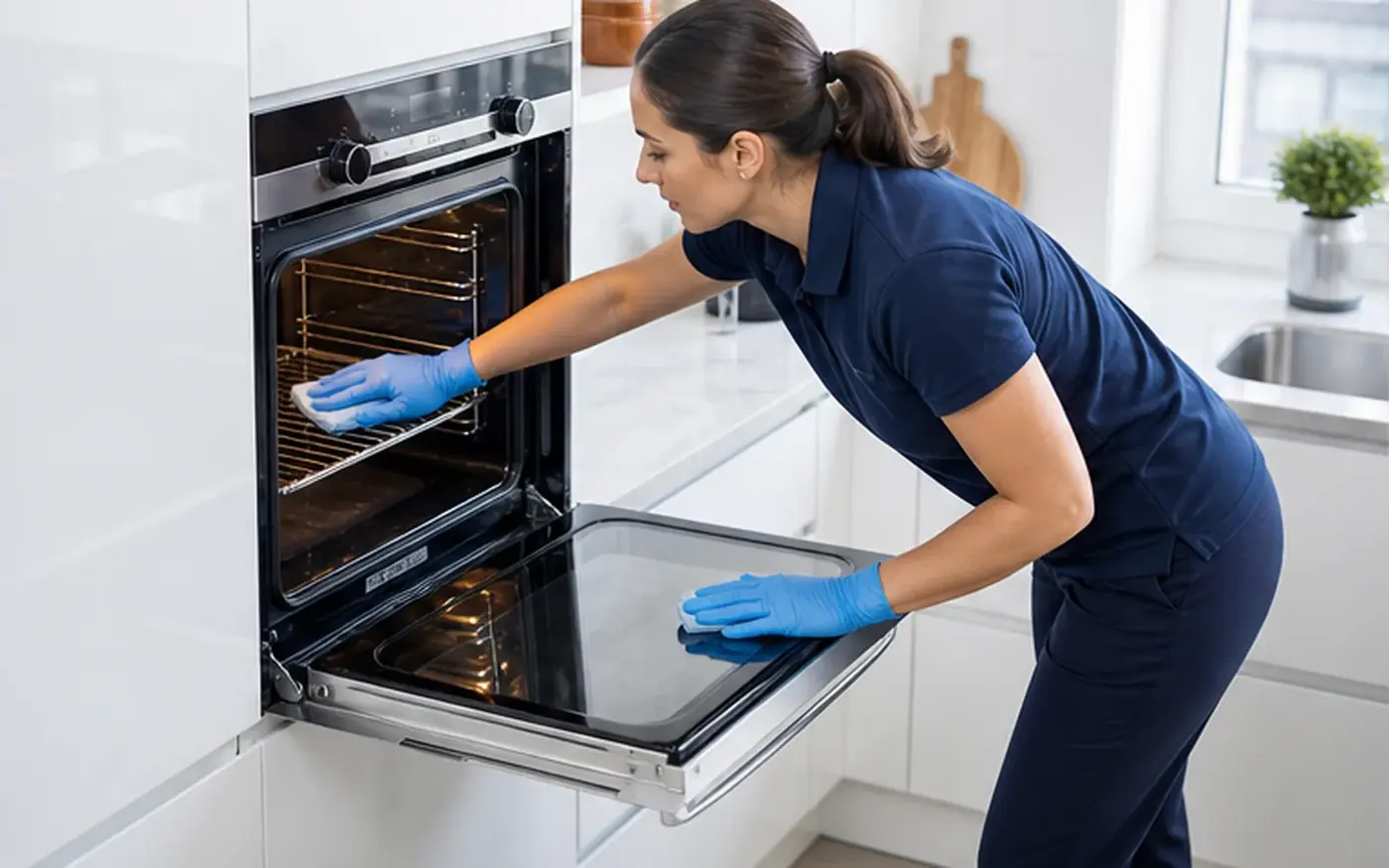
What a photograph of the glass should explain
Show the open door and say whether the mark is on a reachable face or apparently between panes. Include any crack, chip or loose fixing in the description. A request for clear glass cannot be taken as permission to dismantle every door design or disturb damaged components.
The accepted approach depends on construction and condition. Scratches and deteriorated finishes can remain even when removable grease has been addressed. Avoid experimenting with a scraper or abrasive paste on a sensitive surface before the appointment; explain existing attempts so the team can assess the present condition rather than an incomplete history.
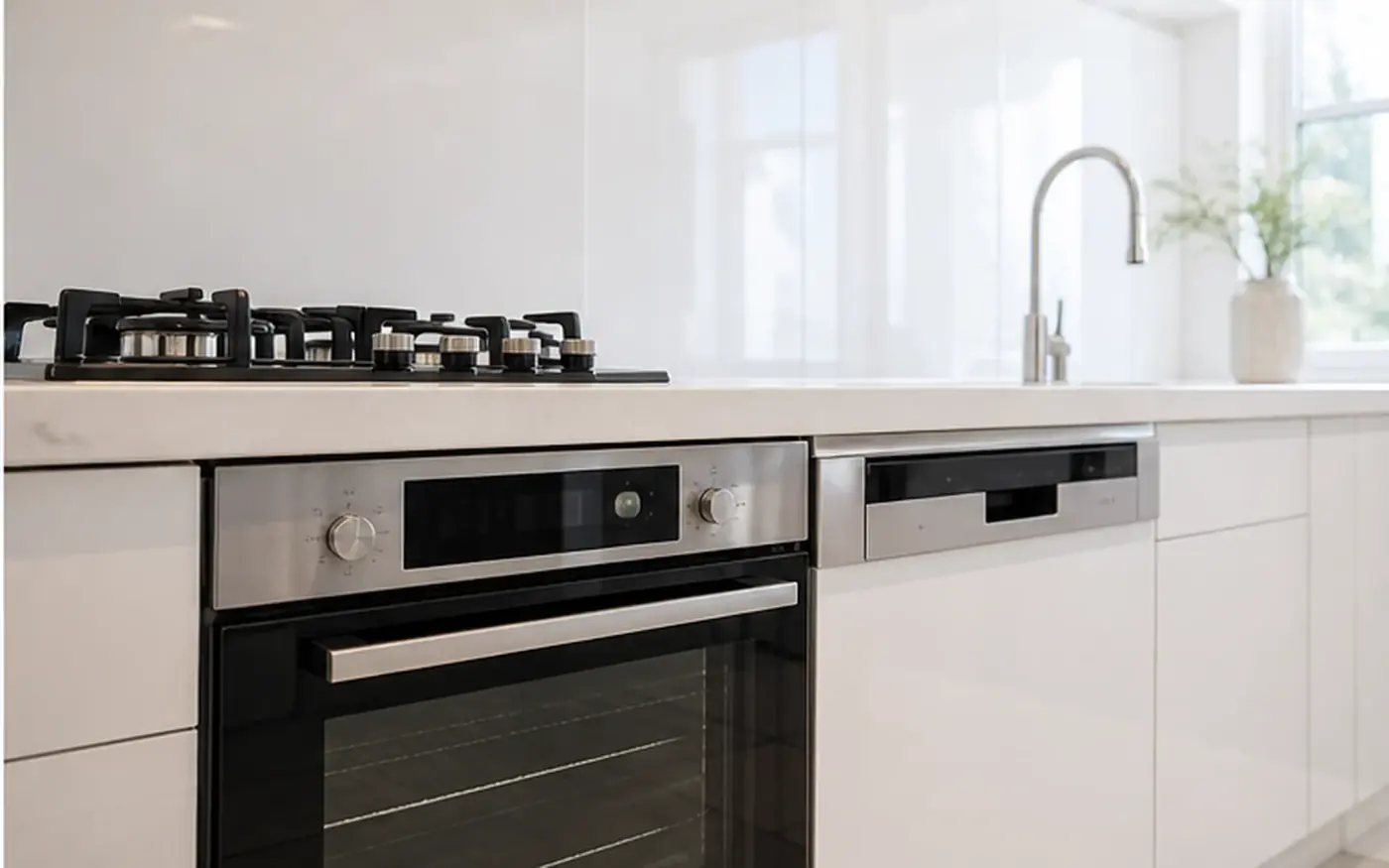
Preparation is about access and information
Let the appliance cool, clear unrelated food and cookware, and keep the floor in front unobstructed. Set aside the manual if available and identify any previous product residue. Tell the household when the cooker will be unavailable so preparation is not undone by last-minute cooking.
Do not pre-soak unfamiliar panels, remove a specialist lining or run a self-cleaning cycle simply because the interior looks heavily marked. Ask for the relevant preparation instructions first. Known faults, damaged seals and electrical concerns need reporting before booking; a cleaning visit is not an appliance repair or operating-safety assessment.
A realistic quote includes realistic boundaries
The oven-cleaning entry price is £69. A specific quote should reflect the number of compartments, accessory list, condition and accepted work. An appliance with extra trays or difficult deposits cannot be accurately described by the word “oven” alone.
Check the full cost, applicable VAT and any agreed access charge. Discuss hob or hood treatment independently if required. Ask for restrictions around special linings, coated trays or inaccessible glass layers to be recorded. The amount paid does not convert cleaning into restoration of worn enamel or a guarantee that every visible mark will disappear.
Belsize Park: match parking arrangements to the task
Camden’s parking guide offers distinct arrangements for property work and for keeping a bay clear. For a Camden address, check which option fits the vehicle and appointment rather than relying on the everyday description of a visitor.
Describe stairs, the entrance and where equipment can lawfully be unloaded. A door code is not enough if another locked entrance follows it, so explain the complete route and the contact responsible for entry. Consult coverage details when arranging another property and supply that location’s own access information.
Aftercare and the distinction from wider cleaning
Review the accepted surfaces and accessories, ask about any remaining condition and receive the instructions for subsequent use. The relevant guidance follows the actual method and appliance; it should not be guessed from a different oven’s earlier treatment.
For grease elsewhere in the kitchen, compare kitchen deep cleaning. A whole-property deep clean has a separate room list. If the purpose is moving out, include the accepted appliance work within your tenancy-cleaning plan and preserve time to review it before returning access to the owner or agent.
Practical answers
Questions about methods and materials
Should I identify a black liner as burnt food?
Do not identify a finish by colour alone. Share the model and care instructions and explain what you can observe without dismantling the appliance.
Are coated trays always suitable for the rack method?
No universal method should be assumed. Show the coating, wear and manufacturer guidance so the accepted approach can be assessed.
Can the cleaner diagnose an operating fault?
An ordinary cleaning visit is not an appliance diagnosis or safety inspection. Report the fault and seek the appropriate repair advice separately.
How do I know whether a mark was excluded?
Ask for the relevant surface or access limitation in the written scope, then review it alongside the accepted work after cleaning.
Nearby areas
These nearby guides describe the same service in surrounding locations.
See our coverage guide and confirm your full postcode when enquiring.
Your next step
Ask the right questions before treatment.
Explain the materials, condition and access when speaking to End To End.