End To End · Acton
After Builders Cleaning Acton
Fine dust, dried plaster and adhesive spots need different decisions. This practical guide to after builders cleaning in Acton explains how to describe the residue, protect new finishes and decide which tasks are ready for a cleaning appointment.
- Identify dust separately from attached residue
- Provide care guidance for new materials
- Plan the route before bringing furnishings back
Understand what a post-renovation clean can address
The purpose of after builders cleaning is to deal with an accepted list of accessible dust and suitable residue after works. It does not complete decorating, repair damaged flooring or certify installation quality. Establishing those boundaries gives the appointment a useful target.
Describe the type of work and when dusty activities will stop. A bathroom refurbishment may need attention to fittings and tile edges; redecorating several rooms may leave a wider distribution of dust. Neither description proves that all new surfaces can be treated immediately.

Start with settled dust before discussing stubborn marks
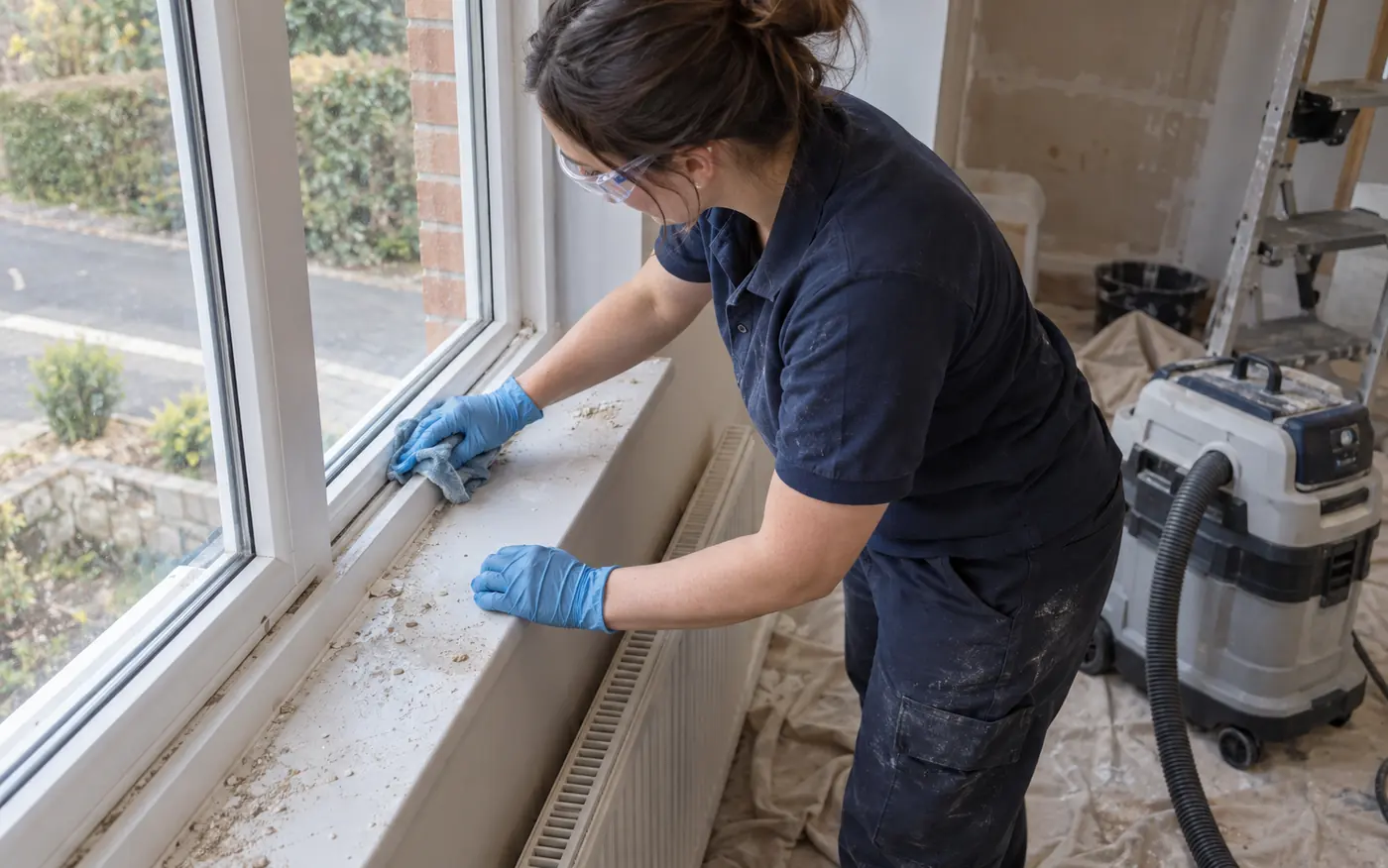
Show shelves, ledges, door frames, skirting and exposed floor edges in your photographs. Include the less visible corners where work has occurred, provided they are safely reachable. Explain whether units, radiators or other fixtures were installed during the project.
Keep the description factual: loose dust on a painted frame is different from a paint splash on glass. Naming the material and deposit helps the team assess an appropriate approach. Do not assume that a stronger product is the answer simply because a mark survived ordinary wiping.
Glazing and coatings deserve a careful assessment
Reachable internal panes, frames and sills can be discussed within the cleaning scope. Tell us about tinted, coated or otherwise sensitive glass and provide care instructions where available. Cement, paint and adhesive need individual assessment; scraping should never be assumed suitable.
If both sides of a window need attention, distinguish the internal work from exterior window cleaning. Send photographs of outside access, height and obstructions. A pane visible from the pavement is not automatically accessible by a suitable method, and a cleaning visit cannot repair a failed glazing unit.
Read floor and sealant instructions before scheduling
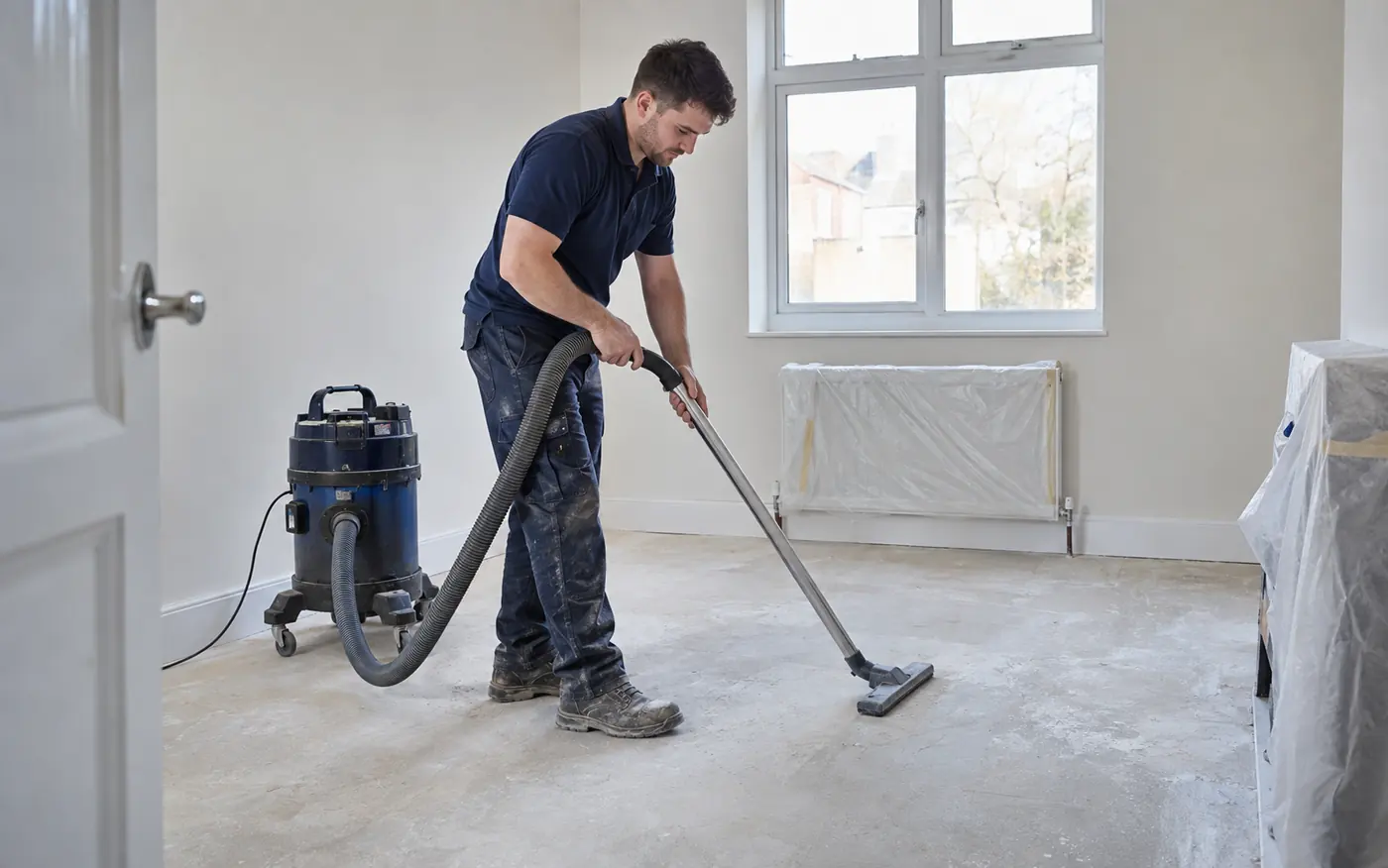
Ask the installer about curing, protection and recommended care for flooring, grout, stone and sealants. Share the information before agreeing the date. Appearance alone does not establish that a new surface is ready for moisture, friction or a particular product.
Leave protective coverings in place until removal has been assigned to the appropriate person. Note loose trims, unfinished joints and damaged edges so they can be recorded as defects. The cleaning brief should identify which finishes are ready, which need restrictions and which must be left for the contractor.
| Surface | Information to provide |
|---|---|
| New flooring | Installer’s care and curing guidance |
| Coated glass | Type of coating and visible deposits |
| Fresh sealant | Restrictions supplied by the installer |
Prepare a route through the finished rooms
Arrange disposal of rubble and surplus materials before equipment needs to move through the property. Rubbish clearance is a separate discussion with its own material acceptance and price. Keep tools, cables and loose packaging away from the working route.
Make entry instructions, lighting, water and electricity available. If some rooms remain active work areas, explain their connection to the finished space. Agree whether a partial clean makes practical sense rather than expecting a closed door to prevent every movement of renovation dust.
Acton bookings: check the address and lawful access
For an Acton address within Ealing, consult the council’s parking suspension guidance if a space must be reserved. Bins and cones are not an authorised substitute. Confirm the relevant authority and actual restriction for your address before arranging vehicle access.
This matters when the builders’ equipment and deliveries have left but the cleaning visit still needs an unloading route. Explain any distance to the entrance, stairs or managed access. Check our coverage information using the full postcode rather than assuming an area name resolves every practical detail.
Specify the work behind the quoted total
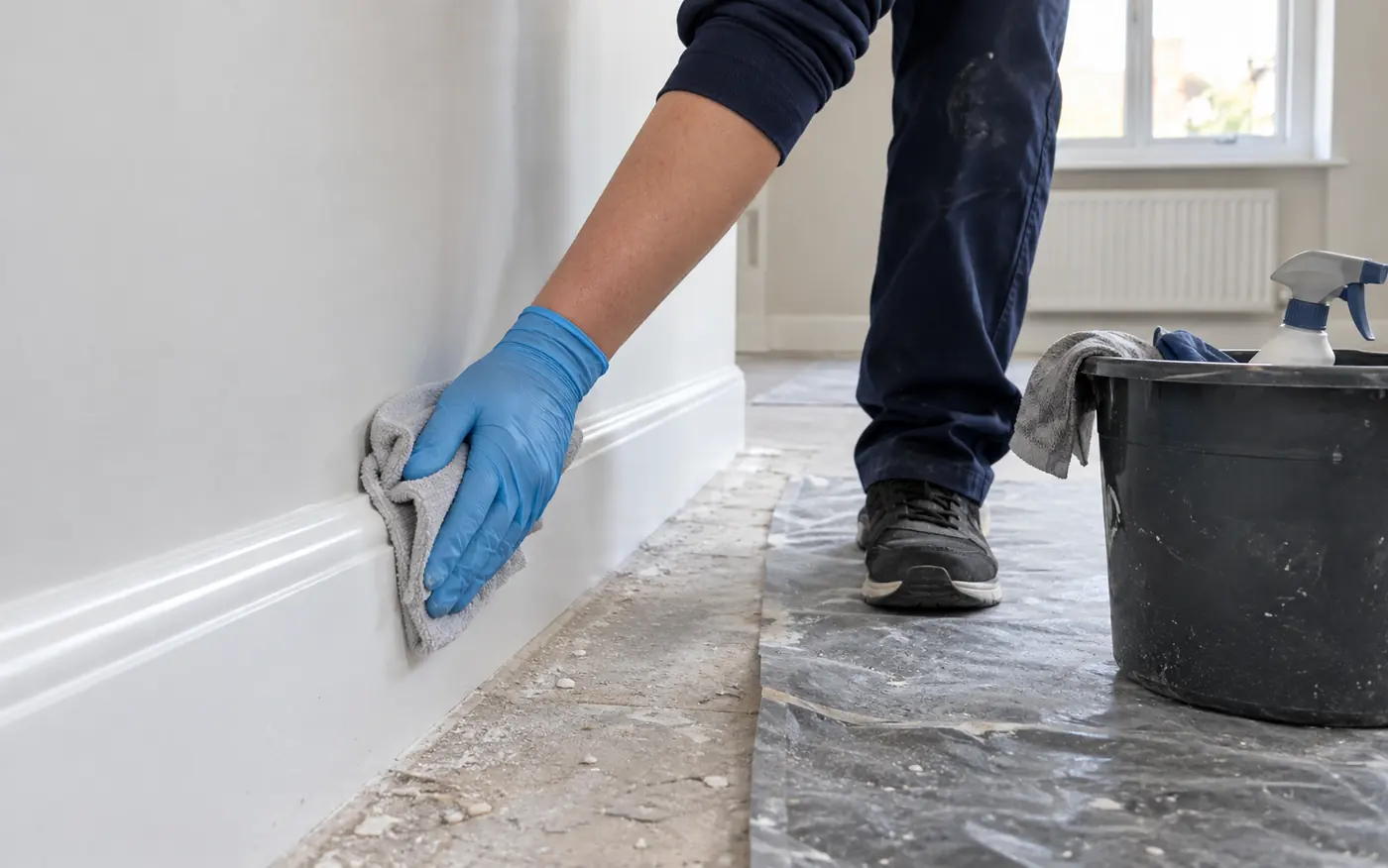
The published pricing is a starting point for discussion. Supply room sizes or clear room photographs, residue details, materials and access arrangements for an accurate brief. Confirm additions, applicable VAT and any agreed access charge in the written total.
If the work is followed by a rental checkout, include the broader tenancy cleaning requirements. If new occupants are arriving, compare move-in cleaning. Combining requirements should clarify what is covered; it should not turn a defined post-build quote into an unlimited promise.
Check ventilation and access instructions with the person responsible for the property. Explain any room that must remain secured, any disconnected fitting and any temporary restriction left by the contractors. These practical details belong in the brief even if the visible dust looks straightforward.
Practical answers
Questions about methods and materials
Does more visible dust mean a stronger chemical is needed?
Not necessarily. Dust and attached residue are different problems, and the surface finish determines suitable treatment. Provide material information instead of applying an unfamiliar product first.
Can exterior glass be included?
Request it explicitly with photographs showing access and height. Exterior work and unusual residue require assessment and should not be inferred from a reachable internal-window scope.
Who decides when new flooring is ready?
Provide the installer’s care and curing guidance. The proposed clean should respect that information; appearance is not a reliable substitute for the relevant material instructions.
Should I bring furniture back before the clean?
Discuss the sequence first. Clear rooms give access to floor edges and surfaces; moving belongings in too early can restrict the accepted work and introduce fresh dust.
Nearby areas
These nearby guides describe the same service in surrounding locations.
See our coverage guide and confirm your full postcode when enquiring.
Your next step
Ask the right questions before treatment.
Explain the materials, condition and access when speaking to End To End.