End To End · Balham
After Builders Cleaning Balham
After decorating or refitting, the room where work happened may not be the only space needing attention. For a Balham post-build clean, identify the worked rooms, connecting route and surfaces ready for treatment so the accepted scope follows the actual dust and residue.
- Show the route used during the project
- Identify ready surfaces by room
- Keep finishes and unusual marks explicit
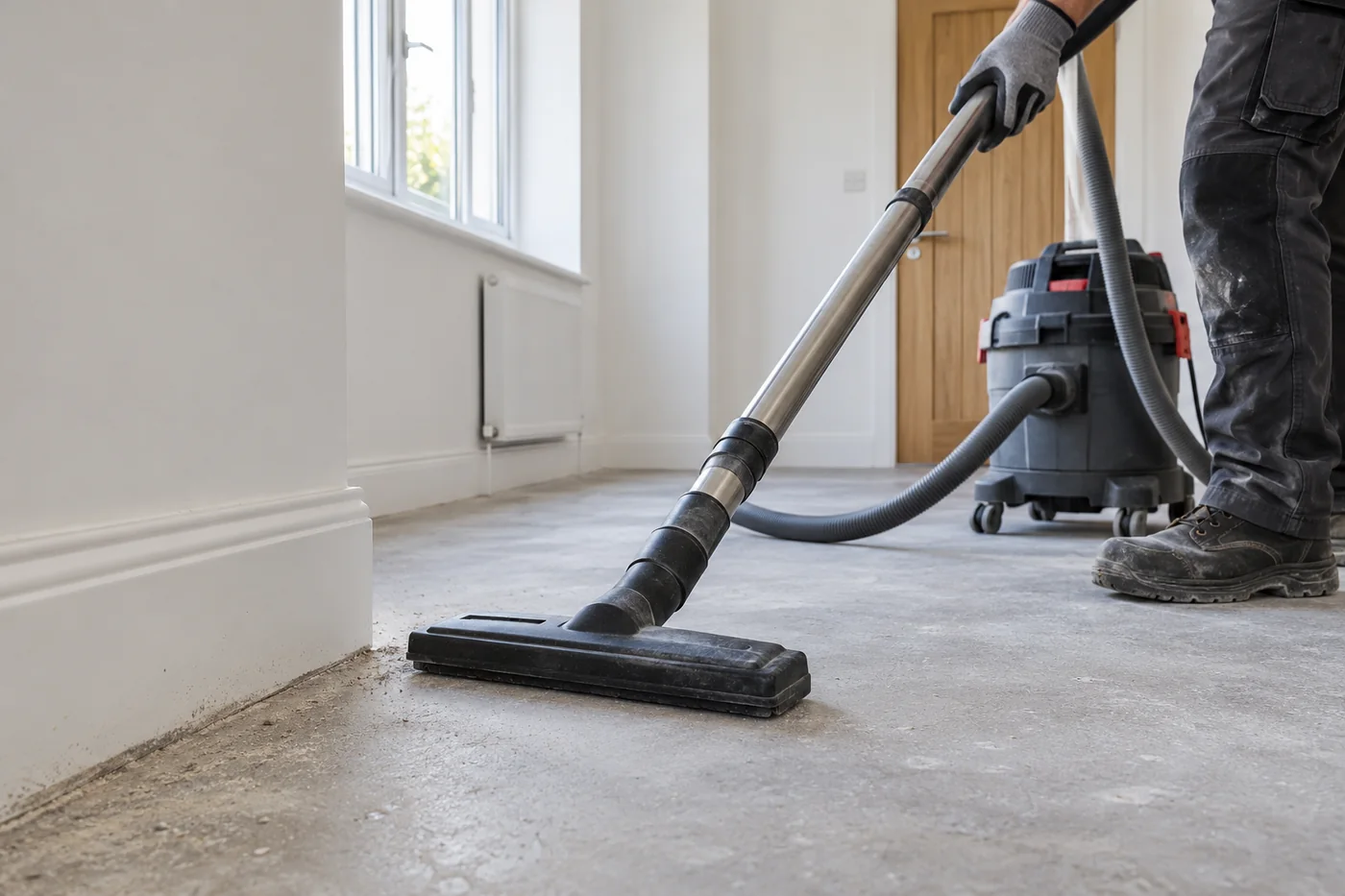
Create a room map from the visible condition
Start where the work happened, then look at the route used for tools and materials. Photograph reachable ledges, frames and floor edges in connected spaces if they need attention. Do not assume every room requires the same treatment merely because one project occurred in the property.
Our post-build cleaning service can assess accessible dust and suitable deposits. Describe rooms deliberately included and any that remain outside the request. A short annotated list helps explain the boundary more accurately than calling for a whole-home clean without showing its condition.
Use fittings to make the scope checkable
In kitchens, identify suitable worktops, cabinet fronts, handles and requested empty storage. In bathrooms, name sanitaryware, screen and reachable tiles. Elsewhere, specify ledges, door frames, skirting and exposed floors, explaining what furniture or protection remains.
New fittings need care information from the installer where available. An empty shelf is different from a protected surface or a cupboard still holding tools. State which areas are ready rather than expecting the team to decide what the contractor may safely uncover, dismantle or move.
| Requested area | Condition information |
|---|---|
| Worked room | Ready surfaces and care instructions |
| Connecting route | Visible dust on reachable details |
| Restricted space | Protection, furniture or unfinished work |
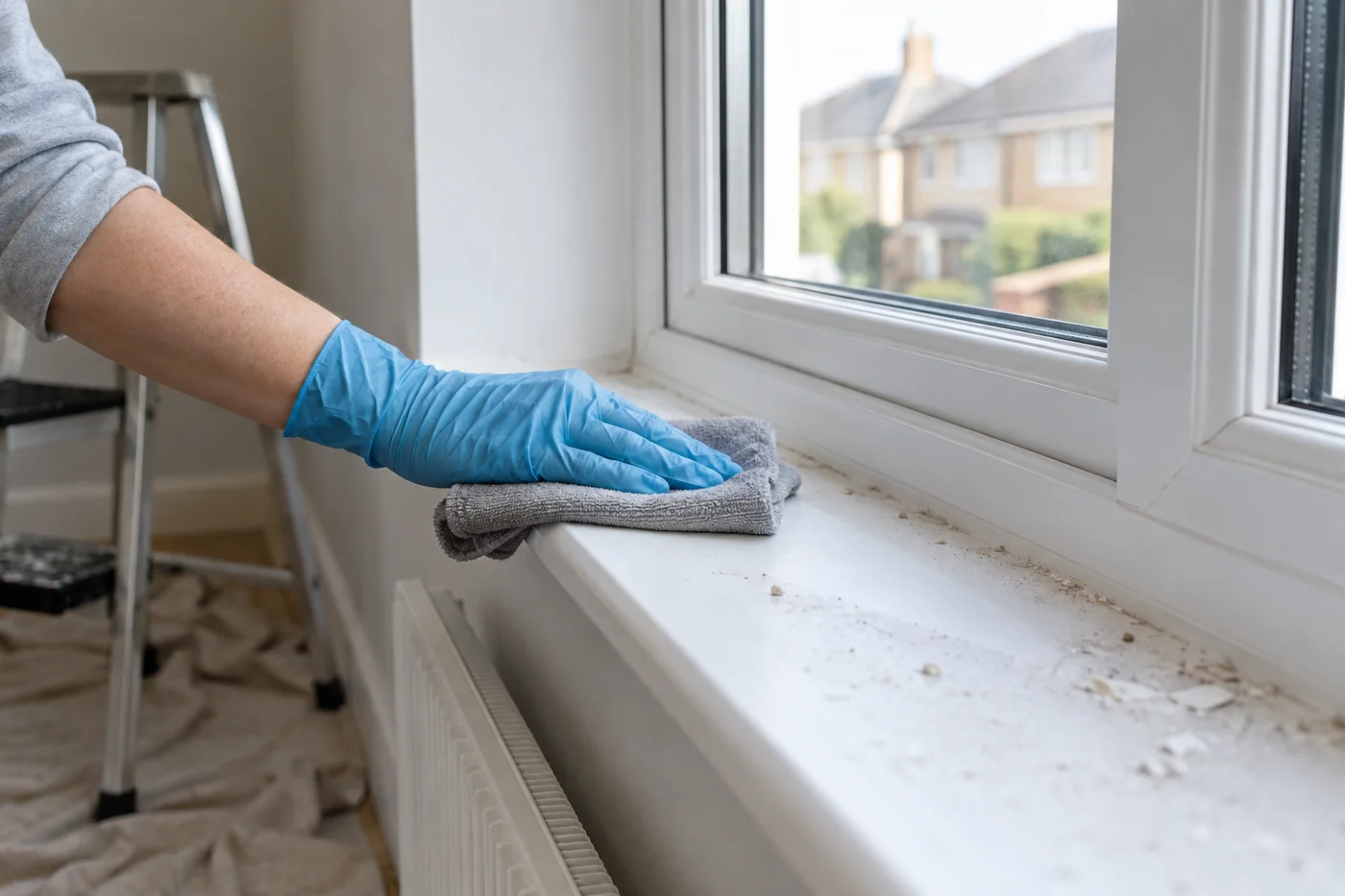
Photograph attached deposits separately from dust
A close view of a paint spot, adhesive or plaster needs its underlying material and a wider location image. Explain any earlier removal attempt. A deposit that looks small can still require assessment when it sits on glass, a coating or another sensitive finish.
Do not treat aggressive scraping as an assumed part of the quote. Cleaning cannot repair a scratch, failed joint or damaged installation. Record known defects before work and keep those observations separate from the accepted residue tasks so a completion review uses the correct starting condition.
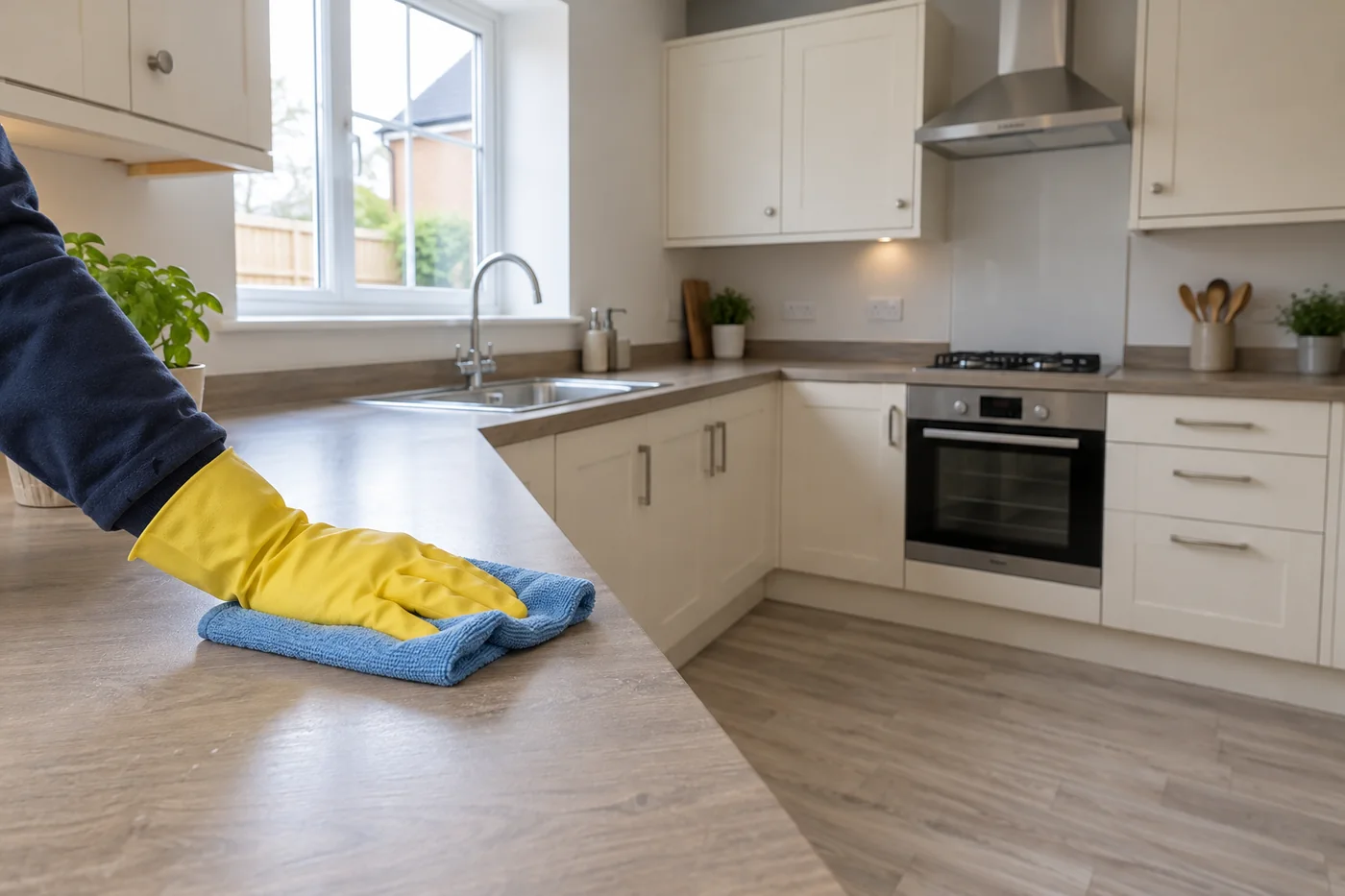
Choose timing after the relevant trades
Ask what contractor activities remain and where they will take place. A brief return involving sanding can matter more to the final condition than a longer visual inspection. Explain the work and its route through rooms already prepared for cleaning.
Schedule accepted waste removal before equipment needs the floor and doorway. If some rooms remain active, discuss a defined limited visit and its boundary. A clean cannot promise that later works will leave finished surfaces unchanged, so the programme should make the accepted appointment useful.
Balham access should follow the actual address
For a property in Wandsworth, consult the council’s suspension guidance where an authorised arrangement is needed. Check purpose, dates and conditions rather than assuming a contractor’s earlier access covers the cleaning visit. Use the responsible authority where the address is governed elsewhere.
Describe the lawful unloading point, stairs, shared doors and private building instructions. Confirm keys, working lighting and utilities, with someone reachable for questions. Check the full postcode through our coverage guide instead of relying on the locality name alone.
Give additions a defined role
If the project leaves unwanted material, request clearance separately with contents, amount and access. For outside panes, request exterior window cleaning with elevation and approach photographs. Neither task should be inferred from indoor room cleaning.
If this is also a rental handover, explain the tenancy checklist; if someone is moving in, compare move-in preparation. A combined enquiry should identify accepted requirements instead of turning the project into an unlimited property-wide promise.
Read the amount and review against the map
Use the price list as background and request a total for condition, materials, access and additions accepted. Clarify applicable VAT, agreed access charges and uncertain residue assessment. Keep the current room map with the person reviewing the property.
At completion, identify a concern by surface and location and compare it with the accepted list. Pass any material-care limitations to the next keyholder. Keep contractor defects and later dust separate from cleaning questions, using the agreed reporting route promptly rather than expecting an unspecified new finish everywhere.
Ask the reviewing contact to keep the same room names used in the enquiry. A specific ledge or fitting is easier to discuss when the condition photograph and accepted task use one consistent location rather than several descriptions of the whole project.
Practical answers
Questions about after builders cleaning
Should connected rooms be included after one refit?
Show their actual condition and request the areas needing attention. Dust beyond the worked room should be identified rather than every space automatically included.
Can new storage be cleaned while tools remain inside?
Explain what remains and who will clear it. Included interiors need suitable accessible surfaces; sorting contractor contents is not implied.
Does a small adhesive spot need assessment?
Yes. The underlying material and earlier treatment matter even when the visible deposit is small.
What if a tradesperson returns after the clean?
Explain the planned activity before booking. Later dust or traffic can change the condition, so choose the final-clean stage with that information available.
Nearby areas
For another property nearby, choose the location where the work is needed.
See our coverage guide and confirm your full postcode when enquiring.
Your next step
Agree the work before the visit.
Share the surfaces or items needing attention so the booking can be assessed properly.