End To End · Barking
After Builders Cleaning Barking
After a small project, it can be unclear whether the property needs a post-build clean, ordinary deep cleaning or specialist residue assessment. Describe what happened in your Barking home and what remains, then choose the scope by condition rather than the project’s size.
- Identify dust created by the work
- Distinguish household build-up and building deposits
- Use new-material guidance when choosing treatment
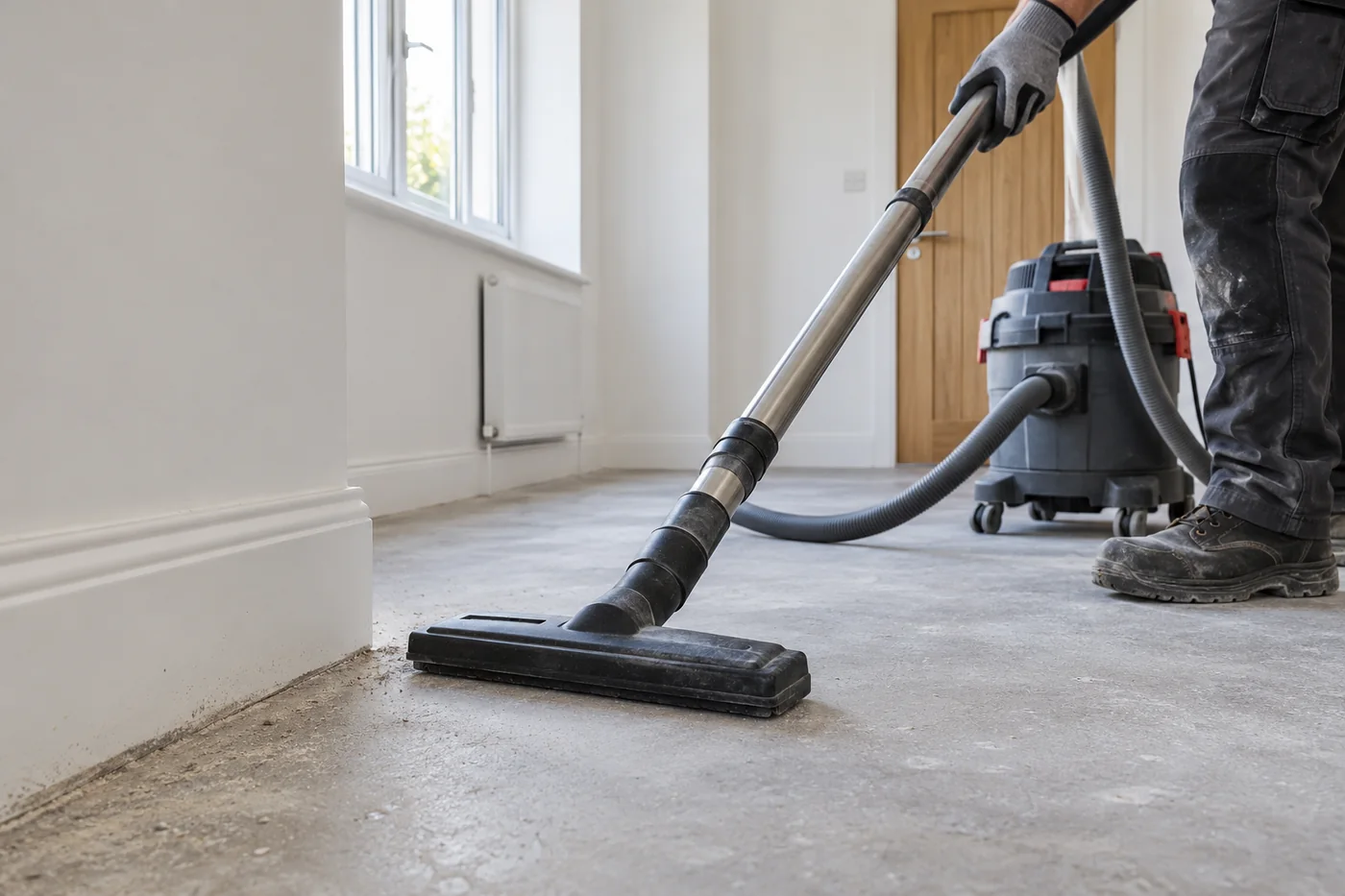
Describe the work instead of calling it minor
Explain the activities completed and the rooms used by the trades. Drilling, decorating or fitting one unit can produce different dust and residue from ordinary household use. Show where that condition is visible now, including the route to the worked area.
Our post-build cleaning service assesses accessible renovation dust and suitable deposits. If the main concern is accumulated domestic grease or bathroom residue, compare deep cleaning. The right enquiry explains the condition so a practical service brief can be agreed.
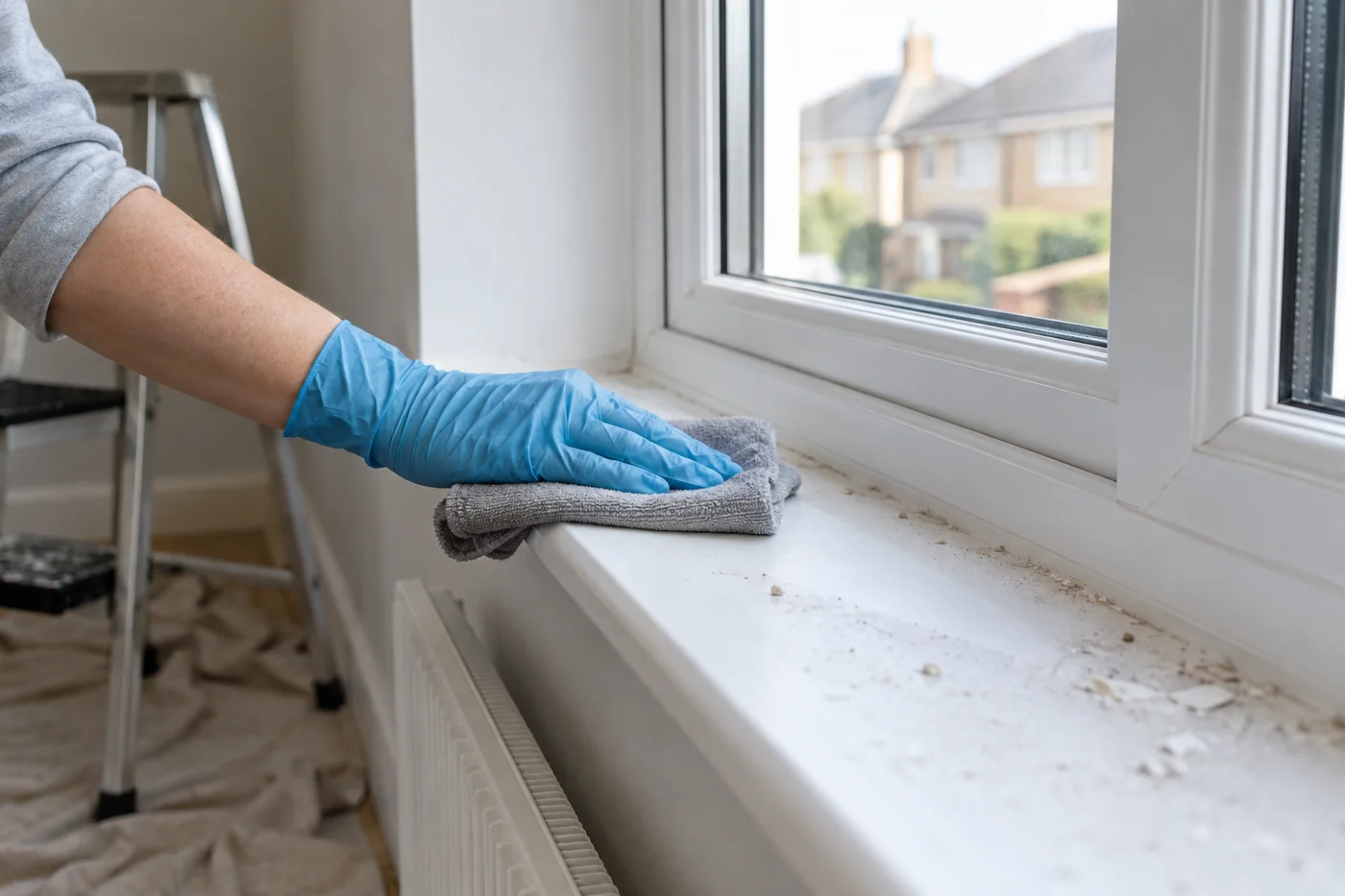
Separate settled dust from attached material
For dust, identify reachable shelves, frames, fittings, ledges and exposed floor edges. Explain whether cupboards are empty and requested. The team needs to know what can be reached, not simply the name of the renovated room.
For plaster, paint or adhesive marks, provide close photographs with their surface and location. A bonded deposit is not the same task as ordinary powder on a shelf. Avoid experimenting with unfamiliar products or scraping before assessment, particularly where a new coating or delicate finish may be underneath.
Check the first-clean instructions for new finishes
Ask the installer about curing, protection and cleaning restrictions for flooring, stone, grout, sealants and painted units. Share the relevant information before confirming treatment. A surface can look ready while still needing a limited method or a later appointment.
Record damaged edges, scratches and unfinished joints separately. Cleaning cannot repair installation defects or restore every altered finish. If information about a material is missing, make that uncertainty clear. The accepted scope should identify ready surfaces and any area that must remain protected or untouched.
| Condition after work | Service question |
|---|---|
| Settled renovation dust | Post-build accessible surfaces |
| Domestic grease or scale | Condition-led deep-cleaning scope |
| Attached unusual deposit | Material-specific assessment |

Decide whether separate clearance is required
List materials and unwanted items left by the project and identify who will remove them. A cleaner cannot be assumed to collect building leftovers under a room quote. Discuss a separately assessed clearance service with material, amount and access details where appropriate.
Barking and Dagenham Council’s March 2026 bulky-waste announcement describes a household collection scheme. Check its current eligibility, accepted materials and booking arrangements directly. A household-item announcement does not establish acceptance of renovation waste or guarantee a collection date before cleaning.
Choose the timing by remaining activity
Ask which contractor tasks are still planned and whether they will create dust or cross completed rooms. Schedule a final clean at an effective point after relevant works and accepted waste removal. If a limited visit is needed, define its rooms and explain the active areas nearby.
Provide water, electricity, lighting and reliable entry. Describe stairs, shared doors and the lawful unloading route, keeping tools and loose materials out of the way. Confirm the full postcode through our coverage guide and keep a knowledgeable contact reachable.
Add only the work needed for the next stage
A home changing occupiers may need tenancy cleaning or move-in preparation beyond the worked rooms. Share storage and appliance requirements so the wider brief is explicit instead of assumed.
For outside glass, show the elevation and safe-access conditions separately. Ordinary internal dust cleaning does not establish a feasible method for every external pane. Name additions before the appointment is accepted, allowing scope, equipment and preparation to be considered together.
Read cost against the selected scope
Refer to the published prices and request a total based on the actual condition, materials, accessible tasks and additions. Clarify applicable VAT and agreed access costs. A small project does not automatically mean a fixed amount of cleaning, and a starting figure does not include unlimited residue removal.
At review, compare the named work with the accepted list and raise a specific concern by surface and location. Keep installer instructions and before photographs available. The result should be discussed as cleaning of suitable accessible material, with repair and later contractor activity handled separately.
Keep a separate note of areas unaffected by the project if only selected rooms are requested. That makes the intended boundary clear to the reviewer and avoids later assuming that every room received a property-wide clean.
Practical answers
Questions about methods and materials
Does a small DIY job automatically need only routine cleaning?
Describe the activity and actual deposits. The project’s size does not by itself establish whether renovation residue, new finishes or ordinary household build-up need attention.
Can deep cleaning include every building deposit?
Unusual residue and new materials need assessment. Explain them separately rather than treating a general domestic-cleaning request as unrestricted post-build treatment.
Does a household bulky scheme accept building leftovers?
Check current accepted materials and eligibility directly with the council. A household-item announcement does not establish that your renovation waste or required collection date can be accepted.
What if one surface is not ready to clean?
Share the installer’s restrictions and discuss excluding or rescheduling that work. Other accepted ready areas still need a clearly defined scope.
Nearby areas
These nearby guides describe the same service in surrounding locations.
See our coverage guide and confirm your full postcode when enquiring.
Your next step
Ask the right questions before treatment.
Explain the materials, condition and access when speaking to End To End.