End To End · Ealing
Carpet Cleaning Ealing
Choosing carpet cleaning starts with the carpet itself. Fibre information, the cause of a mark and previous products are useful details for an Ealing booking; they help distinguish a suitable treatment from an expectation that every patch can disappear.
- Describe fibres, marks and earlier treatments
- Separate routine vacuuming from extraction
- Ask for room-specific drying and care guidance
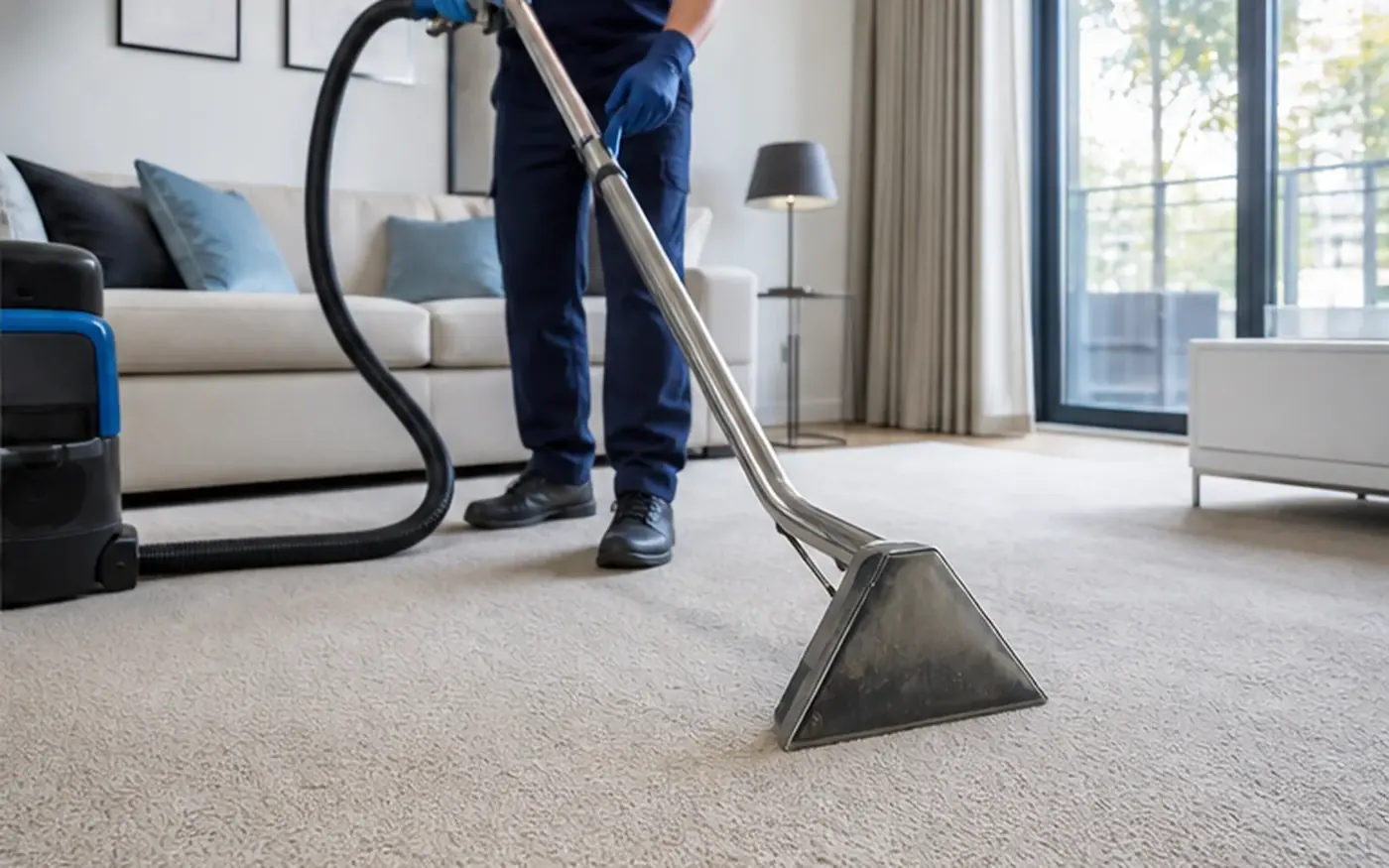
What assessment needs to establish
Tell us the rooms, approximate areas and visible condition, then share any available material or supplier information. If you are uncertain about the fibre, explain that uncertainty. Appearance alone is not a reliable reason to prescribe a method before the carpet has been assessed.
The carpet and upholstery service discusses suitable cleaning and its limitations. Existing wear, colour changes and damaged backing are different from removable soiling. Mention loose edges or earlier problems so the team can understand the starting condition before accepting work.
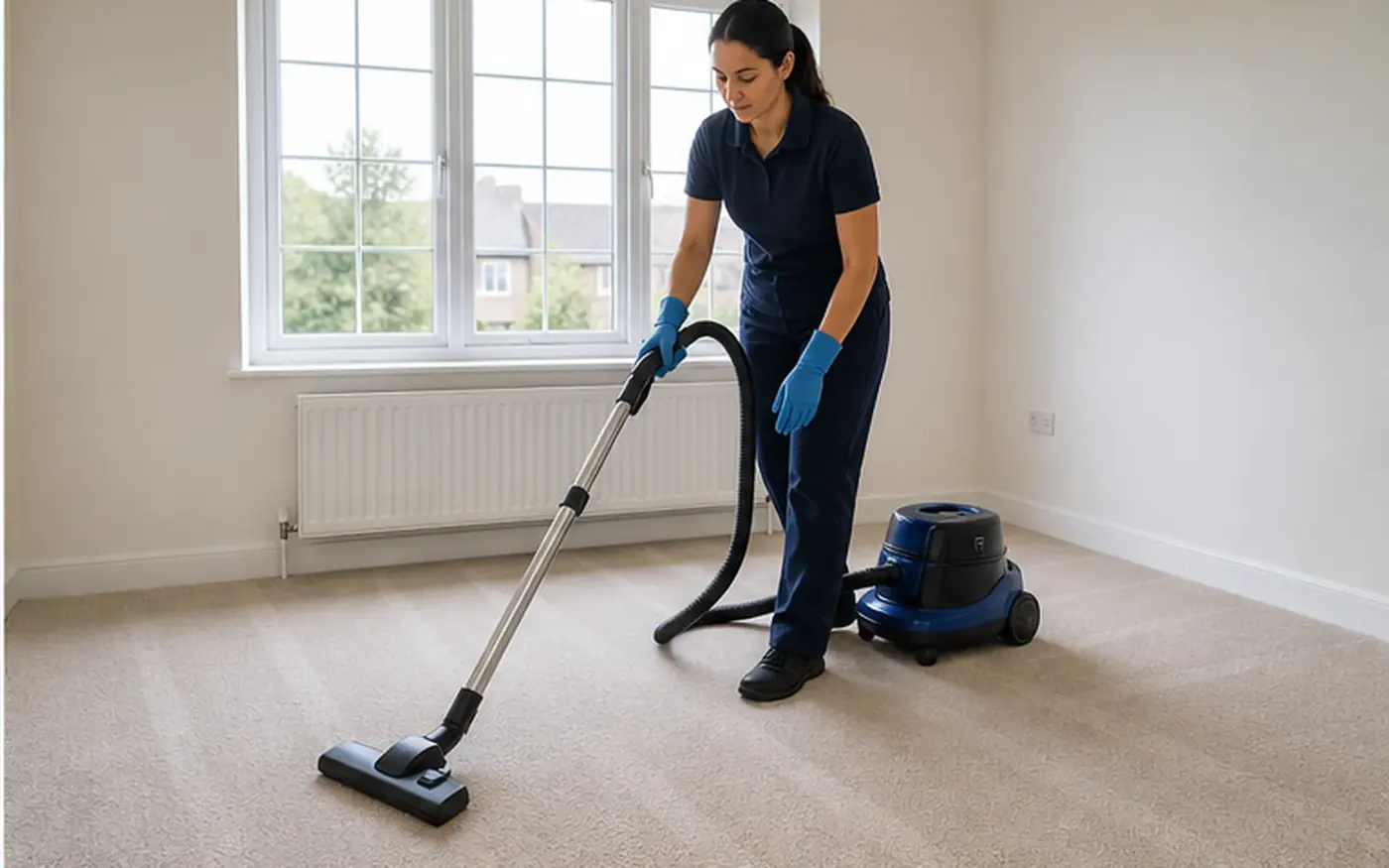
Why vacuuming and specialist treatment differ
Routine vacuuming and specialist fabric treatment are separate tasks. When requesting cleaning, explain whether you want attention to the exposed carpet generally, particular traffic routes or named spots. An ordinary room-cleaning brief should not be assumed to include extraction.
If you need a wider deep clean or a checkout service, have the carpet requirements itemised. That keeps the agreed treatment and drying arrangements visible instead of burying them inside a broad phrase such as all floors cleaned.
Hot water extraction can address soiling in suitable fibres, subject to assessment of the carpet and backing. It should be chosen for the material rather than assumed from the service name.
Stains need a history, not a promise
State the cause if known, when the mark appeared and what has already been applied. Send a close photograph and a view of the surrounding carpet. Do not apply several unfamiliar products before assessment in the hope that the team can undo their effects afterwards.
Some marks remain because the carpet has permanently changed. A successful soil-removal process does not reverse every dye loss, worn patch or damaged fibre. Ask which result is realistic for the actual mark and material, and keep an existing-damage record where a handover is involved.
| Concern | Distinction to discuss |
|---|---|
| Surface debris | Routine vacuuming requirement |
| Embedded soiling | Suitable specialist treatment |
| Pale worn patch | Possible fibre wear or colour loss |
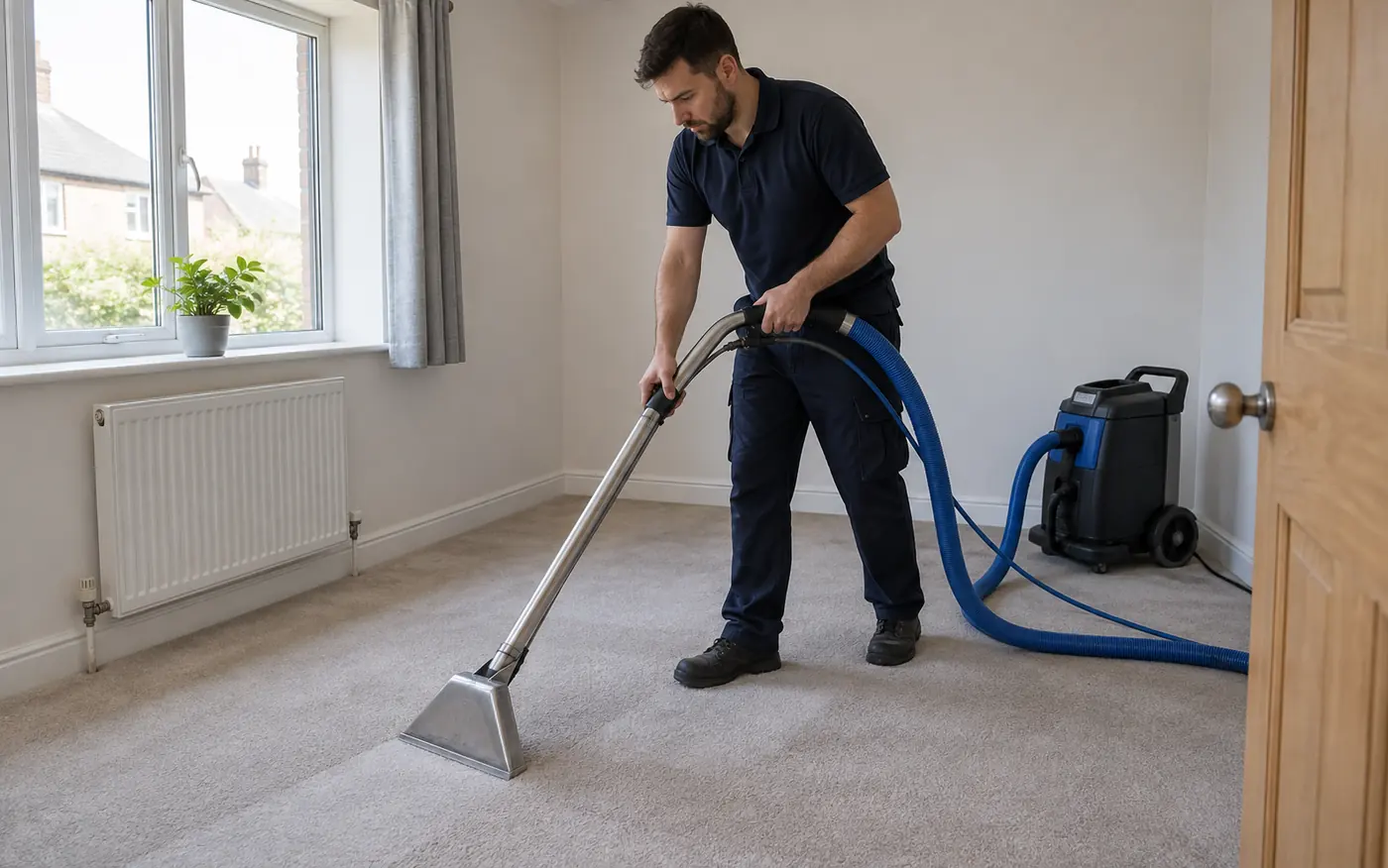
Preparing furnished and empty rooms
Clear small objects and loose cables, then identify furniture you intend to leave in place. Moving heavy or assembled pieces is not automatic. Discuss any proposed movement and whether the carpet underneath can be accessed within the accepted scope.
For an empty property, remove remaining packaging and explain any other trades or deliveries. A clear room can still have an awkward equipment route. Confirm the entry point, stairs, water and electricity requirements so the appointment is based on the space the team will actually be able to use.
Drying is part of the treatment plan
Ask about aftercare for the selected method, fibre and room conditions. There is no single drying interval that suits every carpet. Explain ventilation constraints and when people, pets or furniture need to return, then plan around the guidance provided.
At completion, make sure the person responsible for the property understands any restrictions. If an inspection follows, leave enough time to review the accepted work and manage drying. Do not treat a general estimate as confirmation that a particular carpet is ready for immediate heavy use.
Ealing: equipment access and an occupied home
Where vehicle space is necessary, check Ealing Council’s suspension guidance and the actual street restrictions. The council prohibits using bins or cones to reserve road space. A lawful route should be agreed before equipment is due at the door.
For a furnished home, decide where small belongings and people will be while each room is treated. Explain shared corridors, door-entry systems and stairs. Check the full postcode against our coverage guide, and keep someone reachable if a previously described stain or material needs clarification.
Read the price alongside named items
Use the current prices as background and request an itemised quote. The room list, stairs, rugs, condition and assessed treatment should be clear, together with applicable VAT and agreed access costs. A quoted room does not imply unlimited treatment of every possible mark.
If a chair or sofa also needs attention, request upholstery cleaning separately with fabric details. The armchair image illustrates that related service. If unwanted furniture must leave first, discuss clearance before the carpet appointment rather than expecting treatment around an item that will immediately be removed.
Before accepting, check who will review completion and who will receive aftercare if you are absent. Passing those instructions to the next keyholder helps keep the treatment plan useful after the equipment has left.
Practical answers
Questions about methods and materials
Can you choose a method from a room photograph?
Photographs help the initial discussion, but material, condition and suitability still need assessment. Supply labels and any known treatment history rather than assuming a universal method.
Why ask about products I have already used?
Earlier treatments can affect suitability and the achievable result. Give the product name if available and explain what happened after application.
Does cleaning fix a pale worn walkway?
Not necessarily. Wear and colour loss are changes to the carpet itself, while removable soil is a cleaning matter. Ask for a realistic assessment.
How should I prepare a rug?
List it as a separate item with dimensions, material and condition. Confirm suitability and preparation rather than treating it automatically as part of the room carpet.
Nearby areas
These nearby guides describe the same service in surrounding locations.
See our coverage guide and confirm your full postcode when enquiring.
Your next step
Ask the right questions before treatment.
Explain the materials, condition and access when speaking to End To End.