End To End · Abbey Wood
Deep Cleaning Abbey Wood
Not every difficult-looking mark needs the same response. Before an Abbey Wood deep clean, distinguish accumulated residue, material damage and specialist conditions so the booking addresses useful accessible work rather than an unrealistic promise to remove everything.
- Identify the condition behind each concern
- Use material guidance before strong treatment
- Keep mould and fabric work separately assessed
Describe the problem before choosing the intensity
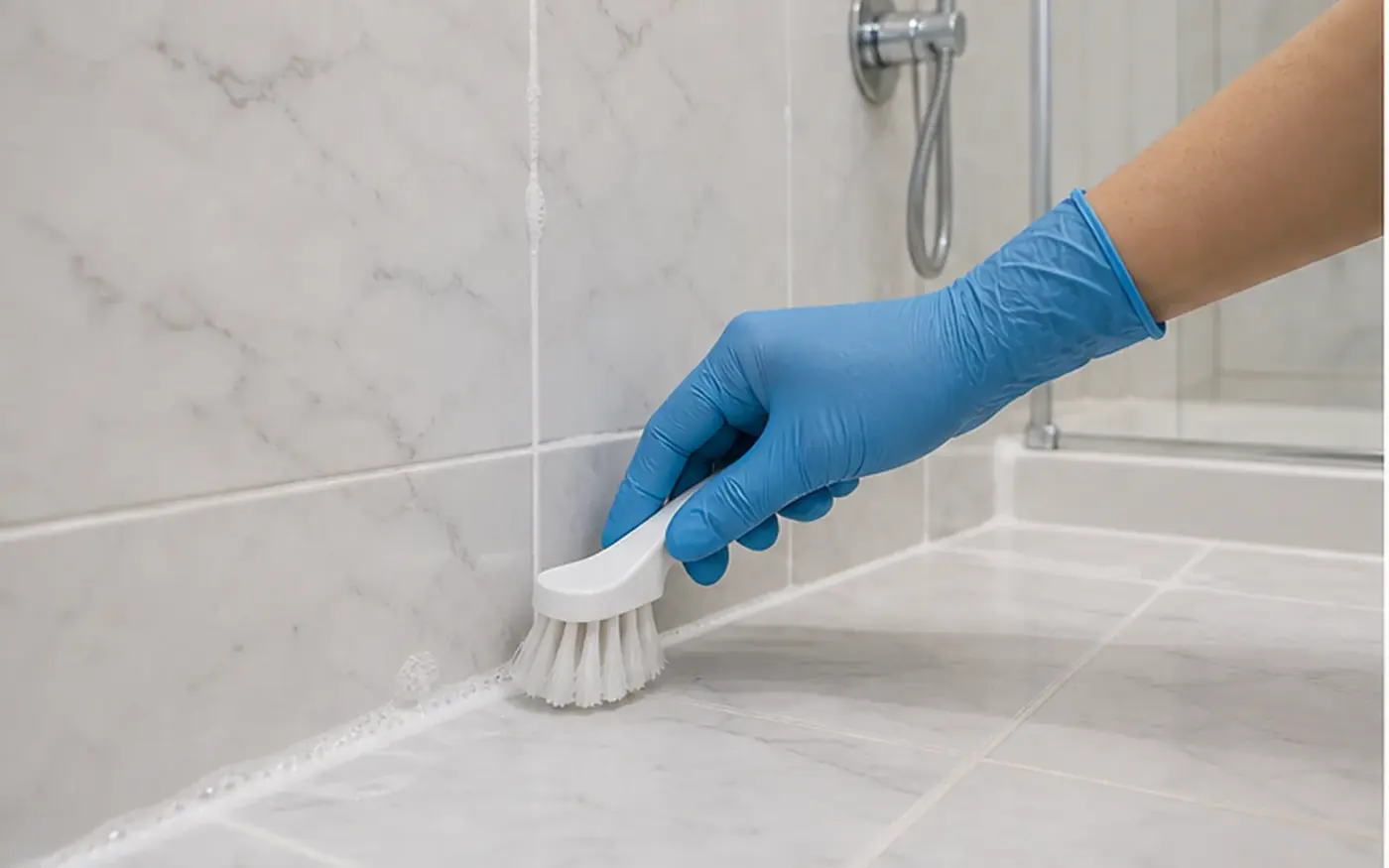
Start with the rooms and the specific areas that have built up residue. Show greasy fittings, dusty edges or bathroom deposits in photographs, identifying the underlying surface. Explain how long the area has been inaccessible or any previous cleaning attempts where known.
The deep-cleaning service focuses attention on agreed reachable tasks. It should not be understood as unlimited stain removal or an instruction to use stronger products everywhere. Condition, material and access establish a useful scope more reliably than describing the home as needing a total transformation.
Kitchen care begins with the finish
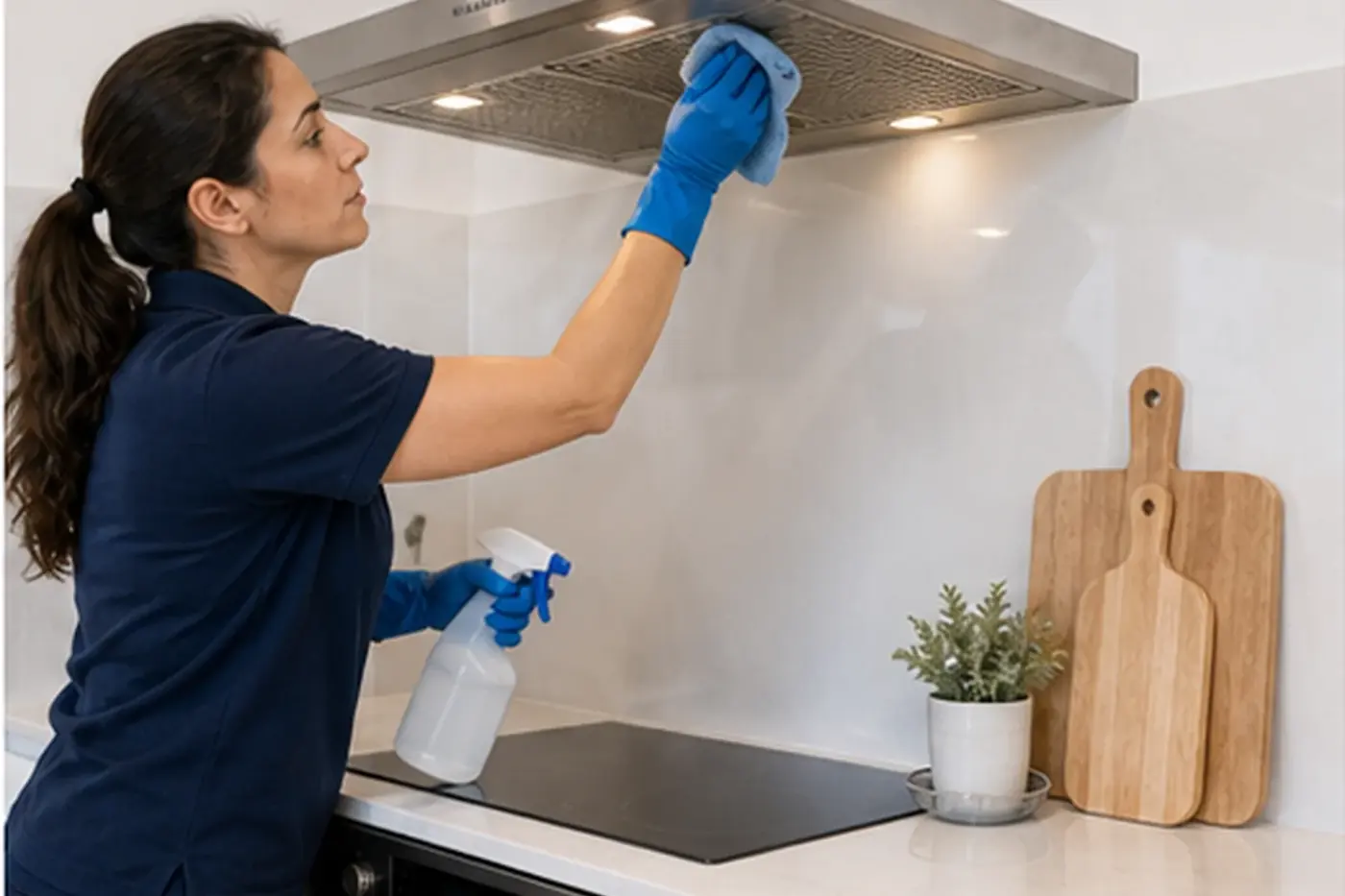
List worktops, splashbacks, sink, hob surfaces and accessible fronts. Ask for cupboard interiors individually and empty those accepted. Identify natural stone, timber, coatings or damaged edging with care information where available, rather than assuming a general-purpose treatment suits all of them.
Describe any product already used and the change it produced. A worn finish or swollen unit may remain after cleaning. For detailed oven work, specify the appliance type, accessible components and condition; a kitchen deep clean does not imply automatic dismantling of every appliance.
Bathroom residue and building issues need separation
Explain sanitaryware, taps, bath or shower, screens and reachable tile surfaces. Identify removable soap residue and deposits separately from etching, failed sealant or damaged grout. Cleaning can address suitable dirt but cannot replace a deteriorated finish.
Suspected mould or ongoing damp needs an assessed mould enquiry where appropriate, including photographs and known moisture history. Ordinary bathroom cleaning does not diagnose hidden causes or repair a leak. Keep those limitations visible in the brief instead of treating every dark mark as routine bathroom residue.
| Concern | Appropriate distinction |
|---|---|
| Greasy surface | Assess residue against its finish |
| Damaged material | Record separately from removable dirt |
| Suspected mould | Request an individual assessment |
Match floor and furniture requests to their services
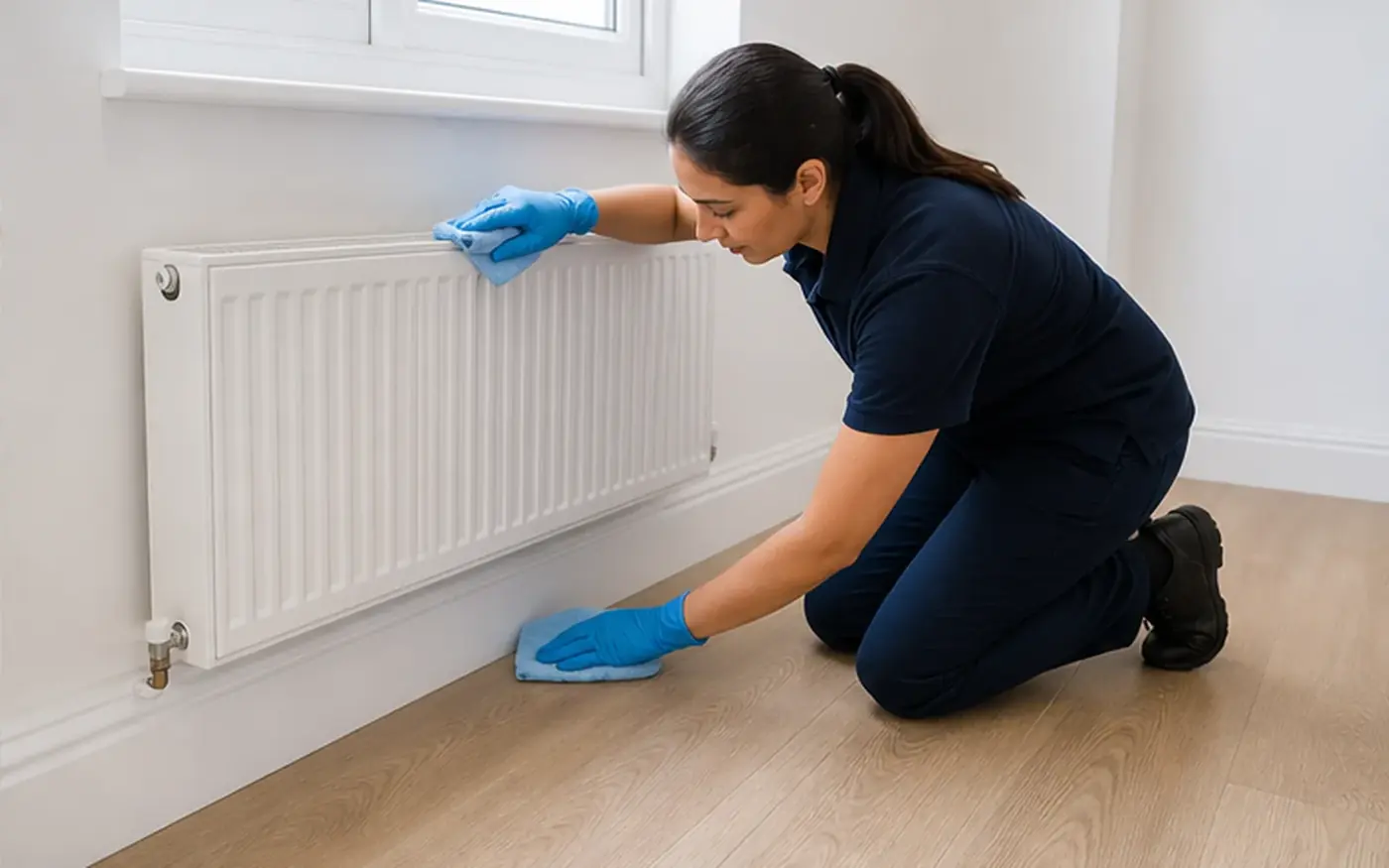
Agree suitable accessible floor cleaning and vacuuming within the deep-cleaning scope. Explain what furniture remains and which edges can be reached without heavy movement. High or restricted details need discussion rather than inclusion by implication.
For extraction or upholstered items, request carpet and upholstery cleaning separately with materials, areas and condition. Fabric suitability and drying introduce their own requirements. The same room can therefore contain ordinary cleaning tasks and separately assessed treatment, with each itemised instead of blurred into one room promise.
Abbey Wood preparation: check disposal locally
For a property served by Royal Greenwich, the council bulky-waste information lists accepted item categories and preparation conditions. Check the current arrangements directly if unwanted items need to leave before surfaces are accessible. Use the responsible council’s guidance for an address served elsewhere.
Keep the actual cleaning route clear after collection and report newly exposed residue. Disposal, organising possessions and cleaning are different tasks. A surface listed in the enquiry still needs to be available on the day; moving its contents into another accepted room may simply transfer the obstruction.
Prepare information as well as surfaces
Clear food, toiletries and personal items from the accepted areas. Keep water, power and lighting available, with working keys and any alarm instructions confirmed. Explain pets, delicate objects and building restrictions affecting the team’s access.
Keep a person reachable who knows priorities and material guidance. If this is checkout, share the tenancy checklist so the appointment matches the handover requirements. Check our coverage guide with the full postcode and arrange who will compare completed tasks with the agreed list.
Use the quote to document realistic work
Refer to the published pricing, then request a total for the condition, accepted tasks and additions. Clarify applicable VAT, agreed access costs and any assessment still required. A starting figure should not be read as a charge for unlimited time or every specialist method.
During review, identify a concern by material and location and distinguish it from damage or excluded work. Keep photographs and any care instructions available. Ask for the agreed reporting process, sharing the scope with another keyholder so later questions are discussed against the same accepted brief.
Take a wider photograph before moving possessions if it helps explain access. Then provide the cleared view where the agreed surface condition can be seen, making the intended preparation clear without disguising what remains inaccessible.
Practical answers
Questions about methods and materials
Does every stubborn mark need harsher treatment?
No. The underlying finish and cause matter. Share material and product history so suitability can be assessed instead of assuming strength determines the result.
Can deep cleaning replace mould assessment?
Mould should be identified separately with extent and moisture information. A routine room scope does not investigate hidden causes or certify unaffected materials.
Is carpet extraction ordinary floor cleaning?
No. Request it separately with fibre, area and condition details so suitability and drying can be considered.
What if my furniture collection changes?
Tell the team what remains and which surfaces are still accessible. The accepted scope may need review if the planned preparation cannot be completed.
Nearby areas
These nearby guides describe the same service in surrounding locations.
See our coverage guide and confirm your full postcode when enquiring.
Your next step
Ask the right questions before treatment.
Explain the materials, condition and access when speaking to End To End.