End To End · Anerley
Mould Removal Anerley
An inspection note mentioning mould should lead to a specific assessment request, not a stronger ordinary bathroom clean. For an Anerley handover, clarify the surface, extent and known history before agreeing any visible treatment around the checkout date.
- Inspection wording translated into a clear enquiry
- Cleaning separated from repair and responsibility
- Assessment and access planned before checkout
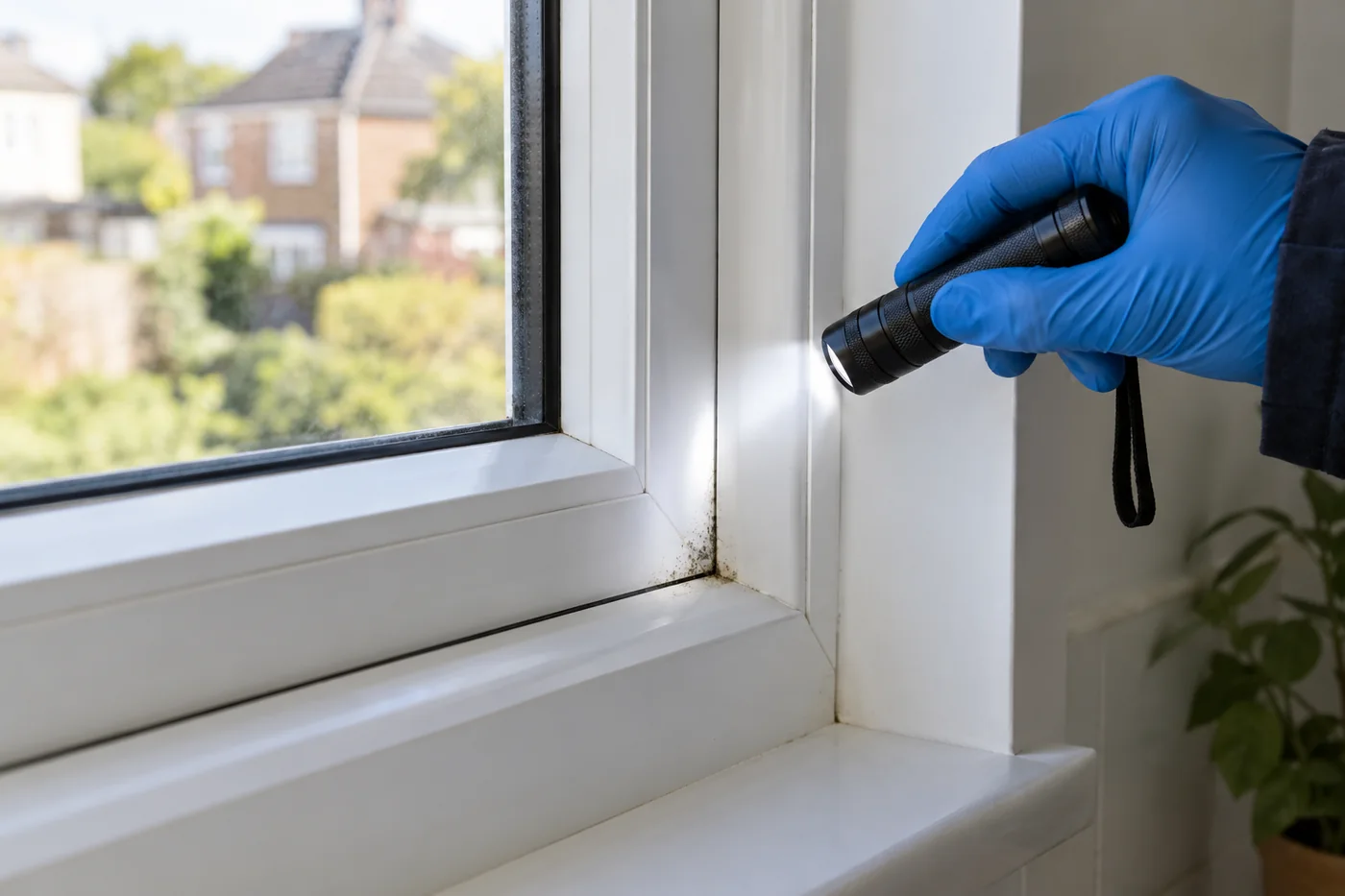
Find the location behind the inspection wording
Ask which room and surface the note refers to and obtain current photographs. Show the surrounding area as well as closer detail, with approximate dimensions. Explain what the surface appears to be made from and whether there is known deterioration. A short inspection phrase cannot establish a suitable treatment method or the full condition behind a finish.
For mould removal, the visible extent and material need assessment before a visit is accepted. State the handover date, but do not treat it as a guarantee that surface cleaning is appropriate within that time. Unclear, extensive or deteriorated conditions may require another professional rather than a rushed cosmetic response.
Separate an inspection concern from a tenancy judgement
Give the team factual observations and known history, keeping existing records intact. The cleaner should not be asked to decide who caused moisture, what deduction is appropriate or whether an agent must accept the result. The scope concerns suitable accepted visible work, not adjudicating responsibility for the property’s condition.
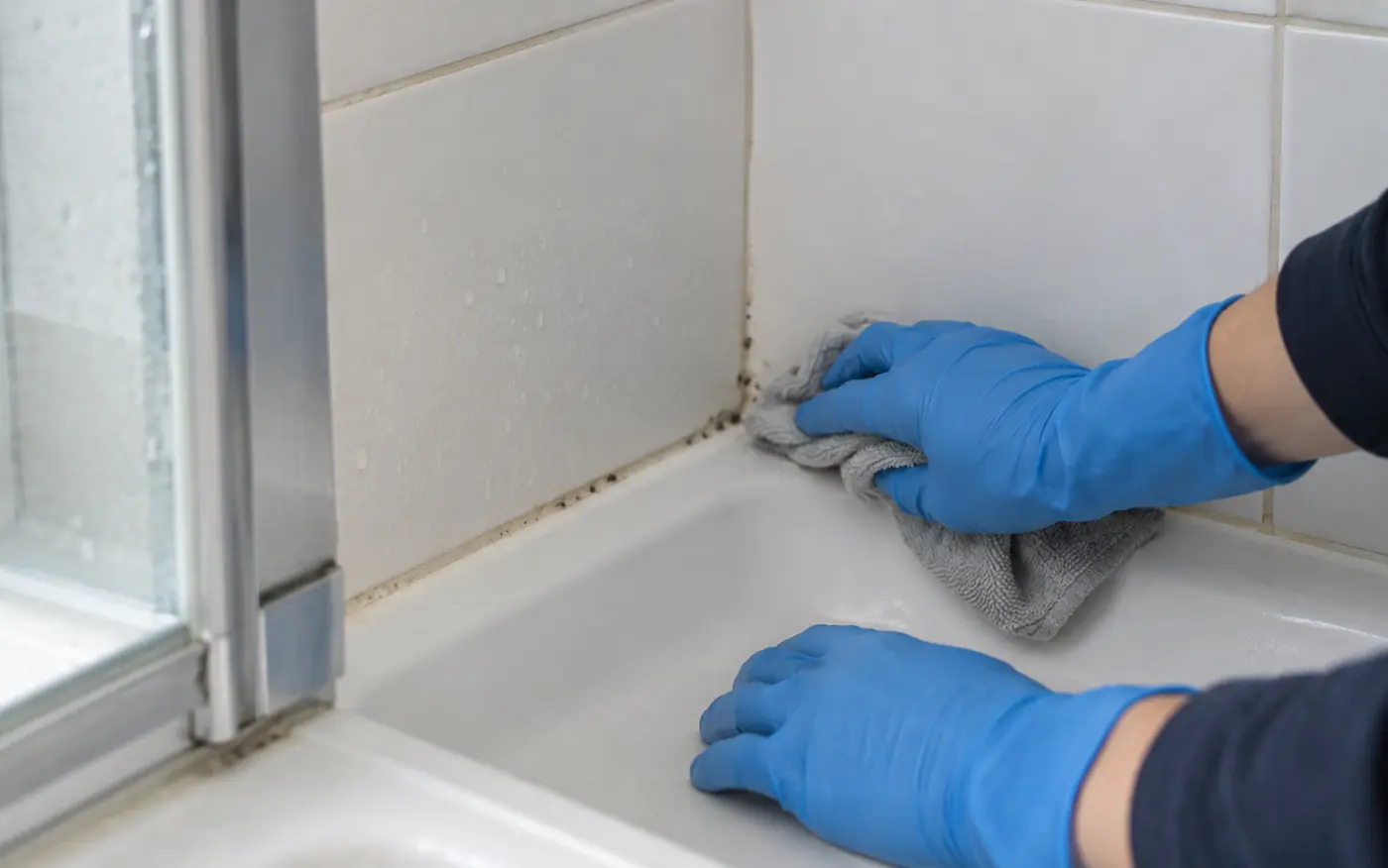
General tenancy cleaning can still have its own list of accessible dirt and residue elsewhere. Suspected mould should be identified separately rather than folded into scale removal or an undefined bathroom detail. That distinction allows each task to be assessed and prevents a routine cleaning label from implying a building investigation.
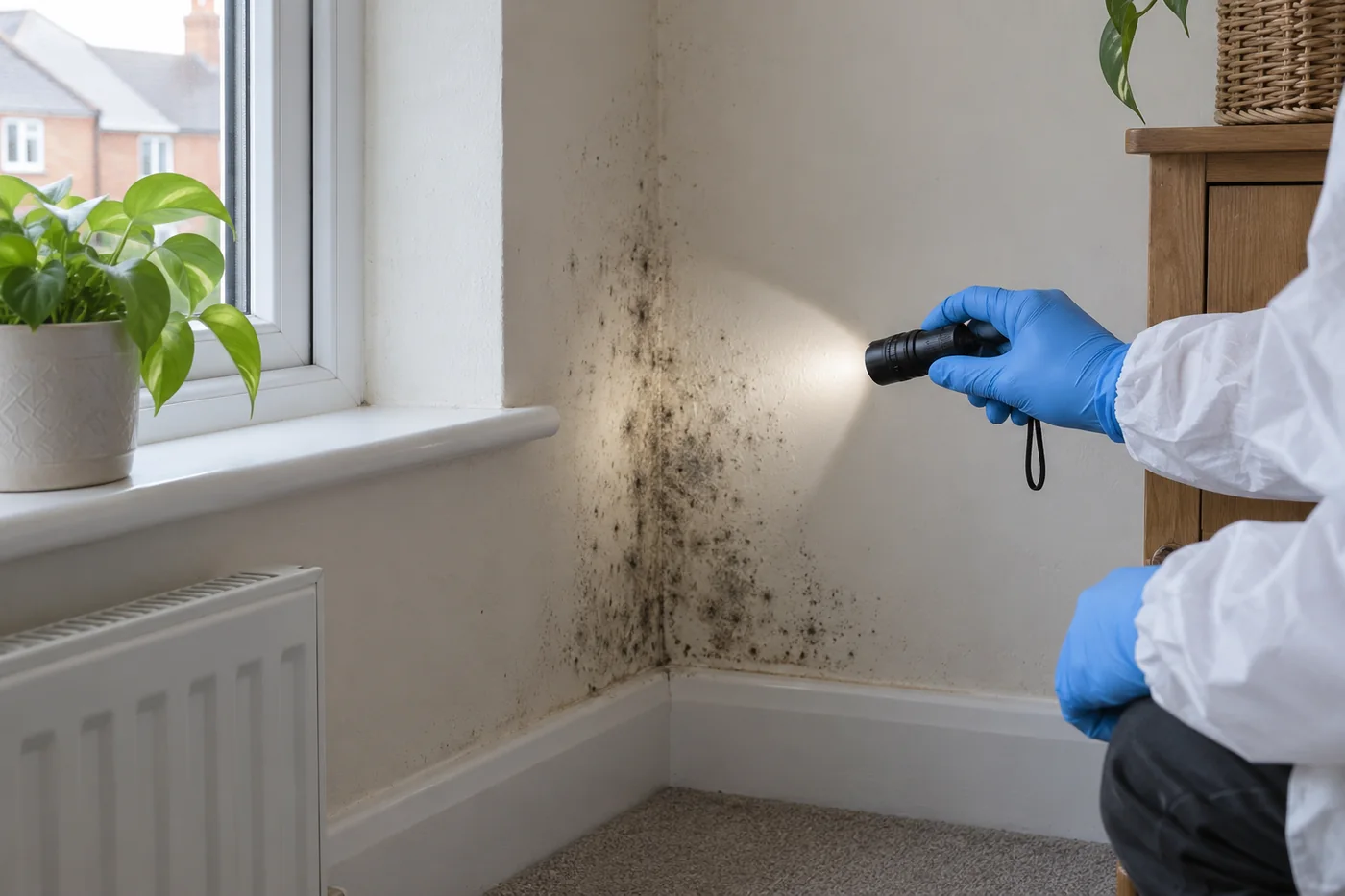
Assess what the finish can realistically tolerate
Identify tiles, silicone, painted plaster, timber or fabric where known and provide available care guidance. Describe visible gaps, peeling or deterioration without disturbing the material. Cleaning cannot replace failed seals, rebuild damaged plaster or restore every stained finish. An accepted treatment should state its limitations before it becomes part of the moving plan.
Hidden cavities and unsafe or obstructed access are not assumed part of a visible surface visit. Explain furniture and fittings around the concern. If another material or object is also affected, list it independently. A quoted treatment for one location does not automatically establish that every adjoining item can receive the same method.
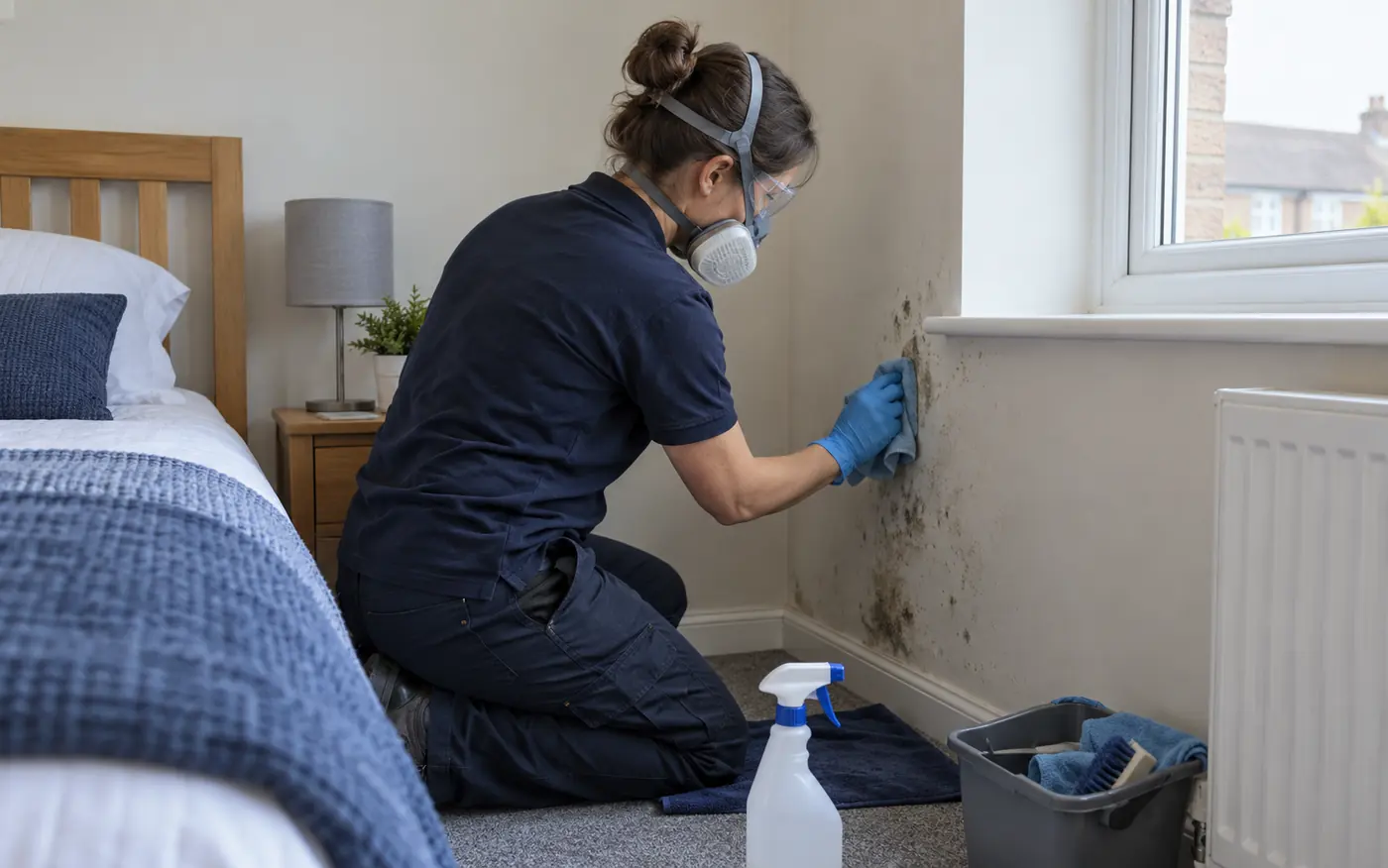
Coordinate the moisture question separately
Report any known leak, recurrence, water damage or previous products, and say what investigation or repairs are already planned. The government’s damp and mould guidance supports addressing moisture alongside visible growth. Appropriate property professionals may need to investigate causes that cannot be established from the enquiry photographs.
Keep that work distinct from the cleaning booking and give each contractor clear access information. A completed visible treatment does not certify a repaired source or rule out recurrence. The inspection deadline should be shared with the team, without asking it to promise an outcome about hidden material or the building as a whole.
Prepare only under the accepted instructions
Do not mix products, sand or paint over the area to prepare for inspection. Disclose what has already been applied. Ask how people, pets and belongings should be kept clear and what access must remain available. The contractor should determine suitable methods, controls and any required PPE for the assessed task.
For ordinary unaffected bathroom residue, discuss bathroom deep cleaning separately. Wider household soil can be considered through deep cleaning. Neither service should be treated as a substitute for mould assessment or a promise to replace materials and complete property repairs.
Understand the quotation before aligning the diary
The published mould-removal starting amount is £120. Extent, material, condition and access determine whether treatment can be accepted and what it would cost. Ask for the written total, applicable VAT, exclusions and agreed access charges. An inspection note alone is not enough to establish a fixed price for an Anerley property.
Update the team if the condition or access changes after photographs are supplied. Some staining or damage may remain even after appropriate treatment. No permanent-removal guarantee, medical conclusion or deposit assurance is implied. Review the accepted surfaces and limitations rather than an unsupported promise that every inspection concern will disappear.
Anerley keys, parking and the final record
For an address in Bromley, check the council’s permit and voucher guidance against the relevant street. Its schemes cover defined areas, and a cleaning booking itself creates no parking permission. Explain the lawful unloading route, keys and any actual building restrictions before confirming attendance.
Keep the accepted treatment record and separate investigation referrals together. If a later concern is raised, identify its own location and changes with photographs. Use coverage information for surrounding options, with availability and suitability confirmed for the address rather than inferred from the inspection timetable.
Practical answers
Checkout planning questions
Is an inspection note enough to book treatment?
Provide the exact location, current photographs, material and extent. The note explains a concern but does not by itself establish suitable accepted work.
Can the cleaner decide responsibility for damp?
No tenancy or liability judgement is implied. Supply observations and known history, with appropriate separate property investigation where required.
Should I cover the mark before checkout?
Do not paint, sand or chemically mix products as assessment preparation. Explain what has already been done and follow the accepted instructions.
Does the treatment guarantee agent acceptance?
No. Suitable visible work and its limitations are separate from an inspection decision, deposit assessment or certification of hidden material.
Nearby areas
Planning visits at more than one address? Check the page for each property.
See our coverage guide and confirm your full postcode when enquiring.
Your next step
Leave time for the final review.
Discuss the handover deadline and the accepted work before confirming your appointment.