End To End · Hampstead
Mould Removal Hampstead
If a mark returns after cleaning or decorating, the next useful step is a clearer history of the affected surface. For a Hampstead enquiry, explain what was done previously and what is visible now without assuming another surface treatment resolves the cause.
- Previous treatment disclosed
- Current extent documented accurately
- Cleaning distinguished from building investigation
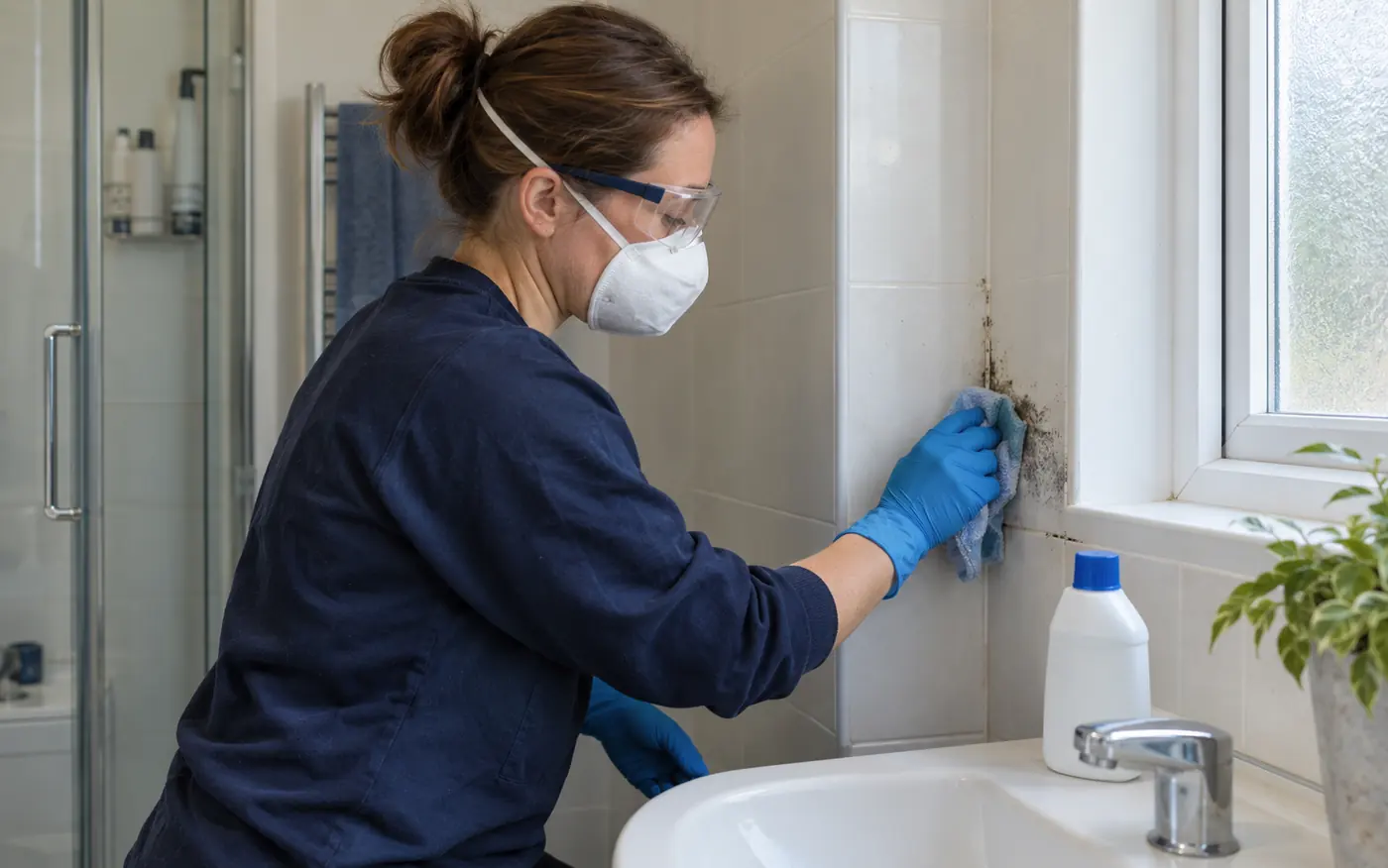
Use the recurrence history to explain the enquiry
Give the approximate date the condition first appeared, what treatment or decorating followed and when you noticed it again. Include the names of earlier products where known, without experimenting with another one before assessment. Photographs from different dates can be useful if they show the same location and enough surrounding context.
Our mould removal overview explains why suitable accessible surface treatment and the cause of moisture are different matters. Recurrence is information to share, not proof of one diagnosis. A cleaner’s enquiry should not turn a photograph into a structural finding or attribute the issue to an occupant’s behaviour.
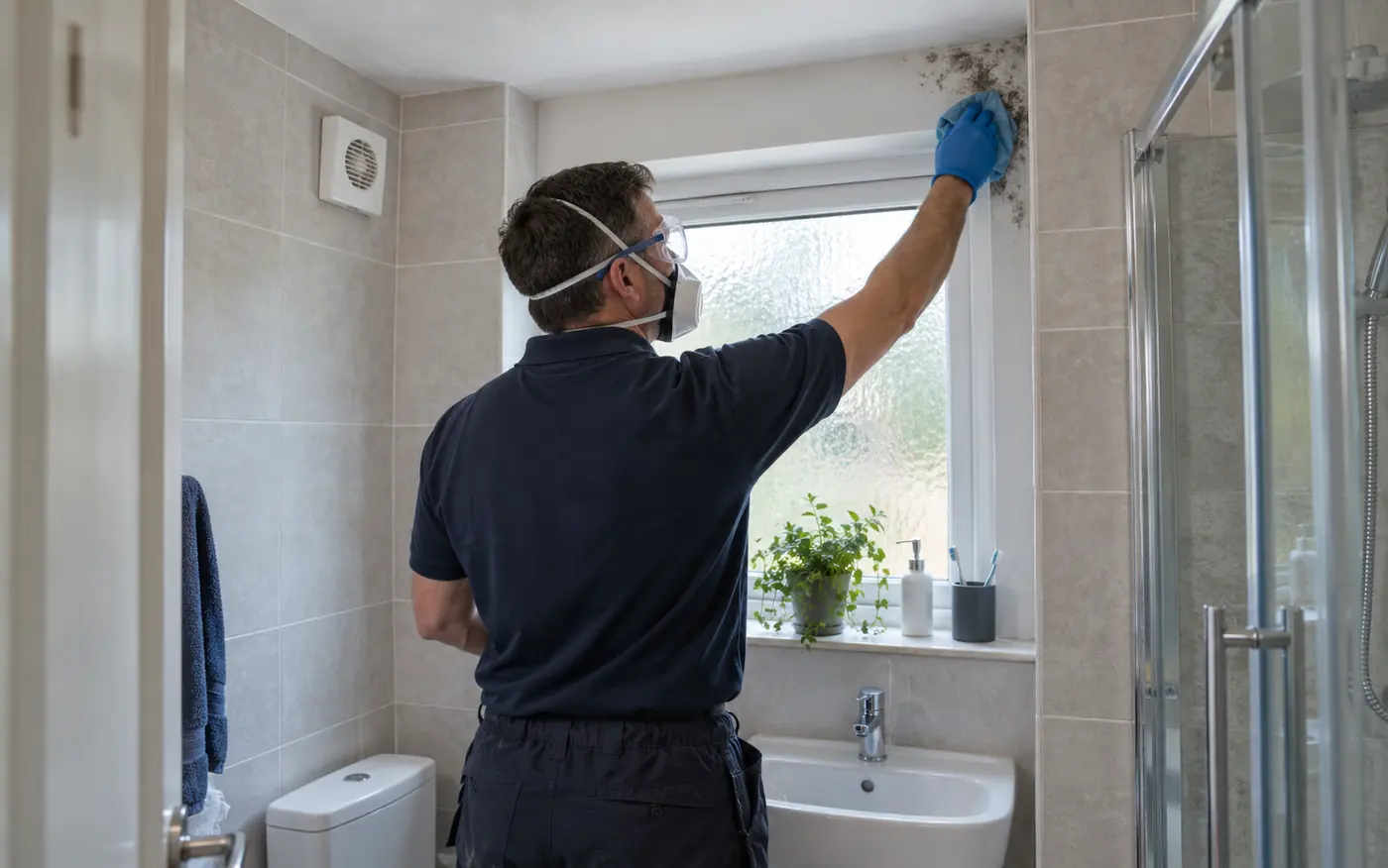
Inspect by observation, not by disturbing the finish
Describe the material as accurately as you can: tile, silicone, painted plaster, timber or something else. Say whether you can see peeling, gaps, softness or other deterioration, but do not scrape, lift or remove materials to answer the booking questions. A concealed layer may need a separate professional rather than more vigorous surface cleaning.
The condition of the finish can limit what treatment is appropriate. Cleaning does not replace failed seals or restore damaged plaster. Even a suitable visible treatment may leave staining or reveal that another trade is required. Keep those limitations explicit when discussing an appointment instead of expecting a new-looking surface as a universal outcome.
Why moisture and repair questions need their own assessment
If a leak, defect or persistent damp is suspected, explain what investigation has already been arranged and who is responsible for it. The government’s damp and mould guidance supports addressing the moisture issue alongside visible mould. Surface appearance alone cannot establish that the underlying condition is resolved.
Do not ask a cleaning confirmation to serve as a building survey, a medical assessment or a warranty against recurrence. Different professionals may need to examine plumbing, fabric or ventilation concerns. The cleaning brief should remain accurate about its accepted surfaces and limitations while those separate questions are investigated appropriately.
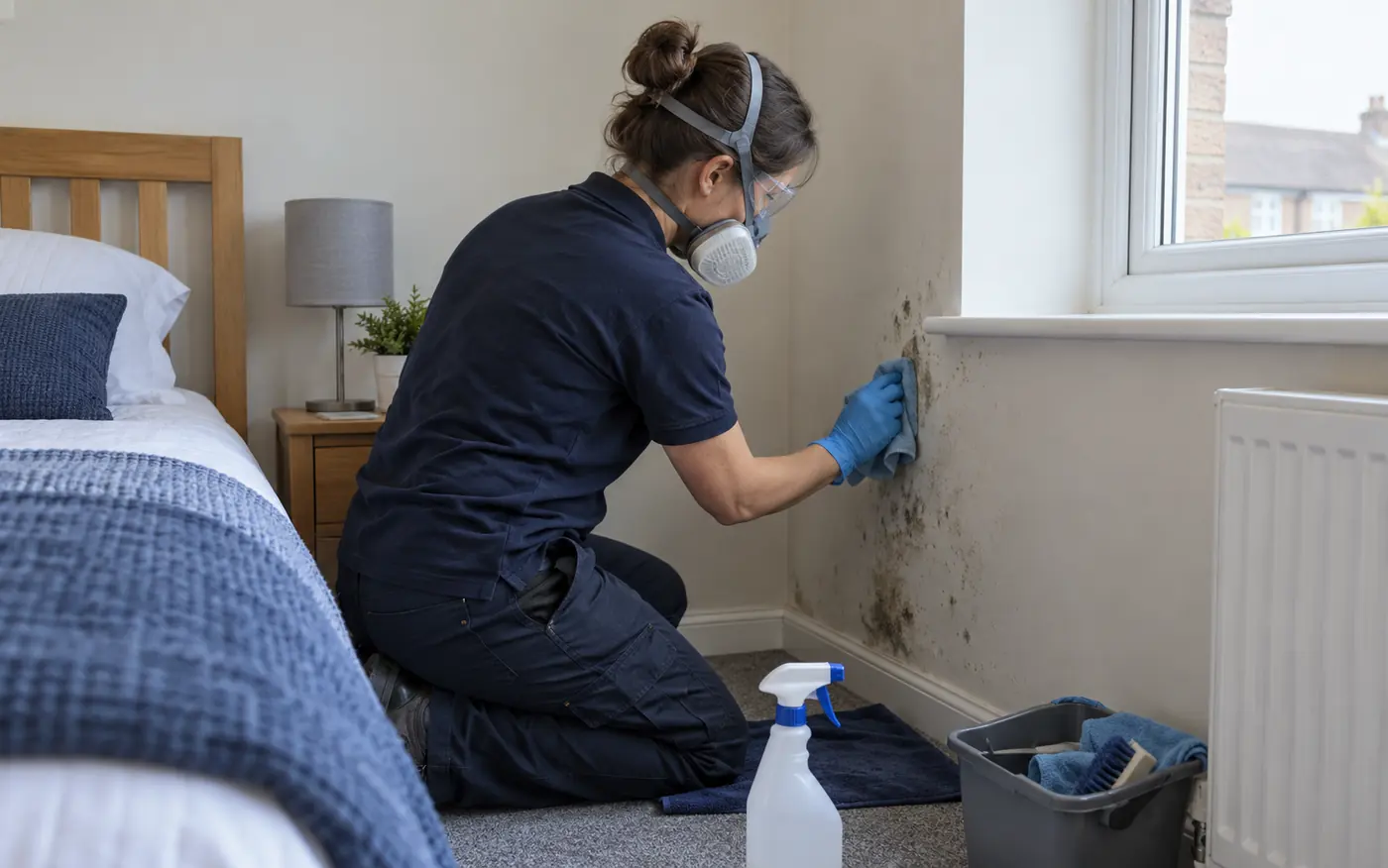
Prepare information before preparing the room
Send a wide view and closer photographs with approximate dimensions, keeping the location clear. Explain access behind furniture, room use and any affected belongings. If fabrics or stored objects are also a concern, list them separately. A surface-treatment request for a wall does not automatically accept every material in the room.
Wait for instructions about keeping people, pets and belongings clear. Do not mix chemicals, sand the area or repaint ahead of assessment. Suitable methods, exposure controls and any PPE must be determined for the actual task. HSE’s respiratory protection guidance provides context where respiratory protection is required, rather than one universal household mask recommendation.
Decide what other cleaning is actually needed
Ordinary residue elsewhere may be addressed through separately accepted bathroom deep cleaning or deep cleaning. Explain which surfaces are unaffected and which belong to the mould enquiry. This avoids treating an assessment concern as an unspecified extra in a general cleaning visit.
For a move, the tenancy scope can provide an ordinary room checklist, but it does not certify the condition of hidden building layers. Keep any appointment sequence practical and tell each contractor about relevant work already planned. The aim is a clear service brief rather than a single label covering cleaning, repairs and handover decisions.
Pricing must follow the assessed current condition
The published mould-removal starting price is £120. A return of visible marks does not establish the price or suitability of another visit. Extent, materials, condition and access must be reviewed from the current enquiry, with limitations stated. Ask whether more information or another property assessment is needed before treatment can be accepted.
Request a written total including applicable VAT and any agreed access charge. Confirm which surfaces are included and how the result will be reviewed. No permanent-removal guarantee or hidden-mould certificate follows from paying for a surface treatment, and repair of the moisture source is not an implied part of the price.
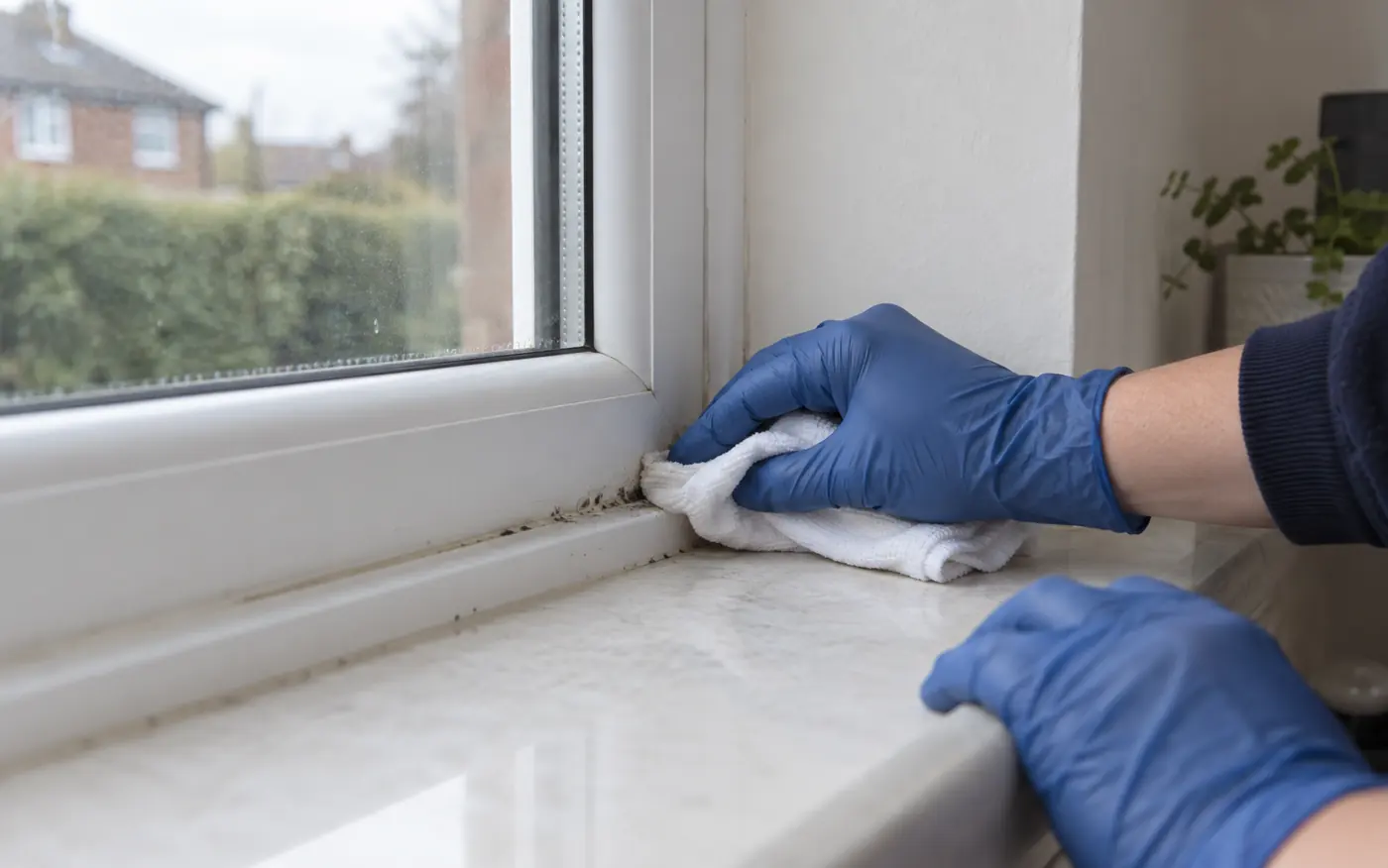
Hampstead access and a record for future enquiries
For an address in Camden, consult the council’s permit and parking guide to identify the appropriate arrangement for equipment access or keeping a bay clear. Confirm keys and building instructions directly, with the actual route described before the visit.
After accepted work, keep the treatment scope, limitations and any separate investigation notes together. If the condition changes again, report the location and new extent accurately. Use the site’s coverage guide for nearby options while confirming availability for your own address; a previous appointment does not establish that the next enquiry has the same suitable scope.
Practical answers
Questions about methods and materials
Does recurrence prove the previous clean was unsuitable?
Not by itself. Explain the material, moisture history and earlier treatment so the current condition can be assessed without assuming a diagnosis from recurrence alone.
Should I peel back paint to show the extent?
Do not disturb the finish to investigate for a booking enquiry. Describe visible observations and arrange further professional assessment where needed.
Can you work over a recently painted surface?
Tell the assessor what was applied and when, with care information if available. Suitability cannot be assumed simply because the finish now looks new.
Can a cleaner certify the cause is fixed?
No building diagnosis or repair certification is implied. Visible surface treatment and an appropriate investigation of the moisture source are separate matters.
Nearby areas
These nearby guides describe the same service in surrounding locations.
See our coverage guide and confirm your full postcode when enquiring.
Your next step
Ask the right questions before treatment.
Explain the materials, condition and access when speaking to End To End.