End To End · Barnet
Oven Cleaning Barnet
A suitable oven-cleaning plan begins by asking what the appliance is made to tolerate. For Barnet, use care information, visible condition and component access to decide what can be assessed, instead of treating every dark patch with the same approach.
- Check the manufacturer’s care restrictions
- Describe cooking surfaces and special functions
- Keep treatment separate from appliance diagnosis

Routine wiping and detailed oven treatment are different briefs
A wipe of the outside handle does not describe the work needed for the cavity, glass and shelves. Identify where deposits sit and show the whole appliance as well as closer views. Say whether a separate grill, smaller oven or other cooking compartment is involved.
The oven service should be defined by the accessible components and their suitability. It does not automatically cover every specialist function, removable panel or adjoining appliance. If the cooker has features you are unsure how to prepare, provide its model information rather than choosing a method from a different appliance.
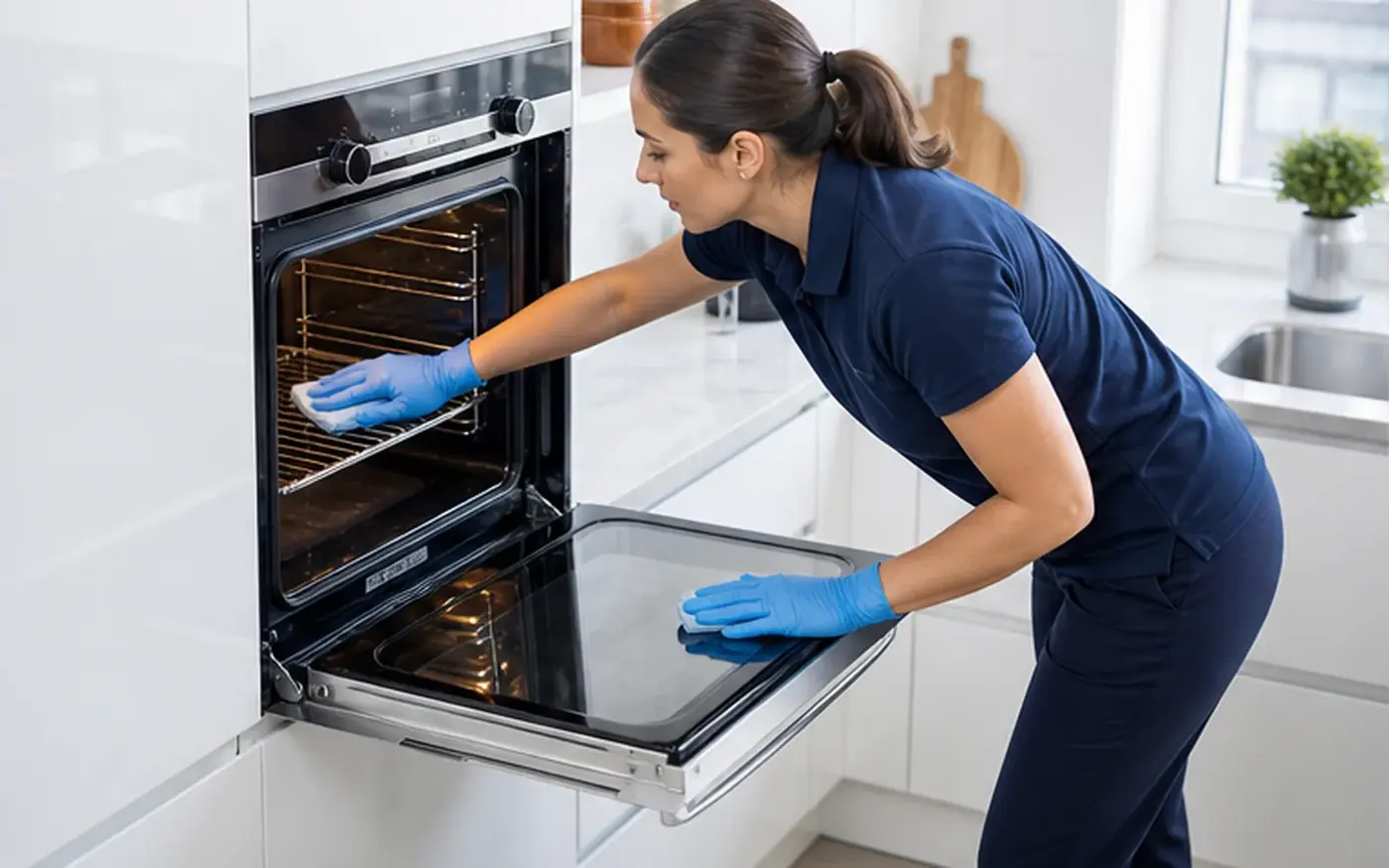
Read the lining and accessory guidance together
Some cavities contain specialist panels or coatings that have particular care restrictions. Provide manufacturer instructions where available and point out any damaged area. A dark finish does not by itself distinguish a designed lining from cooking residue, and cleaning cannot reconstruct a coating that is missing.
Check loose items too. A wire shelf, coated baking tray and grill pan can have different finishes and wear. List each accepted component with photographs. Do not soak or scrape an uncertain accessory simply because it fits inside the same oven as another part that appears more robust.
Questions worth resolving before treatment
| Question | Information to supply |
|---|---|
| What is the cavity finish? | Model, care instructions and clear interior view |
| Where is the glass mark? | Accessible face or apparent space between panes |
| Are extra functions involved? | Manufacturer preparation guidance and requested scope |
| What is already damaged? | Finish wear, seal condition and loose parts |
| What has been applied? | Previous products and remaining residue |
Uncertainty should be explained before booking. It is more useful than an unsupported assurance that every part can receive one standard process.
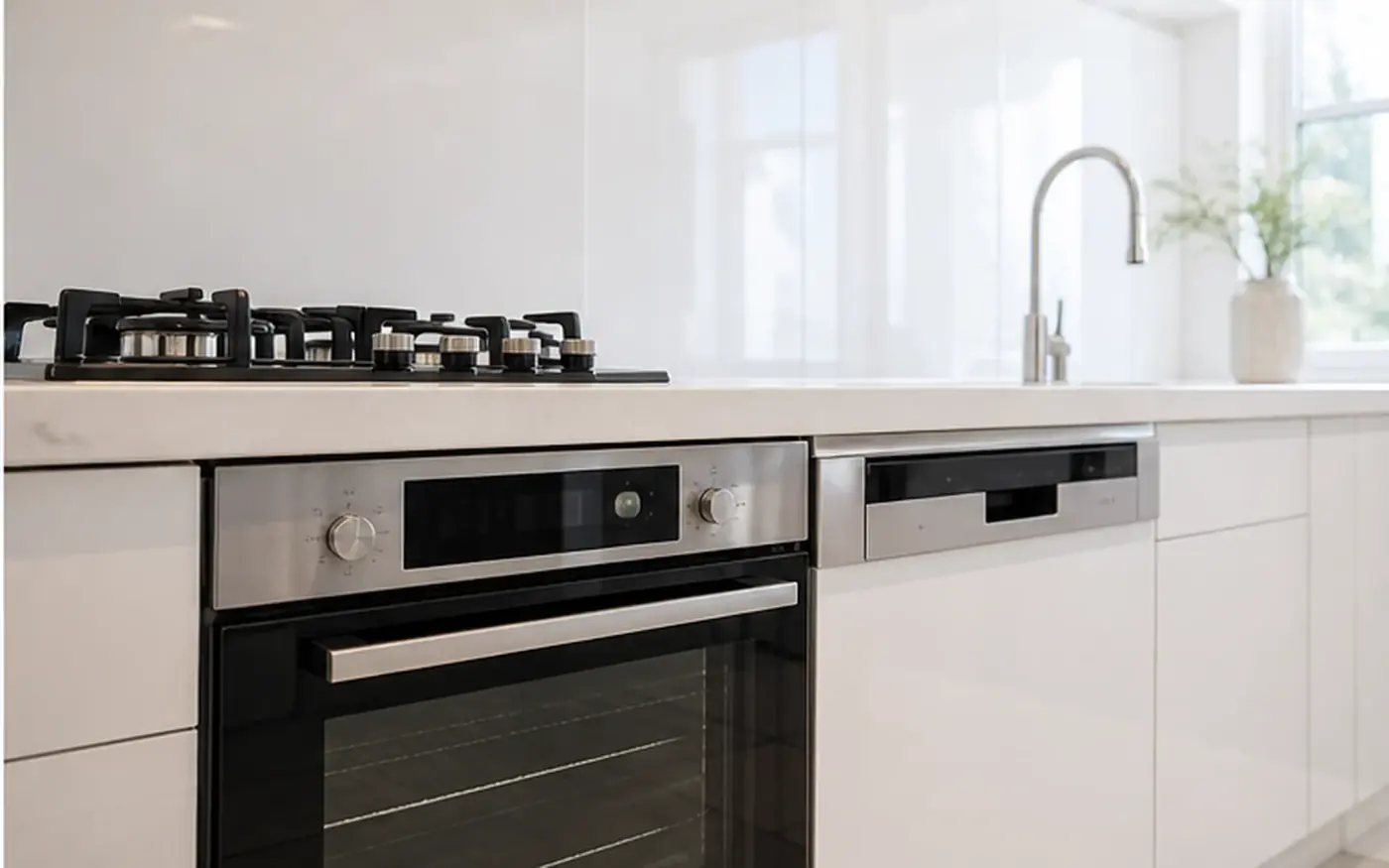
Cooling and access are practical requirements
Finish using the oven early enough for it to cool and remove food and unrelated cookware. Clear the approach and nearby breakables. Keep accepted loose accessories identifiable, along with any useful care information.
Do not dismantle the door or remove an integrated unit to improve access for an ordinary cleaning enquiry. Explain the restriction instead. Report an operating fault before the appointment; the visit is not a diagnosis, gas-service task or electrical-safety inspection. If another household member will be present, ensure they know the agreed limits and can contact the authorised booking person.
A starting price does not remove the assessment
Oven cleaning is published from £69. The final amount needs the appliance size, cavity count, condition and accepted components. More accessories or another cooking chamber should be described in advance rather than treated as automatic additions.
Ask for the complete figure, applicable VAT, exclusions and agreed access charges. Hob and extractor requests need their own details. If the concern is grease across kitchen cupboards and surfaces, discuss kitchen deep cleaning; a wider household clean has a separate task list and price.
Barnet vehicle access needs the applicable permission
Barnet Council describes a contractor permit with eligibility requirements and directs drivers to street signs for zone information. Do not assume an enquiry or a resident’s own permit establishes the contractor’s entitlement to park.
Agree a lawful unloading route and explain how equipment reaches the kitchen. Provide full entry instructions and a reachable contact if access is controlled by somebody else. Use coverage information for another address and supply that property’s own equipment and access details.
Check the accepted result and subsequent-use guidance
At completion, inspect the agreed cavity surfaces, glass and accessories. Ask about permanent marks or restricted components rather than assuming another stronger treatment would be suitable. Receive the instructions relevant to the actual product and appliance before cooking resumes.
For a move-out appointment, identify detailed oven work in the tenancy-cleaning request and leave time for review before handover. Cleaning cannot repair chipped enamel, a damaged seal or a faulty control. Keep a specific cleaning concern distinct from those maintenance issues and from any landlord or inventory decision.
Practical answers
Questions about methods and materials
Can every oven part be treated like its shelves?
No universal equivalence should be assumed. Liners, coatings and loose accessories can have different care restrictions and condition limits.
Should I detach panels to reveal the residue?
Do not dismantle unfamiliar parts for an ordinary enquiry. Show accessible views and provide the model so permitted access can be assessed.
Does a cleaning price include appliance diagnosis?
No. Report faults beforehand and seek appropriate repair advice. The accepted appointment concerns cleaning, not certifying operation.
What if the care manual cannot be found?
Explain the missing information and send the model and clear photographs. Do not replace unavailable guidance with a guessed material or treatment.
Nearby areas
These nearby guides describe the same service in surrounding locations.
See our coverage guide and confirm your full postcode when enquiring.
Your next step
Ask the right questions before treatment.
Explain the materials, condition and access when speaking to End To End.