End To End · Bayswater
Oven Cleaning Bayswater
Door glass, shelves and a lined cavity are not one interchangeable surface. Use this Bayswater oven-cleaning guide to describe the materials, deposits and accessible components, then discuss a suitable scope without confusing cleaning with appliance repair.
- Describe where deposits sit and what surrounds them
- Provide model and finish information where available
- Confirm accepted parts and preparation limits
The visible mark is only one part of the question
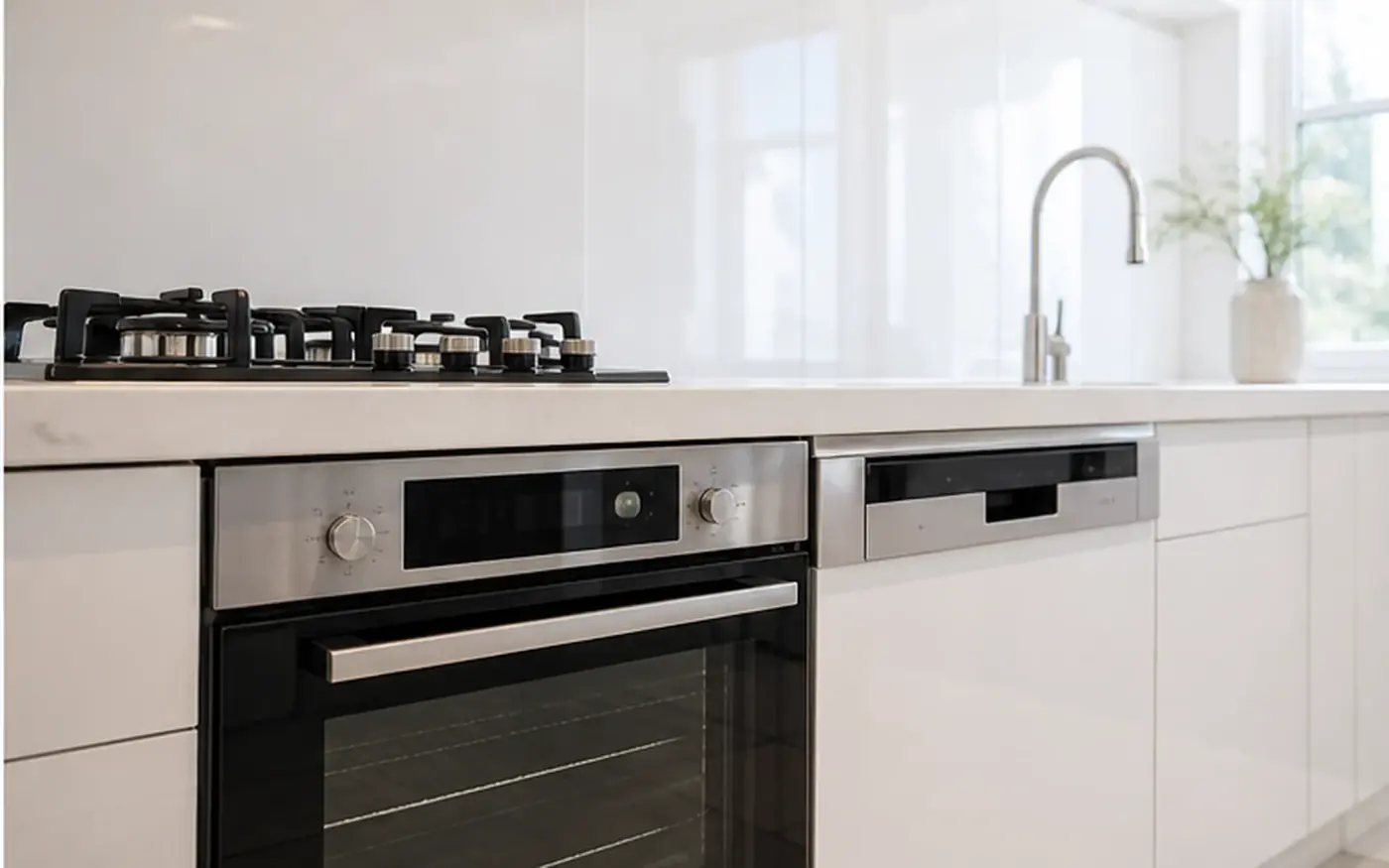
A dark area could be cooking residue, an intended lining or deterioration of a finish. Photograph the entire cooled cavity and close views without scraping or dismantling it. Supply the model and any care information you have so the surface can be discussed with context.
The oven service focuses on suitable accepted components. It does not promise a universal process for every liner or a restoration of worn enamel. Explain when the mark appeared and earlier products used, while acknowledging any part of the history you do not know.

Door access depends on the assembly
Identify whether the concern is on the inside face, the exterior or apparently between glass layers. A photograph with the door in its normal open position can help explain that location. Include visible damage and any loose part in the description.
Removal of glass or panels is not an automatic feature of every booking. Design, fixing condition and permitted access need assessment. Do not detach unfamiliar parts or try a blade on a sensitive surface before the visit. Cleaning can address accepted residue but cannot remove a scratch or rebuild a damaged coating.
Accessories require their own finish description
| Item | Detail to provide | What not to assume |
|---|---|---|
| Wire shelf | Quantity, deposits and plating condition | Unlimited extra shelves included |
| Coated tray | Material guidance and visible wear | The same treatment as plain metal |
| Grill pan | Separate compartment and component list | Automatic inclusion with the main cavity |
| Other loose part | Purpose, material and manufacturer care | Suitability based only on appearance |
Keep components associated with the correct appliance if there is more than one cooker. Ask which items are accepted before calculating a final amount.

Preparation should preserve a useful assessment
Stop cooking in time for the appliance to cool and remove food and personal cookware. Clear breakables and the floor route. Leave the accepted components available and manufacturer guidance accessible to the person supervising the visit.
Do not run a self-cleaning function or apply another strong product merely because the cavity looks dirty. Ask for the appropriate preparation first. Report known faults before booking; cleaning is not gas work, electrical diagnosis or an operating-safety inspection. Fitted equipment is not automatically moved or disconnected to reach hidden areas.
Price the defined treatment rather than an assumed result
The published oven-cleaning starting amount is £69. Appliance size, chamber count, condition and accessories affect the confirmed quote. A guarantee that every permanent mark disappears is not part of applying an entry price.
Check applicable VAT, agreed access costs and exclusions within the full total. Hobs and extractors need named requests. If the problem extends to cupboards and kitchen fittings, compare kitchen deep cleaning; a whole-home deep clean is another scope, not an assumption that every appliance component receives specialist treatment.
Bayswater parking: verify the address and purpose
For a Westminster address, the council’s trade-permit guidance distinguishes a working visit from simply loading or delivering. Confirm the authority and restrictions using the full address rather than relying on a Bayswater area label.
Explain the equipment route from lawful unloading to the kitchen, including stairs and controlled doors. Keep a contact available for access questions. Our coverage information can help with another address, but each property needs its own entry and appliance details.
Review treatment and the subsequent-use instructions
Check the listed cavity surfaces, accessible glass and accepted accessories. Ask about remaining marks and restrictions while the brief is available. Follow the actual aftercare before cooking resumes instead of copying a waiting interval from a previous appliance visit.
If preparing for a tenancy handover, identify detailed oven treatment within the tenancy-cleaning agreement. Keep review access before key return and pass instructions to the next user. Cleaning does not certify operation, repair a failed seal or decide an inventory assessment.
Practical answers
Questions about methods and materials
Are between-pane glass marks always reachable?
No. The door design, fixings and condition determine whether access can be assessed and accepted. Identify the mark’s location before booking.
Can a coated tray be treated like a wire shelf?
Do not assume that. Provide the material guidance and condition for each accessory so suitability can be discussed.
Should I run a self-cleaning cycle first?
Follow appropriate manufacturer and booking guidance rather than running a function simply as preparation. Tell the team about any recent cycle or product.
What if a dark area is damaged lining?
Cleaning cannot restore missing material. Show the condition and ask which surfaces and limitations can be accepted.
Nearby areas
These nearby guides describe the same service in surrounding locations.
See our coverage guide and confirm your full postcode when enquiring.
Your next step
Ask the right questions before treatment.
Explain the materials, condition and access when speaking to End To End.