End To End · Whitechapel
Oven Cleaning Whitechapel
Know the surfaces before choosing the treatment. An oven in Whitechapel may have coated liners, several glass layers or removable accessories, so a useful cleaning plan starts with appliance instructions and photographs of the actual residue.
- Understand cavity finishes and door construction
- Distinguish accessible grease from permanent damage
- Plan preparation and aftercare around the appliance
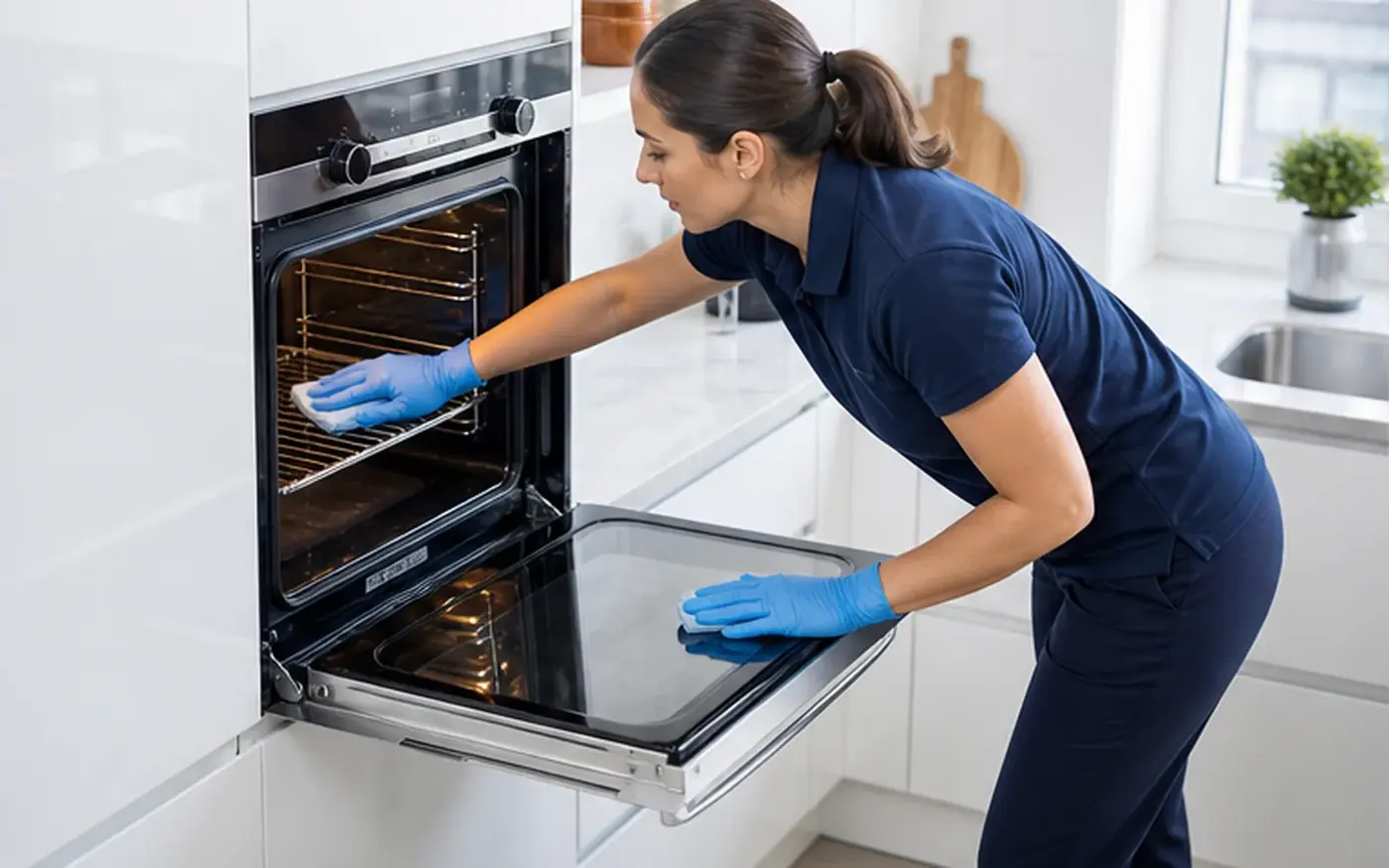
Why the interior finish matters
The cooking chamber is not necessarily one uniform washable surface. Standard enamel, catalytic panels and other specialist linings can have different care restrictions. Send the model information or manual where available and photograph the sides, back and base without taking the appliance apart.
The main oven service guide explains the accepted scope to discuss. A suitable method should follow the material and condition, not the strength of the visible residue alone. Mention chips, flaking and corrosion early: cleaning cannot replace a protective finish that has already deteriorated.

Door glass: identify where the mark sits
Look at the cooled appliance with the door in its normal open position. Is the grease on the accessible inner face, the exterior face or between separate panes? Describe that location and supply a photograph. These are different access questions, even when the mark looks similar from outside.
Permitted glass removal depends on construction, fixings and condition. Dismantling should only happen where assessed and agreed; it is not a universal feature of an oven booking. Clouding, scratches and damaged coatings may remain because they are not removable surface deposits. Do not use a blade or abrasive pad to test an unfamiliar finish yourself.
Accessories and adjacent equipment are different tasks
| Item | Describe before booking |
|---|---|
| Wire shelf | Quantity, residue and damaged plating |
| Baking tray | Size, coating and visible wear |
| Grill compartment | Separate cavity and accessible surfaces |
| Hob | Fuel or surface type and condition |
| Extractor | Accessible exterior, filter request and material |
Ask which items are accepted and how they are priced. A non-stick tray should not be assumed to tolerate the same approach as a plain metal rack. Leave unfamiliar fittings in place until the team has reviewed them.
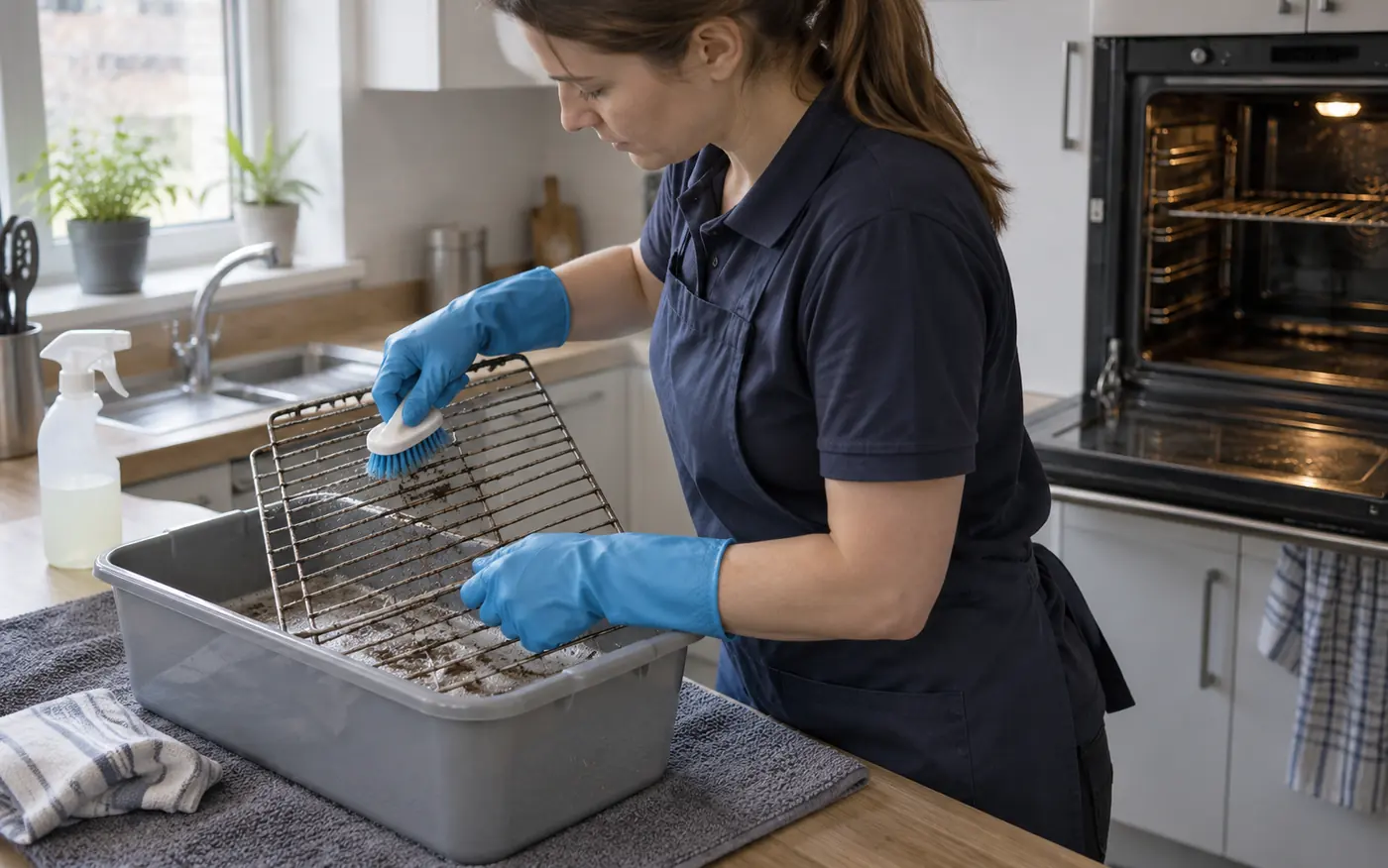
A practical preparation sequence
Stop cooking early enough for the whole appliance to cool. Remove food and unrelated cookware, clear the floor in front and create a nearby working area without fragile objects. Keep any care information at hand and explain previous treatments, including household products or a recent self-cleaning cycle.
Confirm what utilities and access are required for the accepted work. The visit is for cleaning, not disconnection, gas work or moving a heavy integrated unit. If a fault is known, report it before the appointment rather than asking the cleaner to investigate it while handling the appliance.
Understand the quote and the limits
The oven-cleaning starting price is £69. Cavity count, size, cooking residue and listed components affect the final quote. Do not use the entry figure as a fixed allowance for a double oven, hob and hood combined.
Get the total, applicable VAT and agreed access costs in writing. Ask for any exclusions involving liners, between-pane glass or damaged parts to be noted. If the oven is included within tenancy cleaning, confirm exactly which level of appliance work has been accepted. An explicit limitation is more helpful than an expectation of a factory-new appearance.
Whitechapel preparation if old items are being removed
If a kitchen clear-out accompanies the visit, arrange unwanted furniture and bulky possessions first. Tower Hamlets Council’s bulky-waste guidance says collectors cannot enter properties. Residents in flats should check appropriate ground-floor collection arrangements with the caretaker or managing agent where needed.
This is separate from oven cleaning and should not obstruct shared routes or the kitchen entrance. For a private clearance request, confirm accepted materials and charges in advance. Check coverage using the address actually requiring service.
Review the appliance without confusing services
Inspect the accepted racks, accessible cavity and glass once the work is finished. Ask about remaining marks and the reason for any untreated surface. Follow the specific aftercare guidance before using the oven; the appropriate interval depends on the agreed method and appliance instructions.
Surrounding cupboard fronts, worktops and grease on kitchen fittings can be discussed under kitchen deep cleaning. A broader property deep clean serves a different brief again. Decide which problem each booking will address so the appliance visit does not become an undefined renovation or whole-room project.
Keep loose accessories associated with the correct oven. If several appliances share the kitchen, label the requested components in your photographs so the accepted work remains unambiguous.
Practical answers
Questions about methods and materials
Are catalytic liners cleaned like ordinary enamel?
Do not assume so. Provide the appliance model and care instructions so suitable treatment and any exclusions can be assessed.
Can cleaning mend a damaged oven seal?
No. A damaged seal is a repair matter. Point it out before booking because the condition may also affect which cleaning work is appropriate.
What if the stain is between glass panes?
State its location when enquiring. Access and any dismantling require assessment of the specific door design and condition.
Does a hood come with an oven booking?
Only if requested and accepted. Describe the hood, accessible parts and filter requirements so a separate scope and price can be confirmed.
Nearby areas and wider borough coverage
These nearby guides describe the same service in surrounding locations.
See our coverage guide and confirm your full postcode when enquiring.
Your next step
Ask the right questions before treatment.
Explain the materials, condition and access when speaking to End To End.