End To End · Anerley
Upholstery Cleaning Anerley
Furniture cleaning starts with what the upholstery is made of and which parts can be reached. For Anerley, describe each requested seat, cushion and panel, then agree suitable treatment, realistic limits and the room arrangements needed afterwards.
- Describe furniture construction and care information
- Identify accessible faces and existing wear
- Plan equipment space and drying before booking
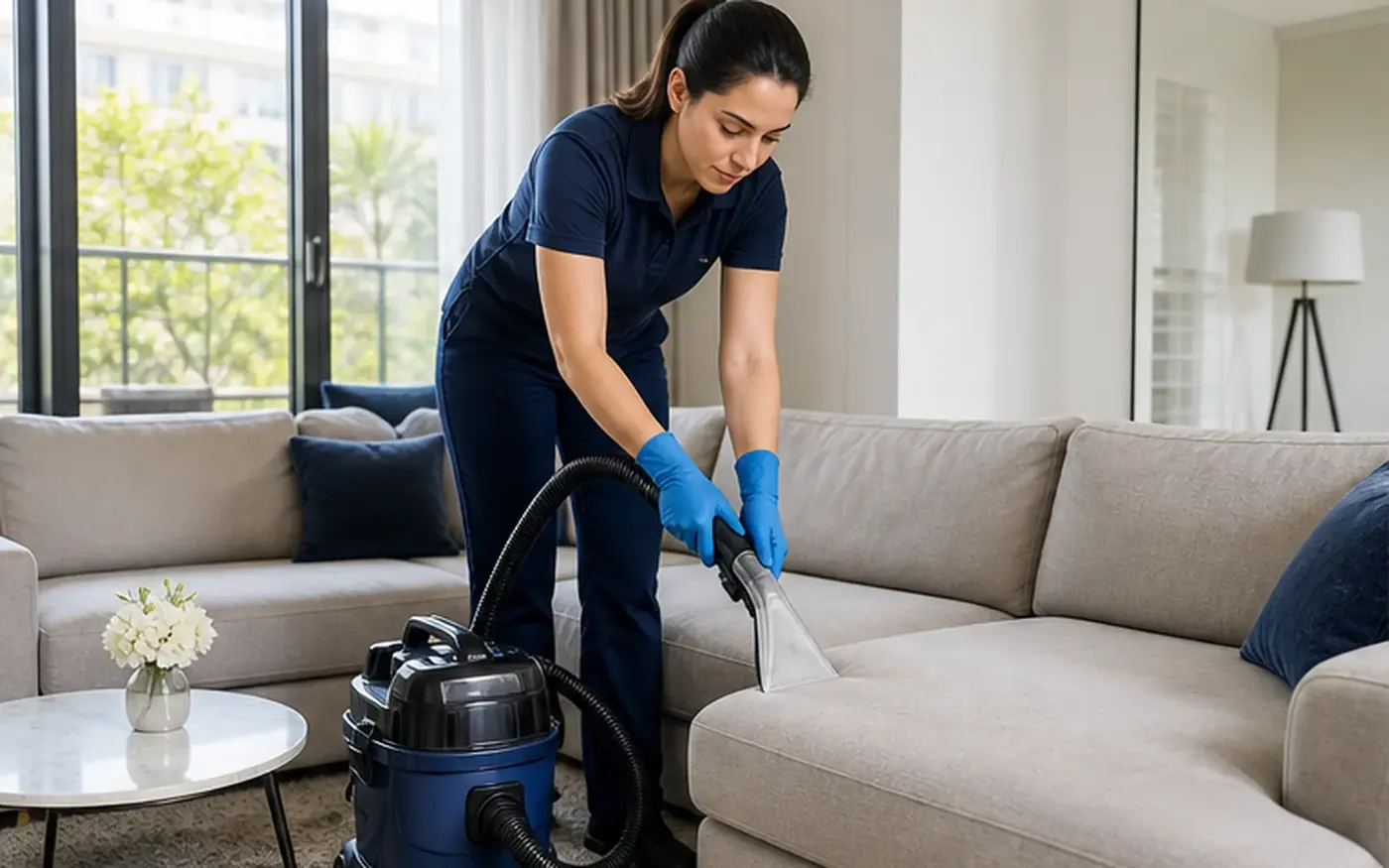
Describe the item rather than just its colour
Give the type and shape of each furnishing, with dimensions where useful. Include a whole-item photograph and the care label, then close views of marks, worn edges and loose stitching. A grey sofa description does not identify the material, filling or treatment restrictions.
The upholstery service considers these details before accepting work. Explain fixed cushions, a chaise section or an unusual base. If the composition is unknown, say so. Do not assume another item that looks similar accepts the same process or belongs within the same seat-count price.
Put accepted components on a simple checklist
| Component | What the enquiry should explain |
|---|---|
| Seat and back areas | Quantity, scale, fixed or loose parts |
| Cushion faces | Which faces are requested and their condition |
| Arms and edging | Soil, worn fabric and fragile trim |
| Sides and rear | Available working room and movement restrictions |
| Separate furnishing | Its own photographs, material and scope |
List footstools, dining chairs or headboards explicitly. A matching accessory should not be assumed included merely because it sits next to the principal item.
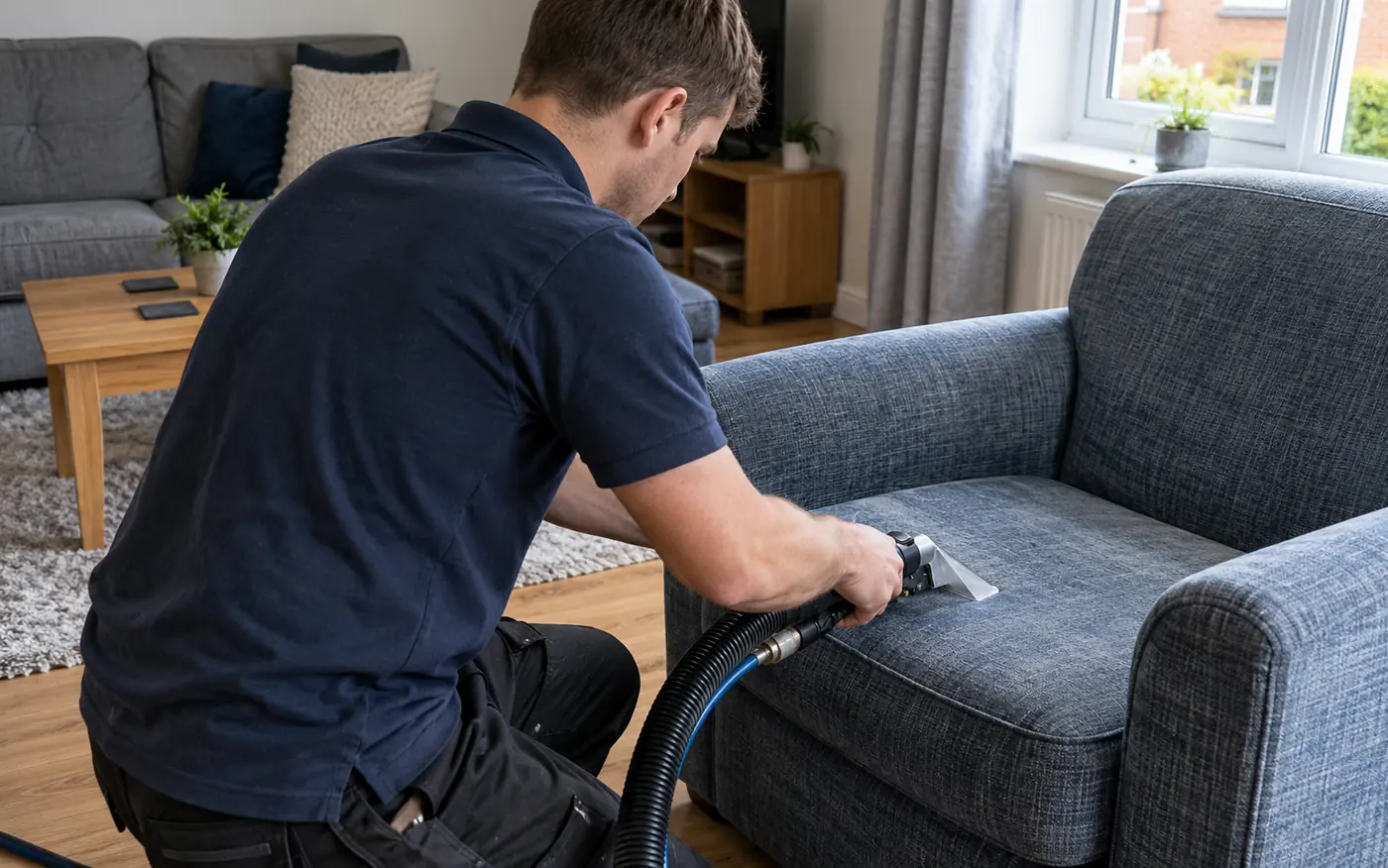
Keep soil and damage as different observations
Explain what you know about each mark and how long it has been present. If a product has already been used, identify it and describe any ring, colour change or altered texture. Clear uncertainty is more useful than a guessed stain source.
Cleaning cannot replace lost dye, mend seams or rebuild a furniture frame. Permanent stains and odours can remain where the material or source limits treatment. Ask for the realistic boundaries before accepting work rather than expecting a whole-item clean to restore every aspect of an ageing piece.
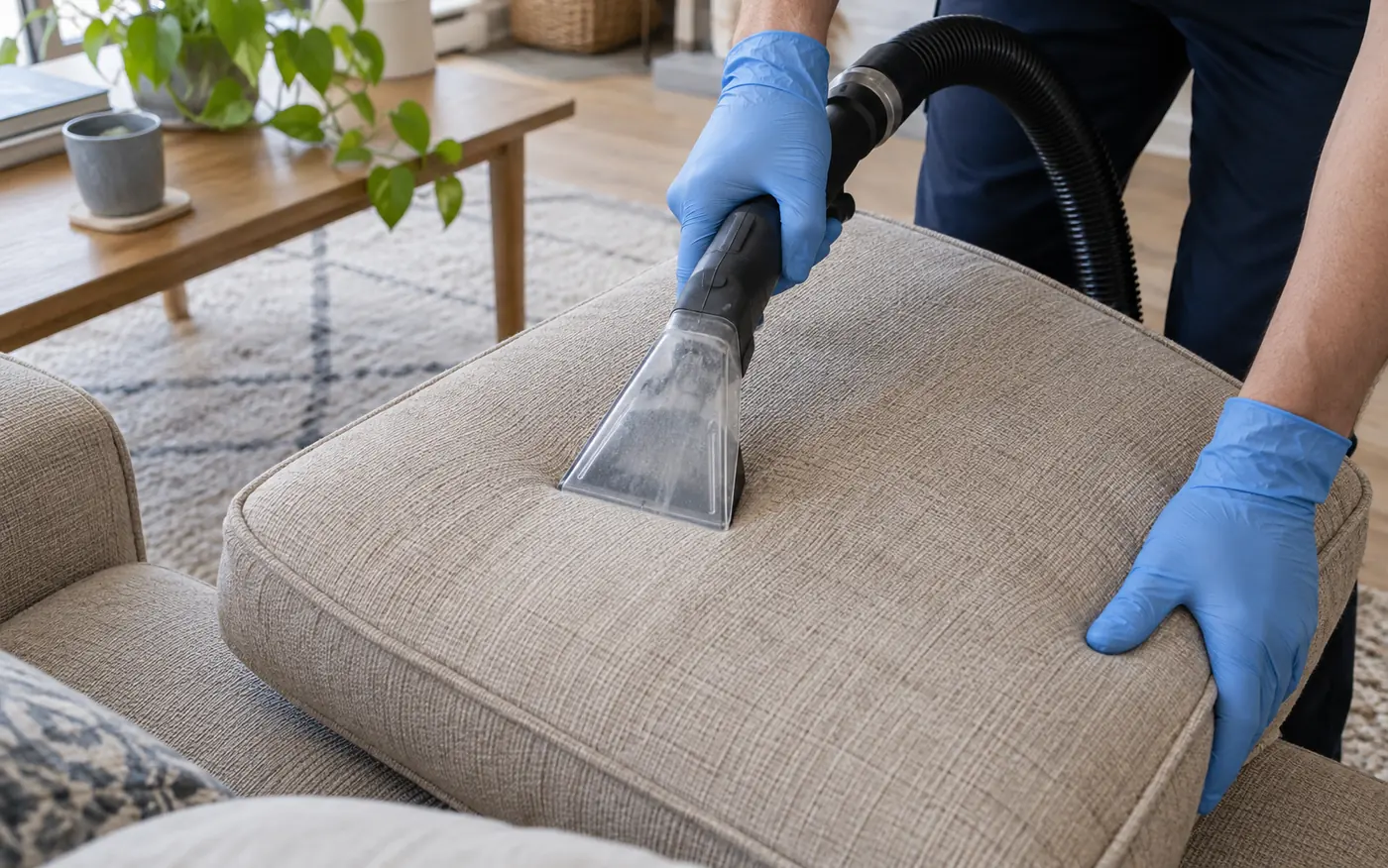
Prepare a usable route and an alternative seat
Remove throws, personal belongings and loose objects from the furniture. Clear breakables and small obstacles around the approach. Explain heavy items that cannot move or a rear panel that remains against a wall; movement should be discussed rather than improvised.
Keep pets and children away during the work and arrange where people will sit afterwards. Room use needs to fit the drying instructions. A shared living space should have a plan for keeping treated components out of ordinary use rather than assuming they will be ready as soon as the equipment leaves.
Confirm the complete furniture quote
The upholstery entry price is £35 per seat. Size, construction, fabric, requested components and condition affect the actual amount. Ask how large sections, extra cushions and separate pieces are counted.
Request applicable VAT, agreed access costs and exclusions in writing. If carpet treatment is needed, define those areas independently and consider equipment routes together. A deep clean covers other accepted household tasks; it does not replace furniture suitability assessment or establish that every textile in the room is included.
Anerley equipment access and local arrangements
For an address within Bromley, the council offers a check for permit availability at the address. Confirm the actual scheme and vehicle arrangement rather than assuming a resident’s existing entitlement covers the cleaning visit.
Describe lawful unloading, stairs and controlled entrances all the way to the furniture. Give an authorised contact if someone else provides the keys. For another property, check coverage information and supply the separate item photographs and access details needed for that address.
Review the accepted work and preserve aftercare
Ask how each treated fabric and filling should dry, including ventilation and cushion positioning. Do not stack or wrap damp components tightly without following that advice. The room conditions and chosen treatment make a universal use-after interval unreliable.
Compare completed faces with the accepted list and ask about remaining marks. For a furnished move, coordinate fabric treatment with tenancy cleaning and pass aftercare to the next responsible person. The appointment does not repair furniture damage or determine an inventory or deposit decision.
Practical answers
Questions about upholstery cleaning
Does the sofa colour identify its fabric?
No. Provide the care label and construction information where available. Similar-looking fabrics can have different restrictions and condition.
Are both faces of a loose cushion accepted automatically?
Specify the faces and number requested. They should appear in the accepted component scope rather than being inferred from removability.
Can a damaged frame be put right through treatment?
Cleaning is not a furniture repair. Identify structural damage separately so expectations and any access limitations are clear.
Can the room be used normally immediately afterwards?
Follow the actual drying and use instructions. Arrange alternative seating and explain any deadline before accepting the appointment.
Nearby areas
For another property nearby, choose the location where the work is needed.
See our coverage guide and confirm your full postcode when enquiring.
Your next step
Agree the work before the visit.
Share the surfaces or items needing attention so the booking can be assessed properly.