End To End · Avery Hill
Upholstery Cleaning Avery Hill
Treating a single spot is not the same as planning care for the whole furnishing. For Avery Hill upholstery, explain the mark, the surrounding material and earlier products together, then agree suitable components and aftercare rather than promising an isolated stain result.
- Show the whole item as well as the mark
- Explain product history and unknown fabric
- Plan treatment limits and ordinary use afterwards
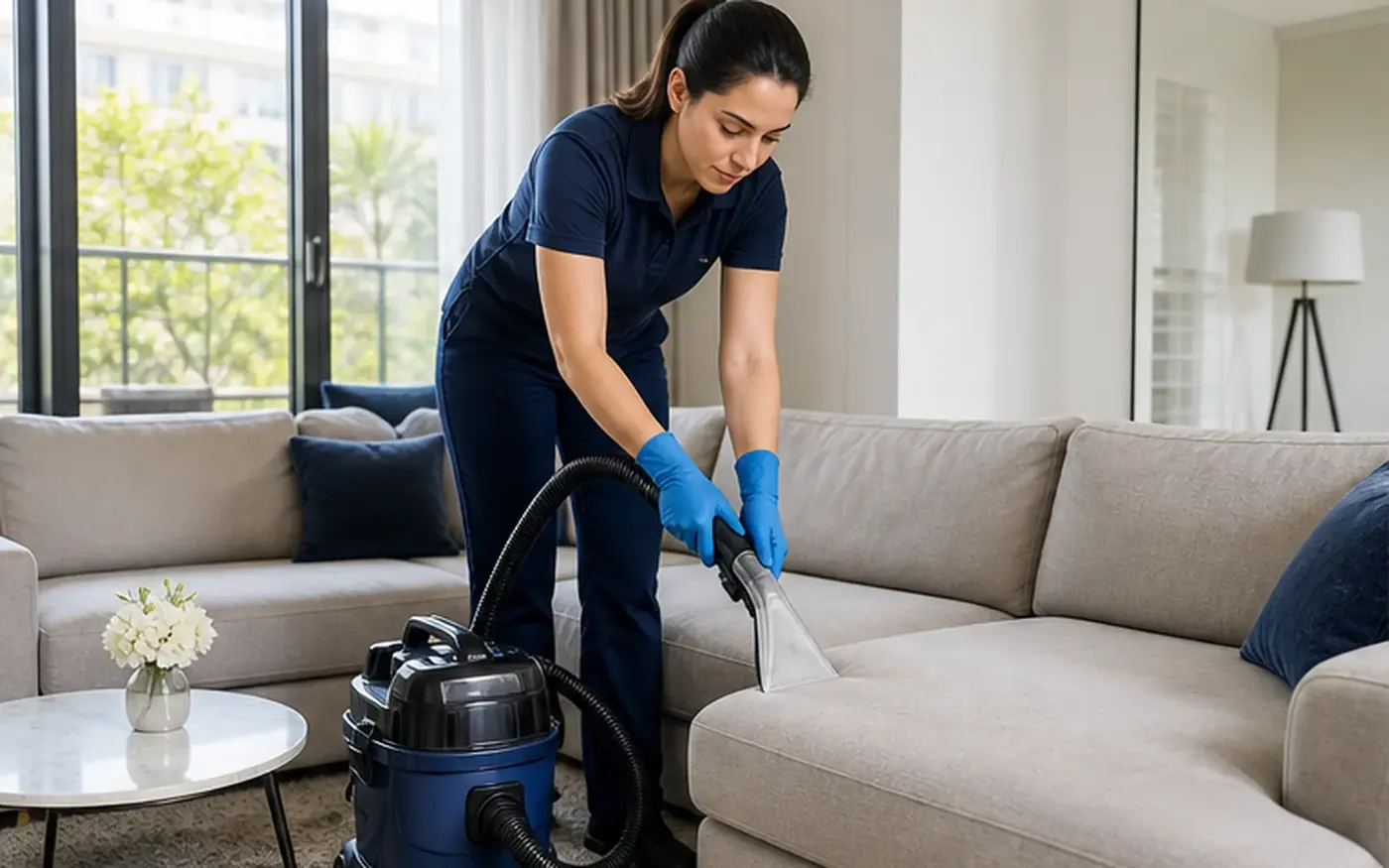
A close-up needs the context of the furniture
Send a wide photograph of the item and room position alongside the mark itself. This identifies the construction, scale and access that a close-up cannot show. Add the care label where available and say whether cushions are fixed or removable.
For upholstery cleaning, the material and surrounding condition matter as much as the visible spot. Explain areas of wear, fading or uneven texture. If a stain has a clear cause, share it; if the cause is unknown, preserve that uncertainty rather than choosing an explanation from appearance alone.
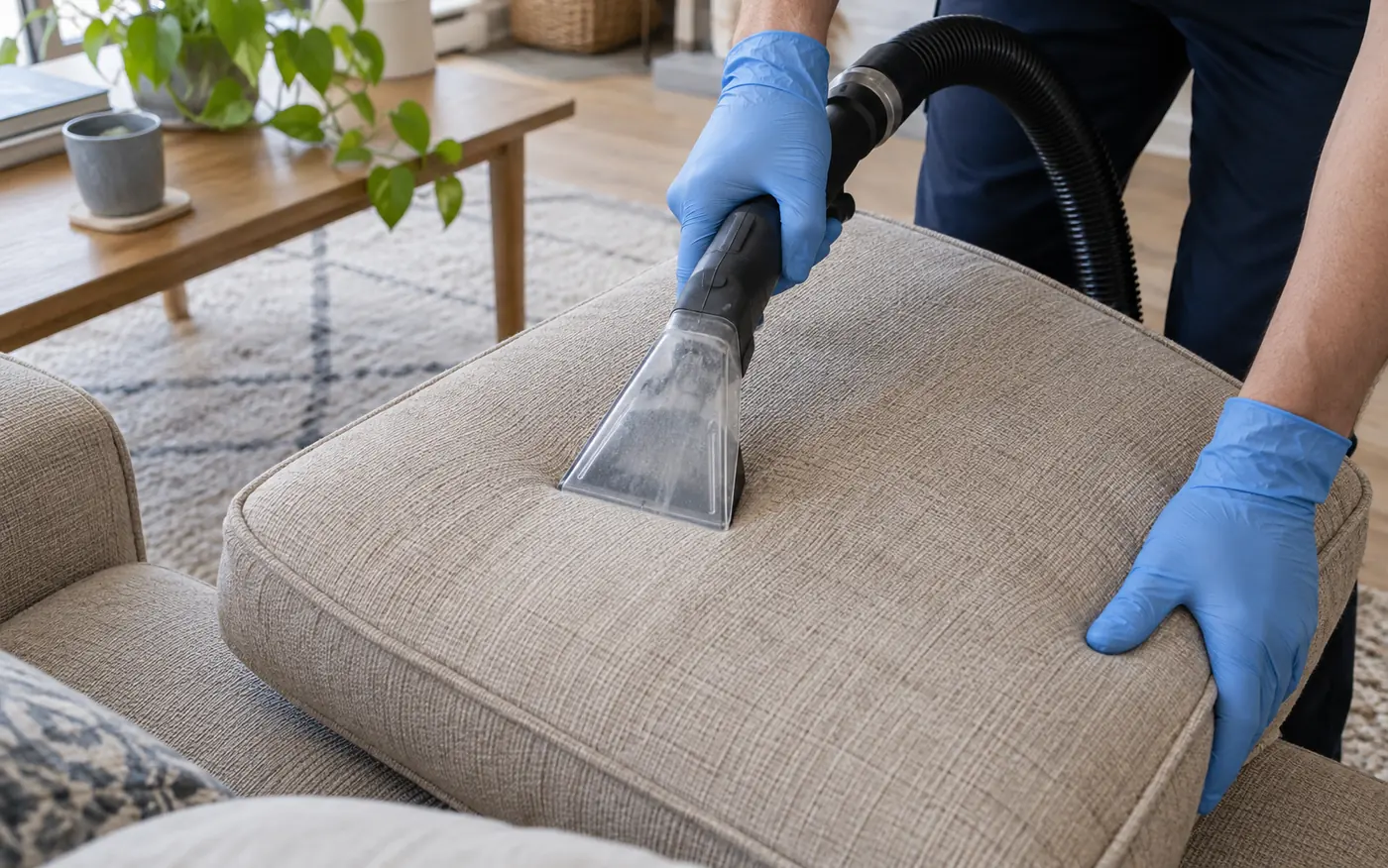
Earlier products form part of the current condition
List spot cleaners, household mixtures or previous treatments used on the affected area, where known. Mention whether the material remained damp, developed a ring or changed colour. A photograph of the product label can be more useful than a vague description of something intended for fabrics.
Do not repeat treatment immediately before the appointment to show that a mark is stubborn. Additional product can change the condition being assessed. Cleaning cannot recreate lost dye, mend damaged fibres or guarantee complete odour removal, particularly where the source and affected filling are uncertain.
Useful observations for an assessed treatment
| Observation | What to explain |
|---|---|
| Mark location | Specific seat, cushion face, arm or panel |
| Known event | Spill and approximate timing, if genuinely known |
| Previous product | Name, application and visible change |
| Fabric condition | Wear, loose stitching, fade or texture difference |
| Construction | Fixed parts, loose covers and available labels |
These observations help describe a concern without diagnosing the fabric or promising what will disappear. Ask for the accepted limits to be explained before the work is confirmed.
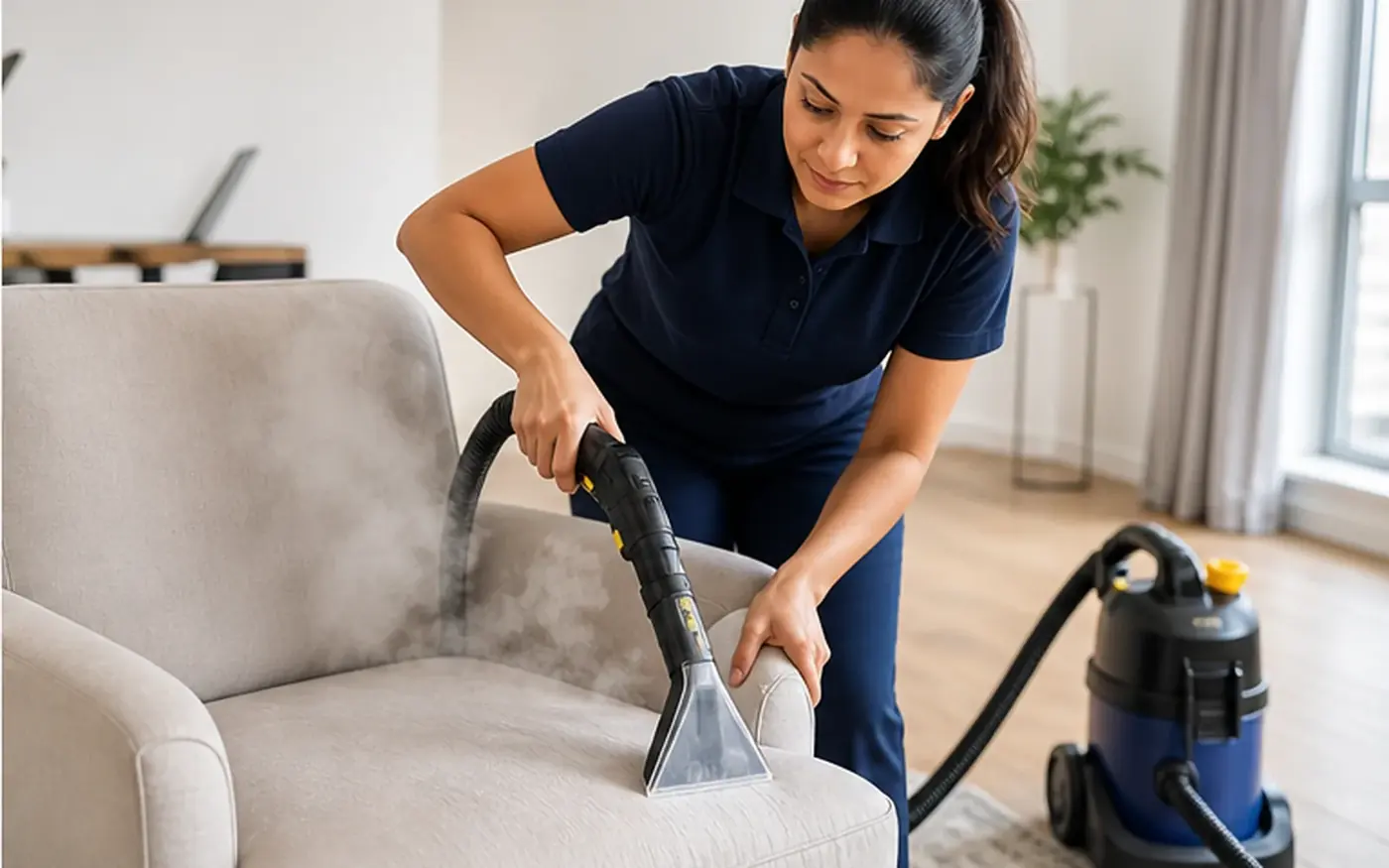
A zip and a spare cover do not establish washability
Manufacturer care instructions should determine how removable parts are approached. An item can have several materials or fillings with different restrictions. Do not machine-wash a cushion cover or detach unfamiliar panels merely because they seem easy to remove.
Show any spare cushions or matching footstool if they also need assessment. Similar appearance does not establish that their backing, dye or condition matches the main seat. The accepted fabric-cleaning request should identify each item rather than assume all soft furnishings share one method or price.
Preparation includes the period after treatment
Clear possessions from the furniture and remove breakables from the working route. Explain blocked sides or rear panels and furniture that cannot be moved. Keep pets and children away while the team works, and arrange alternative seating afterwards.
Ask about ventilation, cushion positioning and ordinary use for the actual fabric and filling. Do not tightly stack or wrap damp components based on a generic drying estimate. If a handover is planned, put those requirements alongside the tenancy-cleaning timetable rather than expecting the inspection date to shorten drying.
Quote the accepted item and components
The published upholstery starting amount is £35 per seat. Dimensions, material, condition, requested panels and additional pieces affect the confirmed quote. A single stain does not by itself explain the workload or establish a fixed spot-treatment result.
Ask for the total, applicable VAT and agreed access costs. Check which cushion faces, arms, back areas and separate items are accepted. A deep clean elsewhere in the room has a different scope. Resolve uncertainties before accepting instead of treating every matching accessory as included automatically.
Avery Hill access and the finished review
For a Greenwich-governed address, the council’s Avery Hill zone page provides local parking information to check against the actual street. Verify the full address and applicable arrangement rather than applying a named zone to every nearby property.
Describe the equipment route and controlled entry, and keep an authorised contact available. Review accepted components and any remaining mark before adding further products yourself. Retain the aftercare. For a second address, use coverage guidance and provide its own furniture photographs and access details.
Practical answers
Questions about methods and materials
Is a close picture of the stain enough?
Include whole-item and room-context views too. Material, size, construction and access affect assessment even when only one mark first prompted the enquiry.
Should I try the product again before the cleaner arrives?
Explain what has already been used and ask for relevant guidance. Repeating an unassessed treatment can alter the current condition.
Does a spare matching cover follow the same scope?
List it separately with available care information. Appearance does not establish identical restrictions, condition or accepted inclusion.
Can the cause of a ring be identified from appearance alone?
Do not assume so. Describe its history and earlier products where known, while clearly acknowledging uncertain information.
Nearby areas
These nearby guides describe the same service in surrounding locations.
See our coverage guide and confirm your full postcode when enquiring.
Your next step
Ask the right questions before treatment.
Explain the materials, condition and access when speaking to End To End.