End To End · Barking
Upholstery Cleaning Barking
A fabric label, the furniture construction and the mark’s history each answer different questions. For upholstery cleaning in Barking, collect those details together before discussing a treatment, a realistic result and the room conditions needed for aftercare.
- Read care information without guessing composition
- Describe covers, fillings and previous products
- Plan suitable treatment and the drying period
Read the information that belongs to the actual item
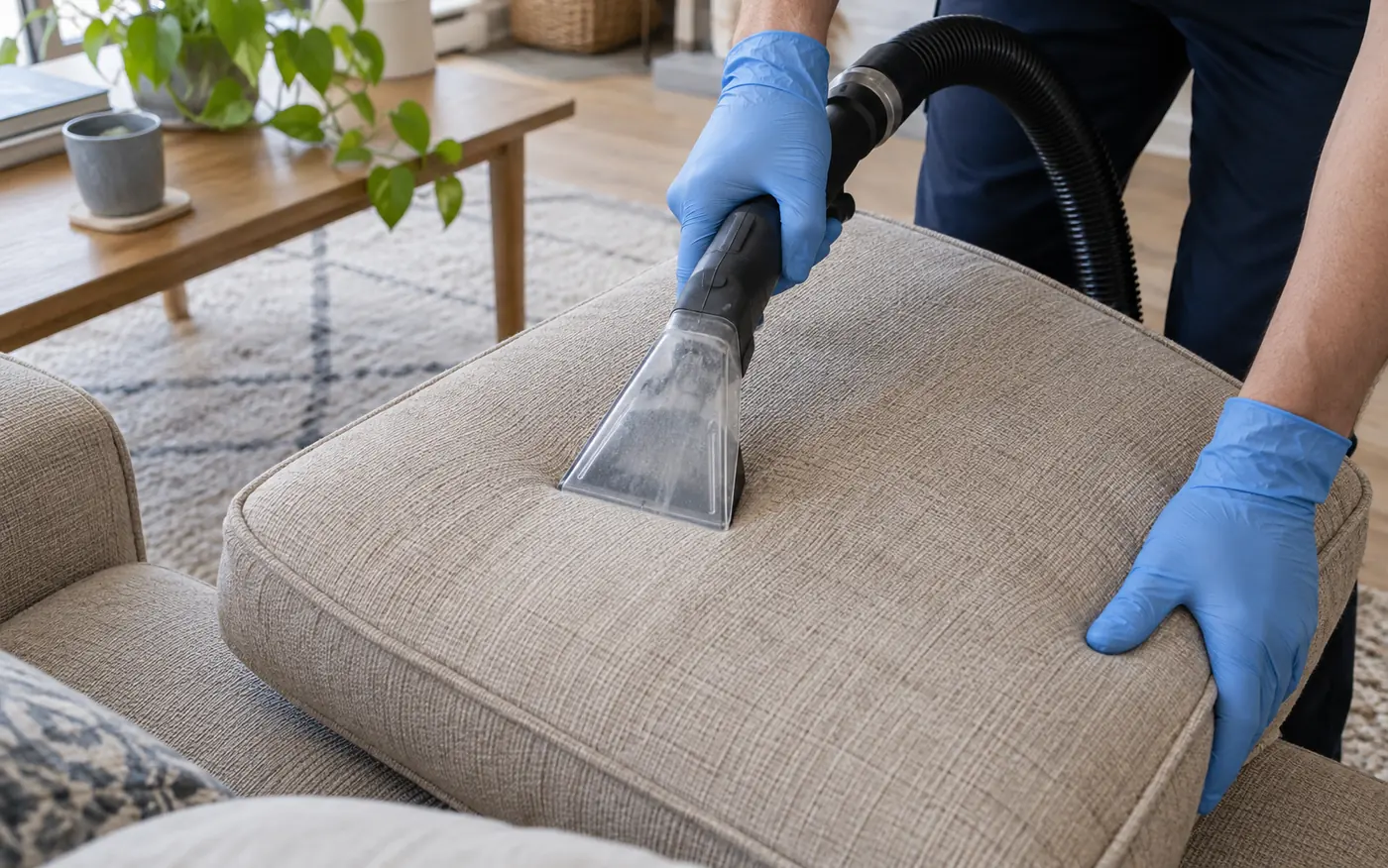
Find the care label where it can be accessed normally and send a clear photograph. Do not cut or open stitched furniture panels to search for information. If the label is absent, explain that and show the material, item shape and construction instead of supplying a guessed fibre name.
The upholstery service assesses suitability against the furnishing being treated. A replacement cover, spare cushion or matching chair may not share every restriction. Identify those pieces individually and explain whether previous washing or treatment has changed their fit, colour or texture.
Construction affects the treatment question
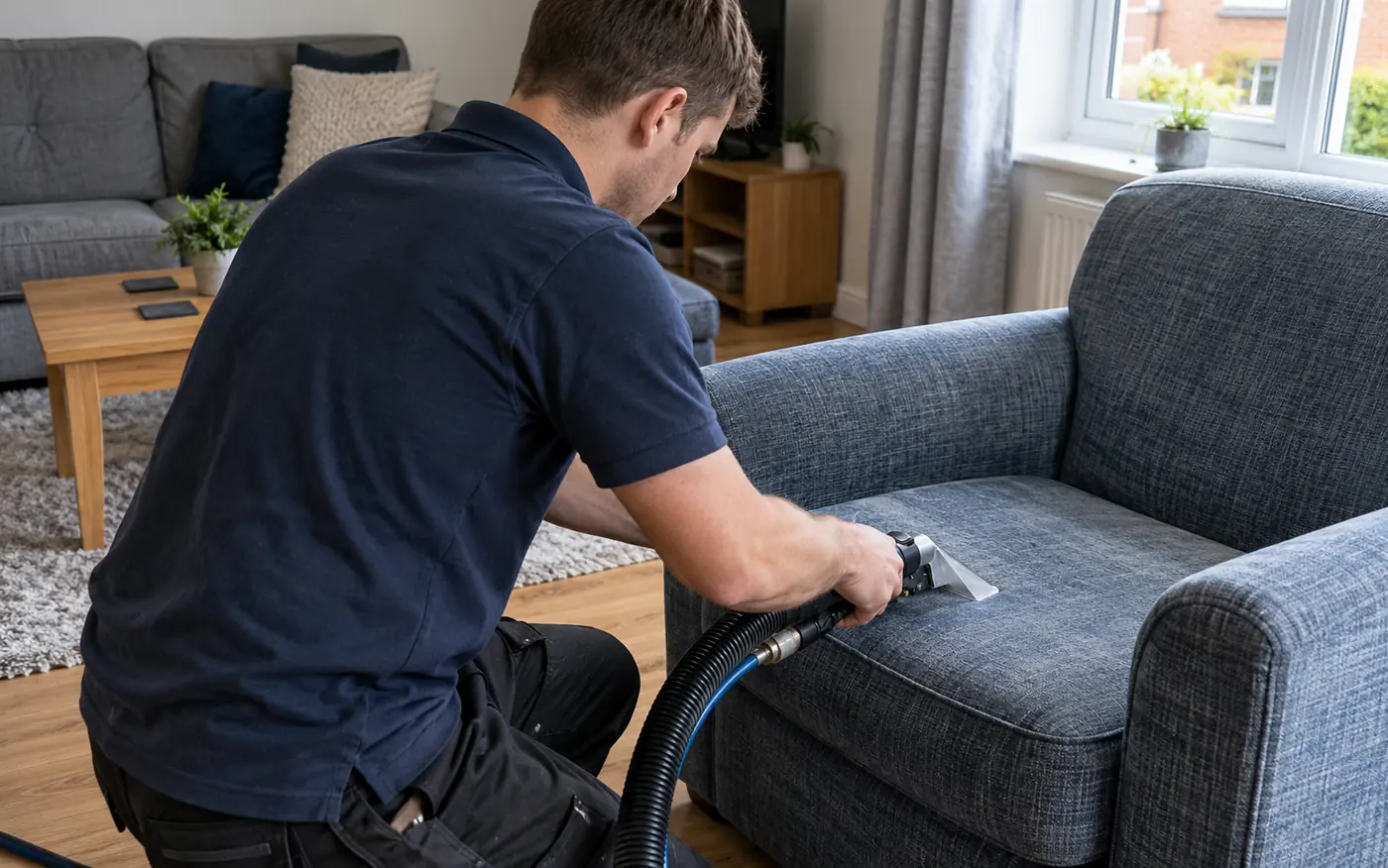
Describe fixed and loose cushions, removable covers and any unusual upholstered base. Provide filling information only where genuinely known. A visible zip says that a cover can be opened; it does not prove the cover is machine washable or that the filling tolerates the same method.
Keep unfamiliar components assembled until the relevant assessment. Do not follow instructions for a different sofa because its colour or feel seems similar. Loose stitching, weak trim and damaged fabric should be shown before the booking so the available work and limits can be discussed realistically.
Useful details about a mark
| Question | Helpful information |
|---|---|
| Where is it? | Exact cushion face, arm, back or side panel |
| What caused it? | Known event, or cause honestly uncertain |
| How old is it? | Approximate history if available |
| What was tried? | Product and visible response |
| What else is present? | Wear, fading, damage or odour concerns |
These observations do not guarantee a diagnosis or removal. Permanent staining, lost colour and damaged fibres can remain after accepted cleaning.

Avoid a last-minute treatment before the assessment
Do not scrub again immediately before arrival to demonstrate that a mark is difficult. Tell the team about earlier products and any ring or colour change. Further unassessed treatment can obscure the history and alter the condition that needs evaluating.
If odour is the concern, explain its possible source and whether liquid may have reached the filling. No universal odour-elimination result should be inferred. A surface appointment may have boundaries where hidden components or permanent damage are involved, so ask what can actually be accepted rather than assuming a stronger product solves every concern.
Preparation should cover the whole period of furniture use
Clear possessions and throws, protect the working route from small obstacles and remove nearby breakables. Explain a heavy item that cannot move and any inaccessible rear surface. Keep children and pets away while treatment takes place.
Arrange alternative seating and ask how the accepted item should dry. Ventilation, material, filling and method affect the guidance; do not tightly stack or wrap damp components on a generic time assumption. For a move, coordinate this with tenancy cleaning so inspection and access arrangements reflect the real aftercare needs.
Quote the material and components accepted
The published upholstery entry figure is £35 per seat. Item dimensions, construction, condition and requested faces determine the confirmed scope and amount. Clarify large sections, extra cushions and any separate furnishing rather than relying on a single room description.
Check applicable VAT, agreed access costs and exclusions. Ask for carpet areas to be described separately if required. A deep clean of other room surfaces does not remove the need to assess fabrics independently or promise treatment of every textile within the property.
If a mattress also needs assessment, describe its size, fabric information and condition as a separate item. Do not apply a sofa seat price or method to it automatically. Ask about suitability and drying before arranging the next use of the bed.
Barking equipment access and a specific final review
The council’s CPZ FAQ notes that permits are zone-specific and do not reserve a space outside the home. Verify the address, applicable arrangement and current street restrictions, then give a lawful route for equipment to reach the furniture.
Review accepted components and receive the actual aftercare before ordinary use resumes. Ask about a remaining mark by item and location. For another property, consult coverage guidance and provide new material photographs and access details instead of assuming the same treatment is appropriate.
Practical answers
Questions about methods and materials
Does a missing label mean I should guess the fabric?
No. State that the information is unavailable and provide clear item and material photographs. Suitability requires assessment rather than a convenient guess.
Can loose cushions follow any removable-cover instructions?
Use the care information for the actual piece. Removability does not establish washability or prove that filling and cover tolerate the same approach.
Should I repeat a failed spot treatment?
Explain the earlier product and outcome and ask for guidance. Repeating an unassessed attempt can change the condition further.
Can an odour be guaranteed to disappear?
No universal promise is made. Describe the source and affected components where known so realistic limits can be assessed.
Nearby areas
These nearby guides describe the same service in surrounding locations.
See our coverage guide and confirm your full postcode when enquiring.
Your next step
Ask the right questions before treatment.
Explain the materials, condition and access when speaking to End To End.