End To End · Belgravia
Window Cleaning Belgravia
Before choosing a treatment for glass, locate the mark and identify the finish as far as possible. For Belgravia window cleaning, clear photographs and care information help distinguish ordinary surface soil from specialist residue, restricted access and permanent damage.
- Locate the mark rather than guessing its cause
- Share coating information and earlier treatment
- Assess the requested faces and surrounding detail
Start with where the mark actually appears
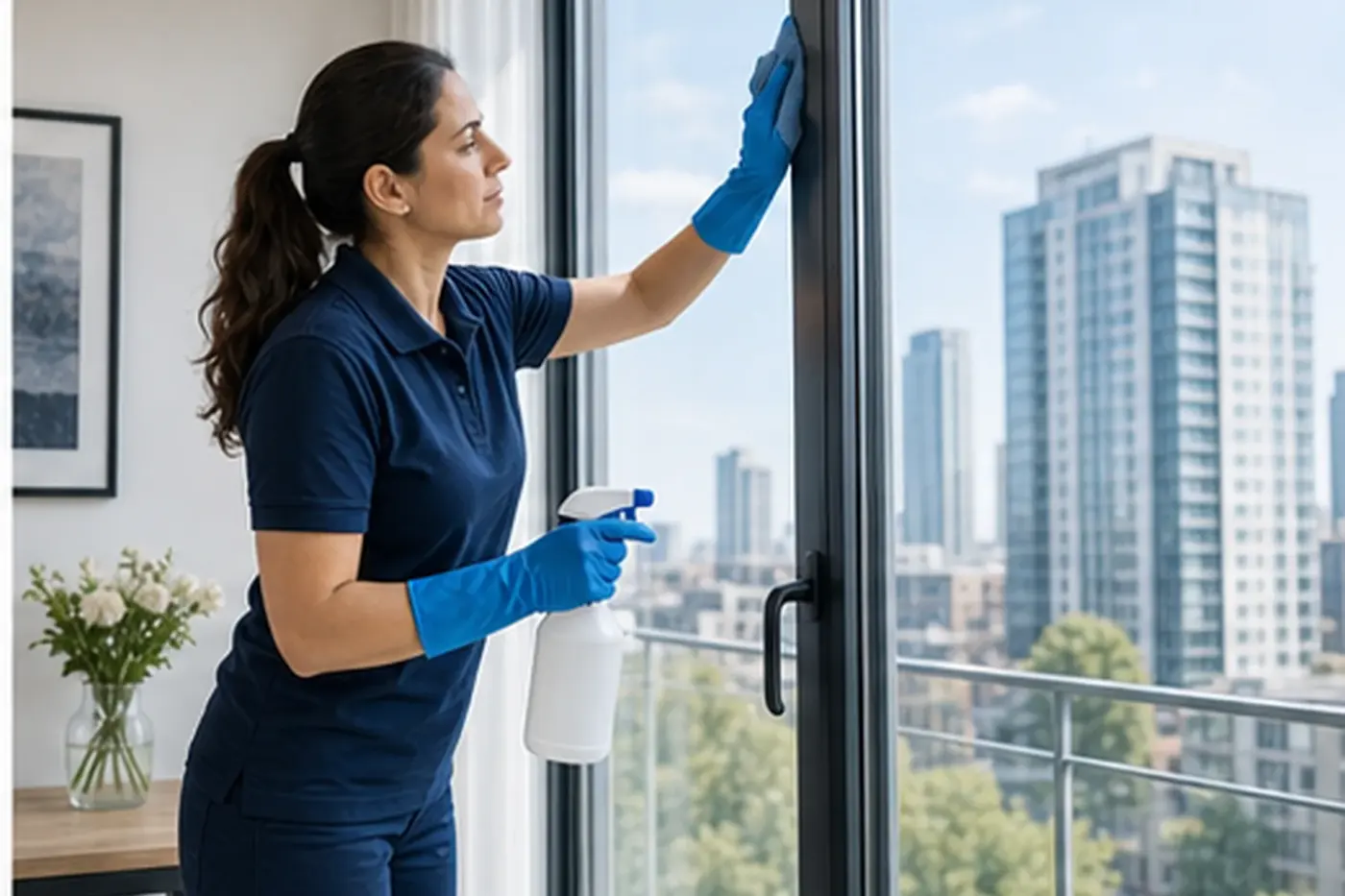
Show the complete pane and a closer view of the concern. Explain whether it seems to sit on an accessible face, the outside or within a sealed unit. Use normal available viewing positions; do not lean out or force an opening to investigate.
The window-cleaning service addresses accepted exposed surfaces. Ordinary fingerprints and dust differ from scratching, coating deterioration and internal clouding. A cleaner cannot repair a failed glazing unit by repeatedly wiping the face, so describe the location instead of asking for an unqualified promise to make all glass clear.
Care information matters when the finish is uncertain
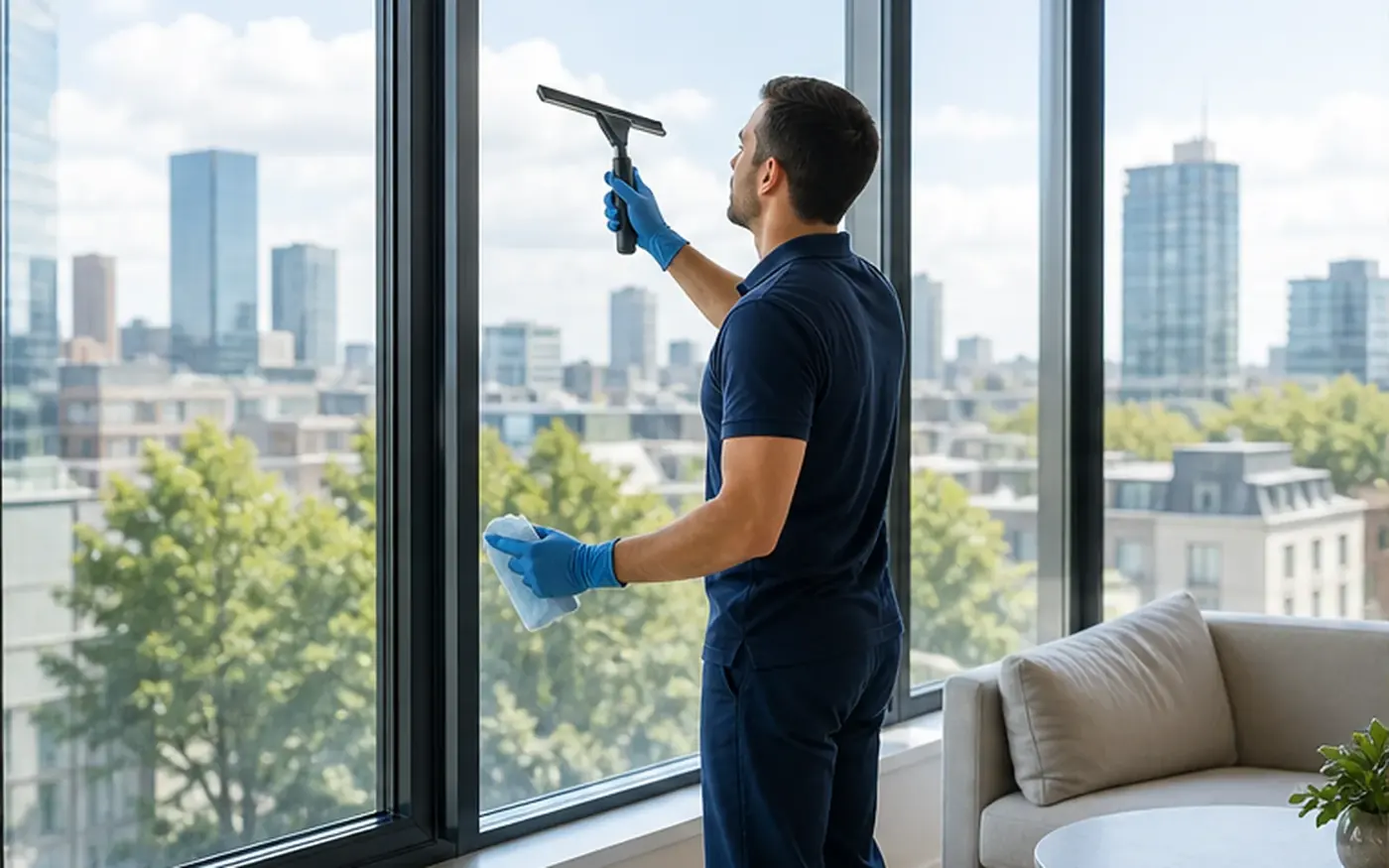
If you know the glass has a coating or special specification, send the relevant care instructions. Where the information is missing, say so. A pane’s appearance alone does not prove what products or tools it can tolerate.
Explain earlier scraping, polishing or chemical products. Further treatment applied immediately before the visit can change the condition being assessed. Do not test a blade or abrasive on a visible area simply because a mark seems resistant. The suitability of residue removal follows the finish and condition, not just the determination to remove a deposit.
Separate pane care from the window assembly
| Element | Question for the scope |
|---|---|
| Glass face | Which side, size, finish and surface concern? |
| Frame edge | Which material and accessible detail? |
| Sill | What will be cleared and which surface accepted? |
| Track | Is the concern reachable debris or an operating defect? |
| Fitting | Is it already loose, fragile or restricted? |
Request surrounding detail explicitly. A pane-cleaning agreement does not automatically include every concealed track, high fitting or a repair to deteriorated frame material.
Describe renovation residue before choosing the appointment
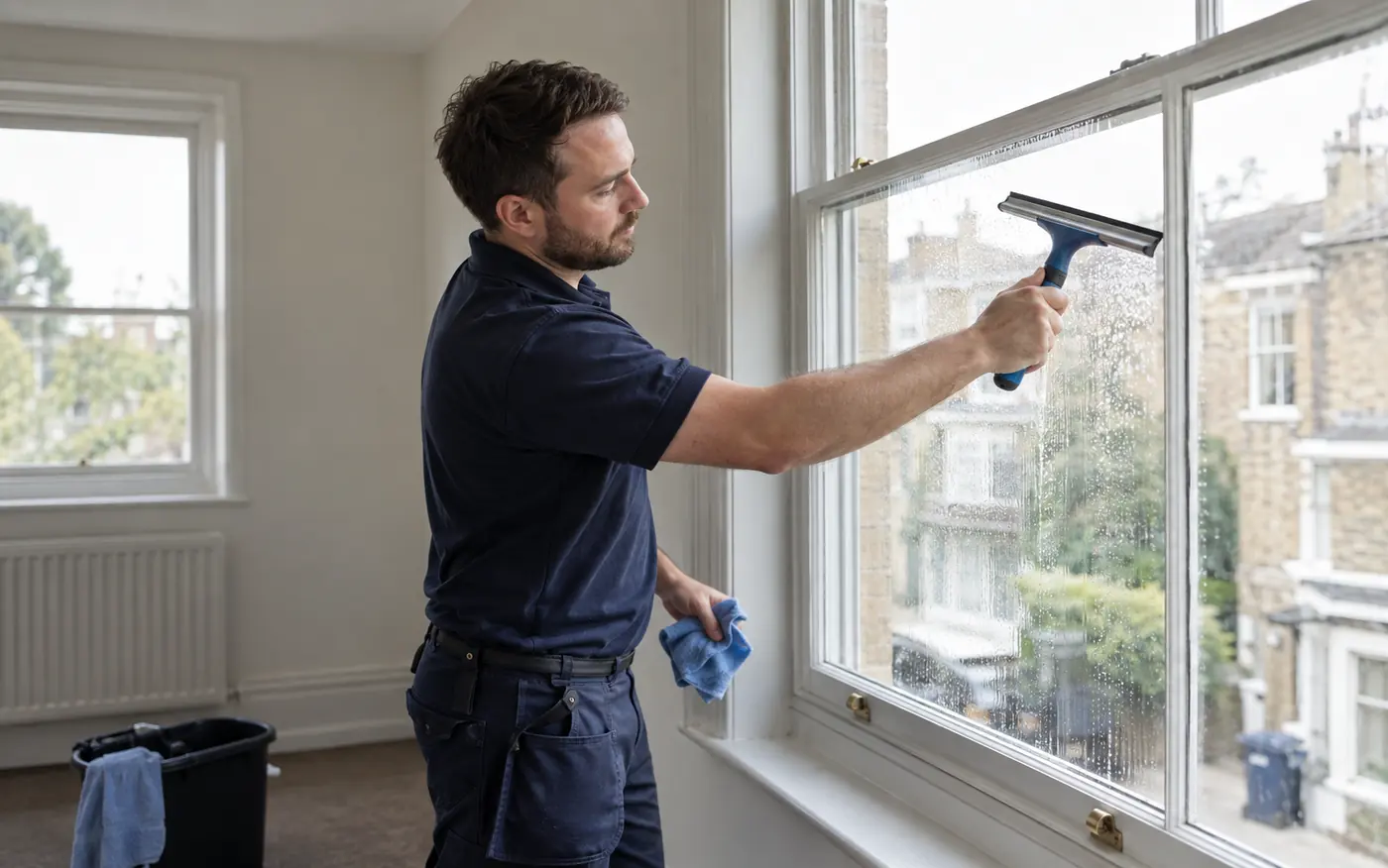
Paint, adhesive and cement should be identified individually where known. Send photographs and explain when they appeared and what removal has already been attempted. These materials are not interchangeable with ordinary dust and may require a different assessment.
If the wider property needs attention after works, discuss after-builders cleaning with the glazing limitations kept clear. Do not assume a broader service authorises aggressive removal on a sensitive pane. For household dirt elsewhere, a deep clean has its own accepted surfaces rather than an unlimited glass-restoration promise.
Preparation should reveal access, not force it
Clear plants, ornaments and personal possessions from accepted ledges and remove small obstacles from the approach. Describe furniture, fixed blinds or restricted opening that will remain. Heavy relocation and dismantling fittings should be discussed instead of improvised before arrival.
List the requested internal and exterior faces separately, including large glazed doors or upper panes. Exterior access requires its own suitable arrangement. If the purpose is a move, compare internal glazing already covered by tenancy cleaning so any additional request has a defined role.
Belgravia equipment access and the amount to confirm
For a Westminster address, the trade-permit guidance distinguishes the working visit from simple loading or delivery. Check the arrangement appropriate to the vehicle, address and restrictions, then describe the lawful route into the property.
Internal glazing has no separately verified fixed tariff for every home. Request a quote for the actual pane list, faces, accepted detail and condition. Ask for applicable VAT, exclusions and agreed access costs within the total, with uncertain specialist residue resolved before acceptance.
Review with a precise location and realistic boundary
Check accepted faces and surrounding detail by room and pane. If a concern remains, identify where it sits and ask whether it was assessed as damage, restricted residue or an excluded surface. Avoid applying a new product immediately to an area already identified as unsuitable.
Keep maintenance questions separate from the cleaning review. For another address, consult coverage guidance and send its own pictures and care information. Similar-looking glass in another room or property may have different condition and access, so do not transfer an earlier treatment assumption without checking.
Practical answers
Questions about methods and materials
Should a resistant mark be scraped before booking?
No unassessed scraping should be assumed suitable. Explain the deposit, glass information and earlier attempts, then ask for assessment of the current condition.
Does unknown coating information mean ordinary products are safe?
No. State the uncertainty and provide photographs. Appearance alone does not establish the finish or appropriate method.
Are a dirty track and a stiff mechanism the same task?
No. Accepted reachable debris can be a cleaning concern; an operating fault is a separate maintenance matter.
Can the price be confirmed from a room count?
Provide the panes, sizes, faces and surrounding surfaces as well. Room counts do not describe the glazing workload or access restrictions reliably.
Nearby areas
These nearby guides describe the same service in surrounding locations.
See our coverage guide and confirm your full postcode when enquiring.
Your next step
Ask the right questions before treatment.
Explain the materials, condition and access when speaking to End To End.