End To End · Bethnal Green
Window Cleaning Bethnal Green
Look at a glass concern in context before deciding it needs a stronger treatment. For Bethnal Green window cleaning, identify the face, finish and residue, explain previous attempts and establish the accessible surfaces rather than promising restoration of every mark.
- Locate the concern on the actual pane
- Distinguish surface soil from glazing damage
- Prepare surrounding detail with realistic access
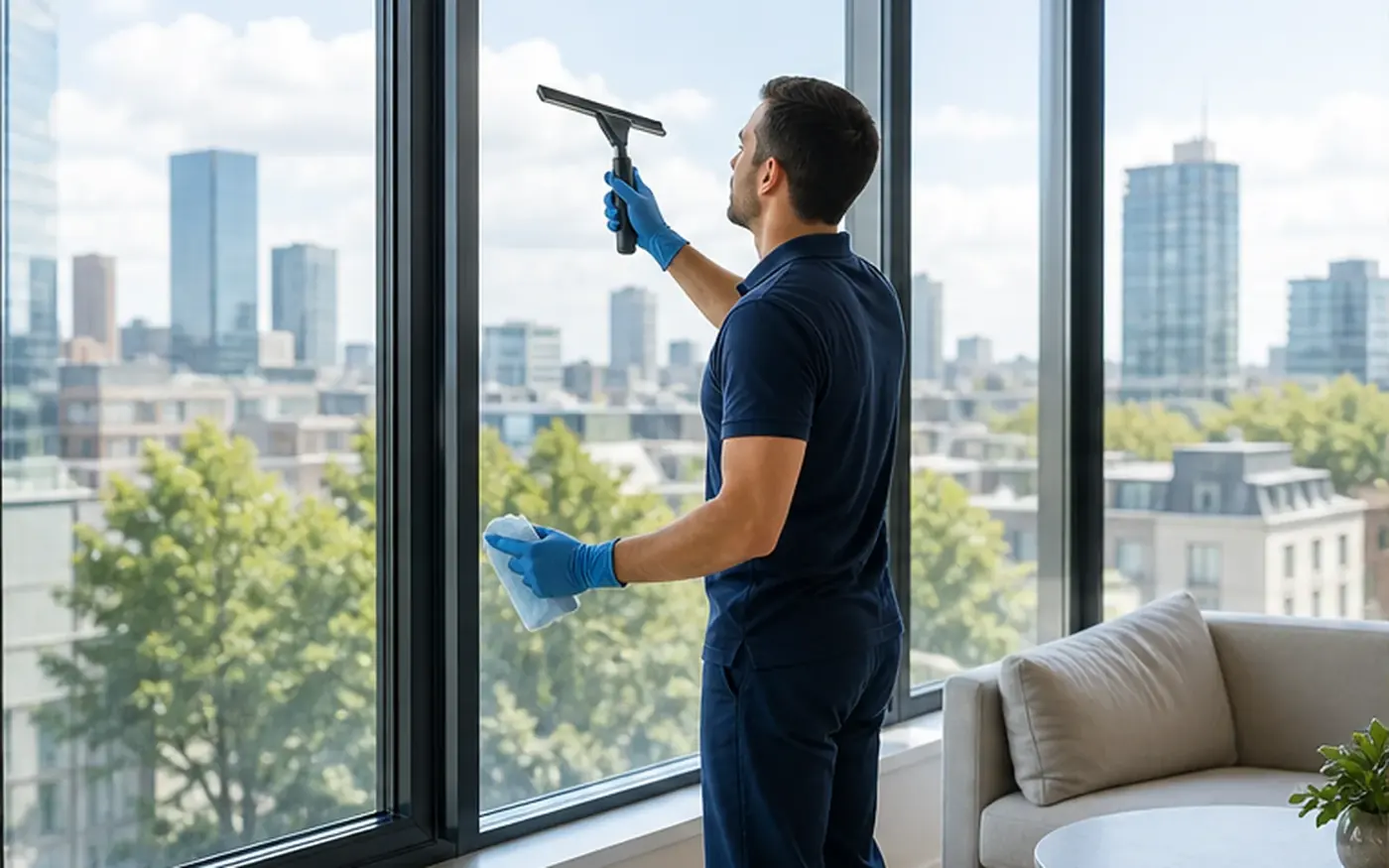
Identify the pane and the side involved
Provide a wider photograph that locates the window and a closer image of the mark. Explain whether the concern appears on an internal face, an outside surface or within a sealed unit. Do not lean out or force an opening to inspect an inaccessible area.
The window-cleaning service addresses accepted exposed surfaces. A cloudy appearance can involve removable soil, a damaged finish or an internal glazing condition. Cleaning the accessible face cannot repair a failed sealed unit, so the location matters before discussing an appropriate scope.
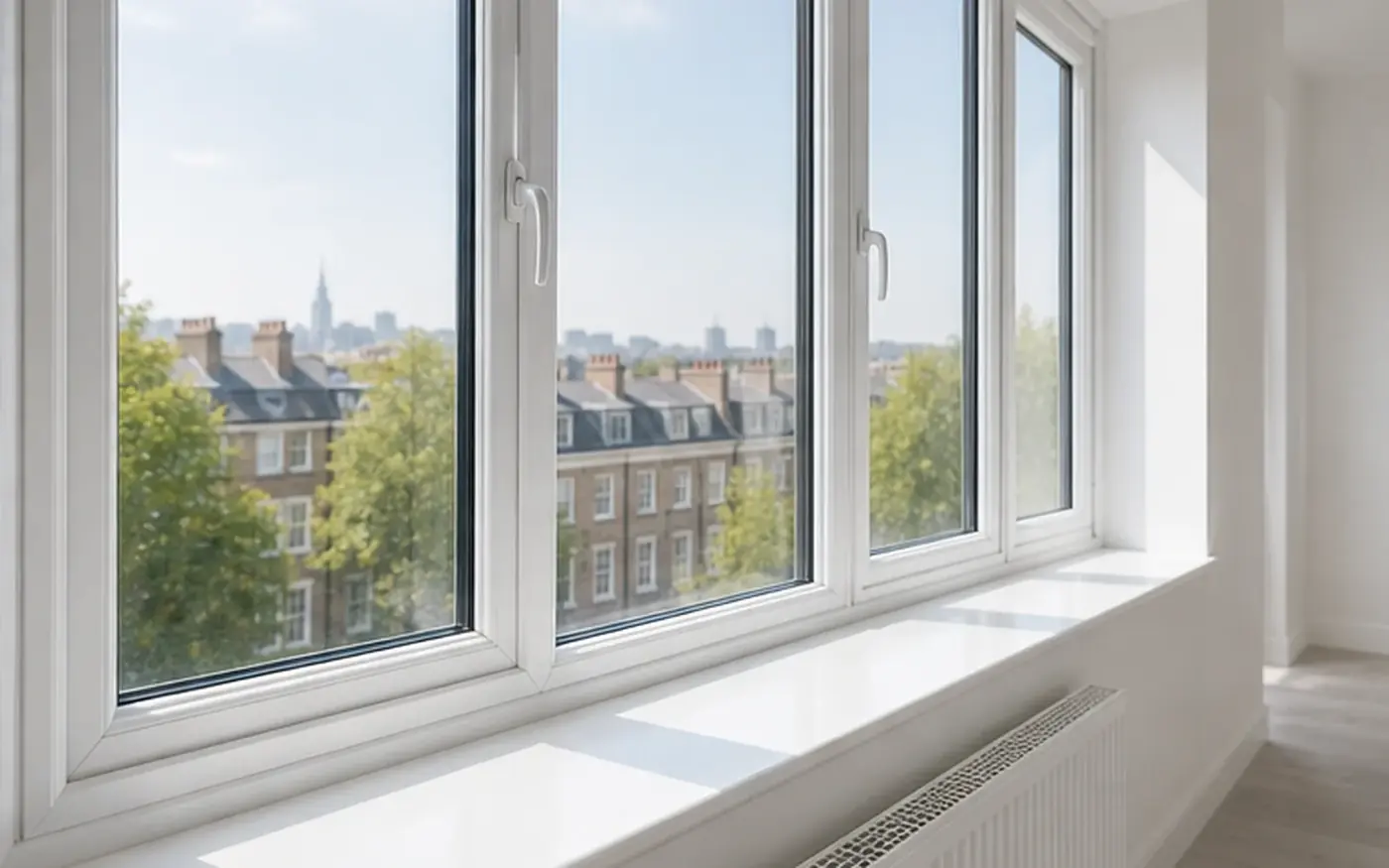
Finish information belongs beside the residue description
Share available manufacturer care information for coated or unusual glass. If the specification is unknown, say so. A pane’s appearance is not proof that a blade, abrasive or particular chemical is suitable.
Explain paint, adhesive or building deposits individually where known, along with any earlier scraping or product use. Do not apply a new treatment immediately before assessment. Aggressive removal can be unsuitable for a sensitive finish, and a larger cleaning request does not remove those material limits. Ask what can actually be accepted rather than treating stubbornness alone as the instruction.
The window is more than its central glass surface
| Part | Cleaning information | Separate concern |
|---|---|---|
| Pane | Requested face and surface residue | Scratch or internal clouding |
| Frame | Material and accepted reachable edges | Loose paint or failed joint |
| Sill | Cleared surface and finish | Swelling or permanent deterioration |
| Track and fitting | Reachable dirt or marks | Broken mechanism or loose handle |
Request those details explicitly. An ordinary pane clean is not a promise to restore the assembly or repair its operating parts.
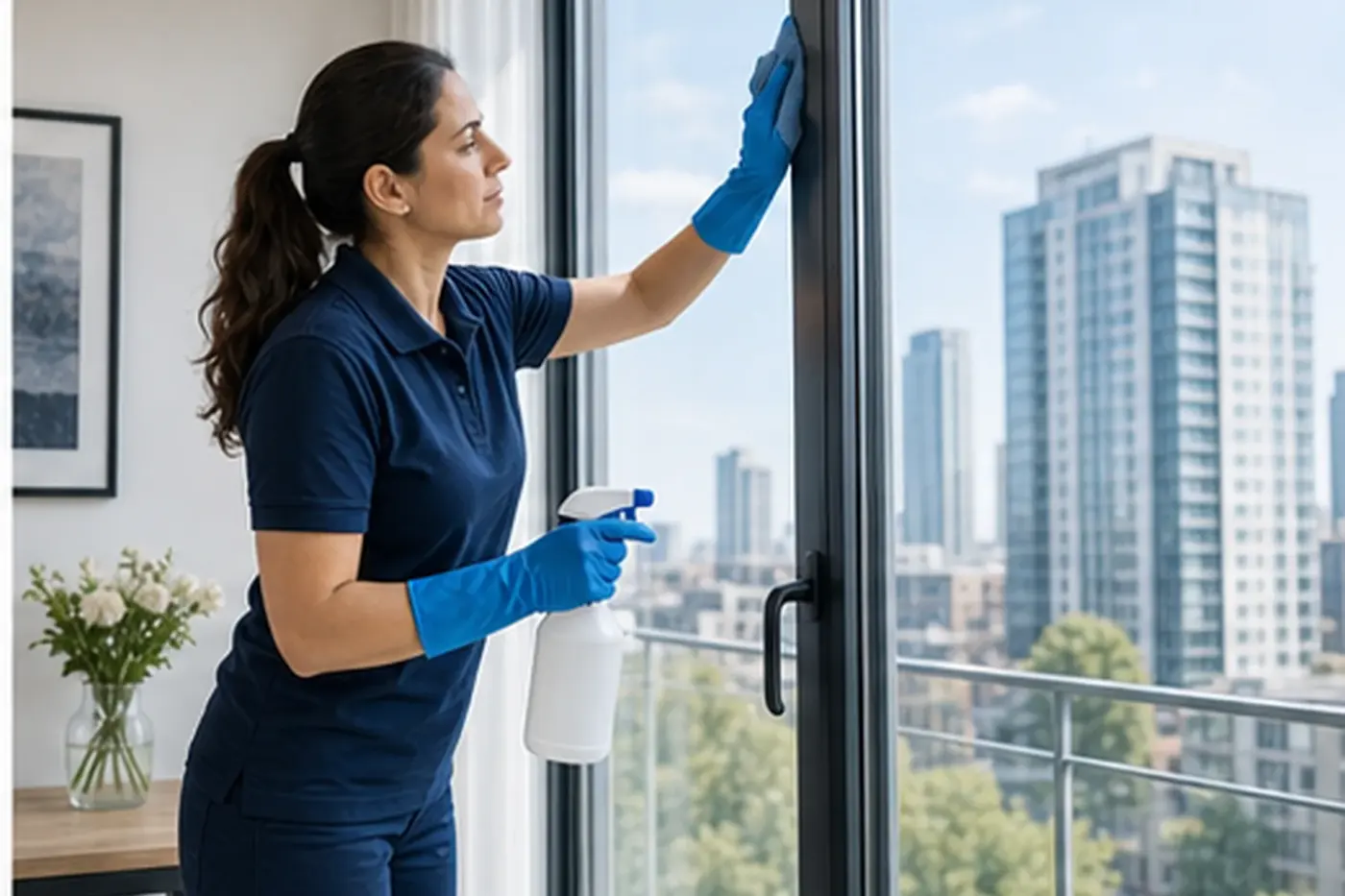
Use the property work to choose a sensible sequence
If renovation caused the residue, describe the remaining contractor activity. A separately scoped after-builders clean may address accepted dust elsewhere before glazing receives its final attention. The glass still needs its own finish and residue assessment.
For ordinary accumulated household dirt, a deep clean serves a different brief. If the purpose is handover, compare glazing already accepted within tenancy cleaning. These distinctions help avoid paying for duplicate tasks or assuming specialist removal from a general room description.
Preparation must respect the opening and the approach
Clear personal objects, plants and breakables from accepted sills. Remove small obstacles from the route and explain heavy furniture or fixed blinds that remain. Do not force a stiff mechanism or remove a restrictor just to make a difficult pane appear accessible.
Obtain keys and permissions for controlled areas and keep pets away during the work. Show the size of pane groups and identify internal or external faces wanted. Exterior cleaning needs a separately suitable route and working method rather than an assumed extension through an open window.
Price the actual accepted surfaces
Internal window cleaning is quoted for the requested panes, surfaces and access. Supply pane sizes, faces, surrounding detail, condition and access so the quote reflects what is required and can be accepted.
Check the full amount, applicable VAT, agreed access costs and exclusions. Identify specialist residue before confirming rather than requesting it as an automatic extra at arrival. A confirmed price does not repair a scratch, replace a failed unit or create permission to work on a shared external area without the relevant arrangement.
Bethnal Green clearance and a precise final check
If unwanted furniture obstructs glazing, arrange removal separately. Tower Hamlets’ bulky-waste guidance says crews cannot enter properties; check the appropriate ground-floor arrangement for flats with the relevant building contact where needed. Keep shared routes free of obstructions.
Review accepted faces and detail by their location and ask about any remaining mark. Retain the explanation of an excluded or damaged surface. For another property, consult coverage guidance and supply its own glazing photographs and access plan.
Practical answers
Questions about methods and materials
Can a cloudy appearance prove that the outside is dirty?
No. Locate the concern and explain whether it appears on a face or within the glazing. Different conditions have different limits.
Does a stubborn deposit justify a scraper?
Not automatically. Material, coating and condition need assessment, particularly where the residue or finish is uncertain.
Can an open window establish safe exterior access?
No method should be assumed from the opening alone. Exterior scope, permissions and practical access need separate confirmation.
Should damaged tracks be included as cleaning tasks?
Reachable debris can be a cleaning concern, but a broken or stiff mechanism is a different maintenance issue to record.
Nearby areas
These nearby guides describe the same service in surrounding locations.
See our coverage guide and confirm your full postcode when enquiring.
Your next step
Ask the right questions before treatment.
Explain the materials, condition and access when speaking to End To End.