End To End · Ealing
Window Cleaning Ealing
Window cleaning works best when the pane, frame and access are understood together. Use this Ealing guide to distinguish ordinary surface soil from specialist residue, identify the sides requested and prepare an accurate list for assessment.
- Understand glass coatings and residue limits
- Describe the dimensions and faces required
- Prepare reachable sills, frames and tracks
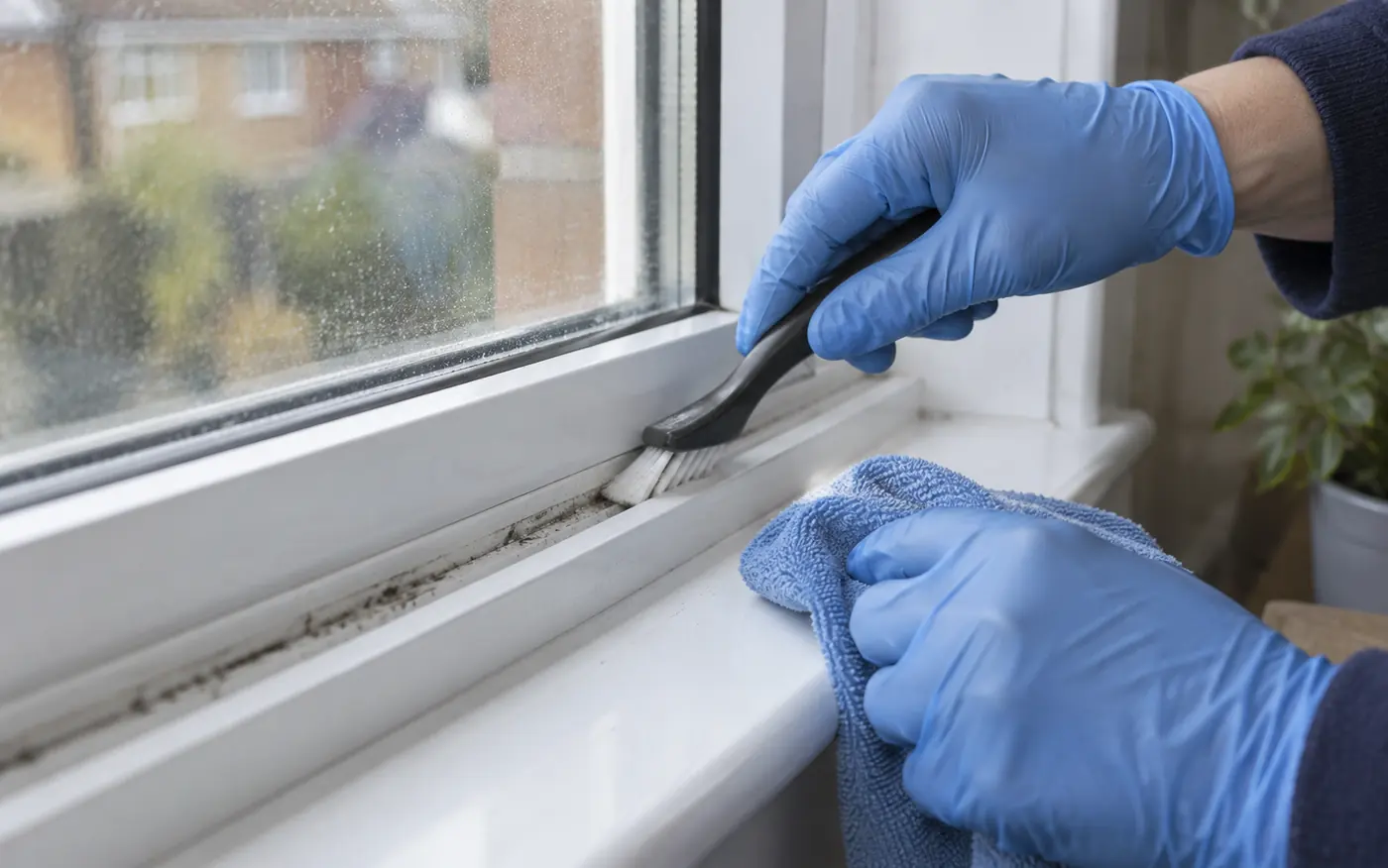
Glass condition sets the starting point
Ordinary dust, finger marks and accepted surface residue can make glazing look dull, but a mark is not necessarily dirt. Scratches, deterioration of a coating and moisture trapped within a sealed unit need a different discussion. Show where the mark appears and whether it changes when you view the glass from each side.
The window-cleaning service focuses on agreed reachable surfaces. If you know the glass has a special coating, supply the care guidance. Where the material is uncertain, say so rather than selecting an abrasive product to test it yourself.
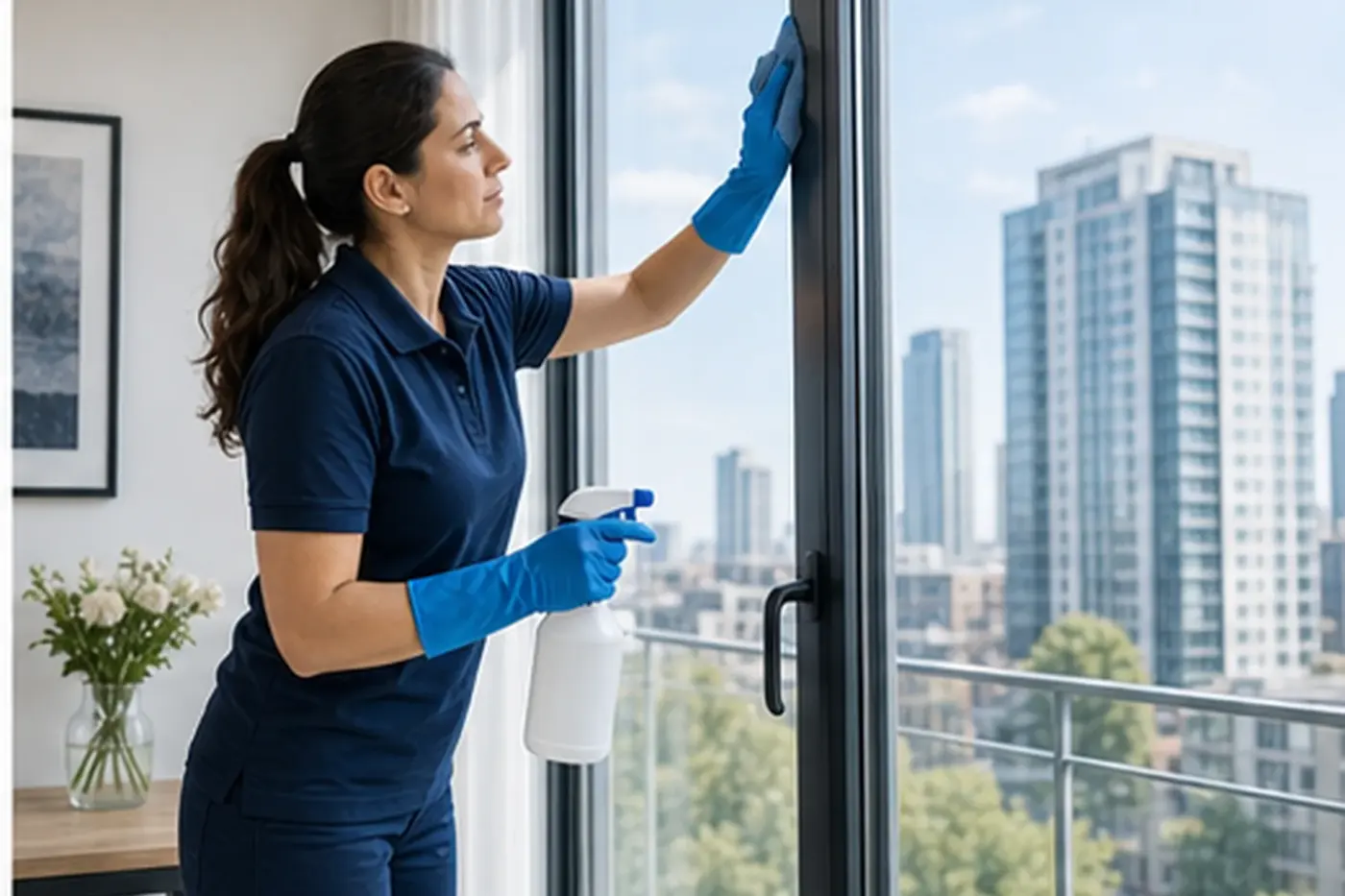
Count panes and sides, then add their scale
A window can contain several panes, and each pane has more than one face. Photograph the group from a position that shows its size and location. Tell the team whether the request is for the interior face, exterior face or both, with exterior requirements assessed separately.
Include patio doors, balcony-door glass and other large panels as named items. Do not assume a standard room count explains their workload. Describe upper panes, restricted opening, furniture and blinds that affect access. Reaching through a window is not automatically an accepted working method, even when the outer face appears close.
Frames, sills and tracks need their own description
| Part | Condition and preparation to explain |
|---|---|
| Frame | Material, worn paint, loose fittings or delicate finish |
| Sill | Surface material and personal objects to remove |
| Track | Reachable debris and any operating defect |
| Handle | Existing looseness or restricted movement |
| Nearby furnishing | Blinds, curtains or furniture affecting the route |
Request these areas explicitly rather than treating a glass-cleaning label as an unlimited frame-restoration service. Swollen timber, failed seals and damaged mechanisms cannot be repaired by wiping accessible surfaces.
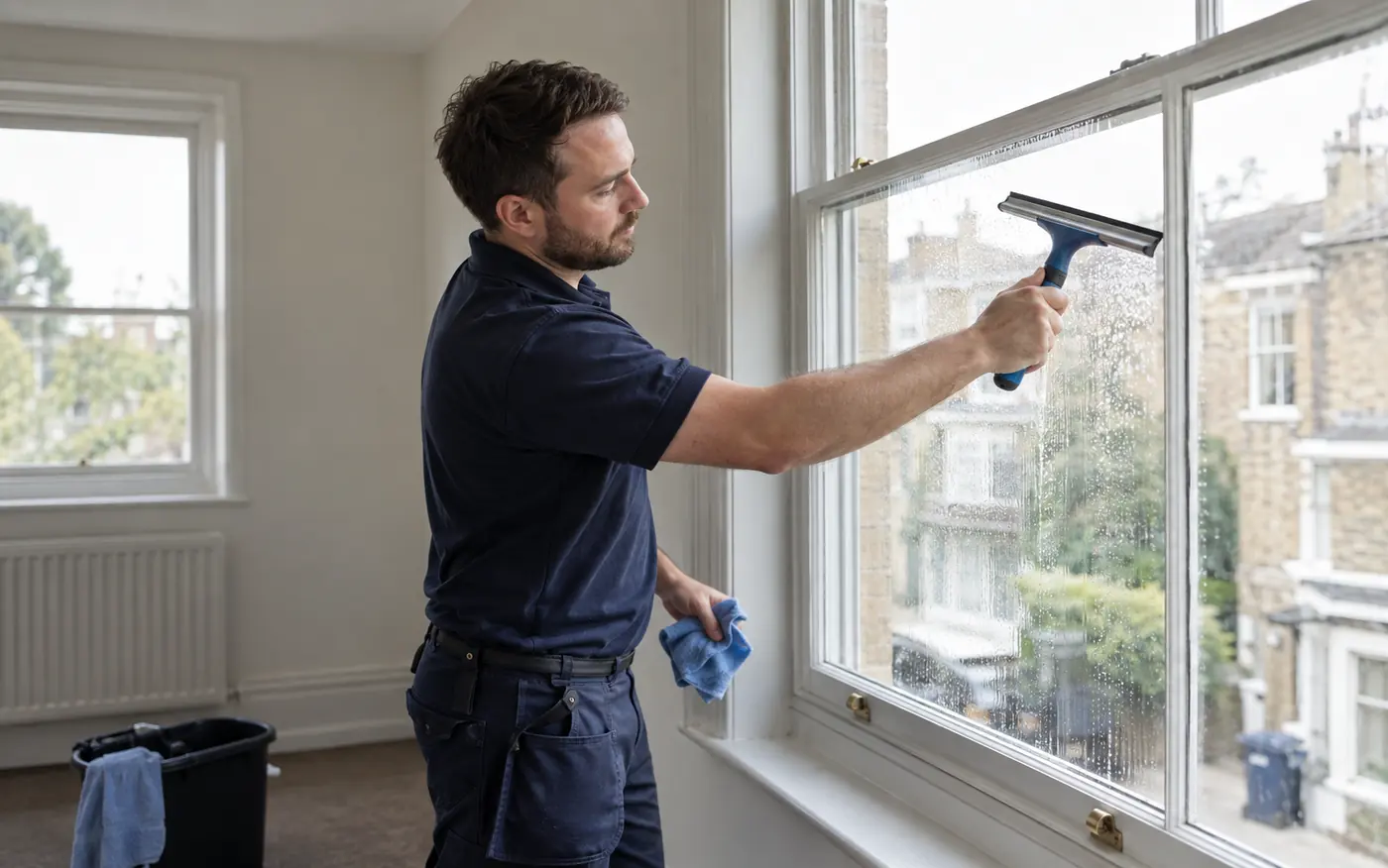
Paint and renovation residue require assessment
If marks appeared after decorating or building work, describe the material involved where known and provide close photographs. Adhesive, paint and cement are not interchangeable residues. Their removal may affect sensitive glass or coatings and should not be assumed within a routine appointment.
A separately scoped after-builders clean can address accepted dust and residue elsewhere, while the glazing method and limits remain explicit. Do not scrape the pane beforehand or layer more chemicals onto an unknown deposit. Explain previous attempts so the assessment starts with the actual current condition.
Prepare a clear route and a clear sequence
Remove plants, ornaments and loose objects from the accepted sills. Clear small obstacles from the approach and tell the team about large furniture that cannot be moved. Identify any restricted window opening and leave unfamiliar fittings alone; access limitations need reporting rather than force.
If a deep clean or tenancy clean is also planned, discuss the order so dusty work does not follow the final glass clean. Check which reachable internal panes are already accepted in the wider brief. A separate appointment should solve a defined gap rather than duplicate existing tasks.
Ealing access and the quote details
Internal window cleaning has no separately verified fixed tariff on the service information, so ask for a quote based on the actual glazing. The number of faces, scale, accessible frames and sills, condition and working route affect that discussion. Confirm applicable VAT, exclusions and agreed access charges in the complete total.
If road space must be reserved, Ealing Council’s suspension guidance says bins and cones must not be used for that purpose. Check the lawful arrangement before booking equipment access rather than assuming the nearest space can be held informally.
Know what to check when work is complete
Review the panes and faces in the accepted list, then the agreed frames, sills and tracks. If a mark remains, ask whether it is a restricted residue, an inaccessible face or a glazing defect. A precise question about one pane is easier to assess than an undefined complaint about all windows.
For external glazing, describe ground access and any building permission requirements independently. Do not apply an exterior starting price to an internal request. For another property, consult coverage guidance and send its own photographs and postcode so the arrangement reflects the correct address.
Practical answers
Questions about methods and materials
How should I count a multi-pane window?
Show the whole group and identify the faces requested. Add dimensions where useful; a single window count can conceal several separate cleaning surfaces.
Can ordinary cleaning remove builders’ adhesive?
Not automatically. Identify the residue and glass type for assessment. Removal can be unsuitable for a sensitive finish and may require a different scope.
Are worn frames a cleaning issue?
Dust or accepted surface residue can be, but peeling paint, swollen material and failed fittings are maintenance matters. Record them before requesting treatment.
Should exterior glass use the same price?
No fixed equivalence should be assumed. External access and scope need separate assessment, while an internal request is quoted for its actual requirements.
Nearby areas
These nearby guides describe the same service in surrounding locations.
See our coverage guide and confirm your full postcode when enquiring.
Your next step
Ask the right questions before treatment.
Explain the materials, condition and access when speaking to End To End.