End To End · Hampstead
Window Cleaning Hampstead
A cloudy view does not always mean the accessible glass needs a stronger product. For Hampstead window cleaning, first locate the mark, identify the finish and explain how the pane can be reached, then agree suitable surfaces and practical preparation.
- Locate marks on a face or between panes
- Explain coatings and previous removal attempts
- Prepare detail surfaces without forcing fittings
Locate the problem before deciding it is dirt
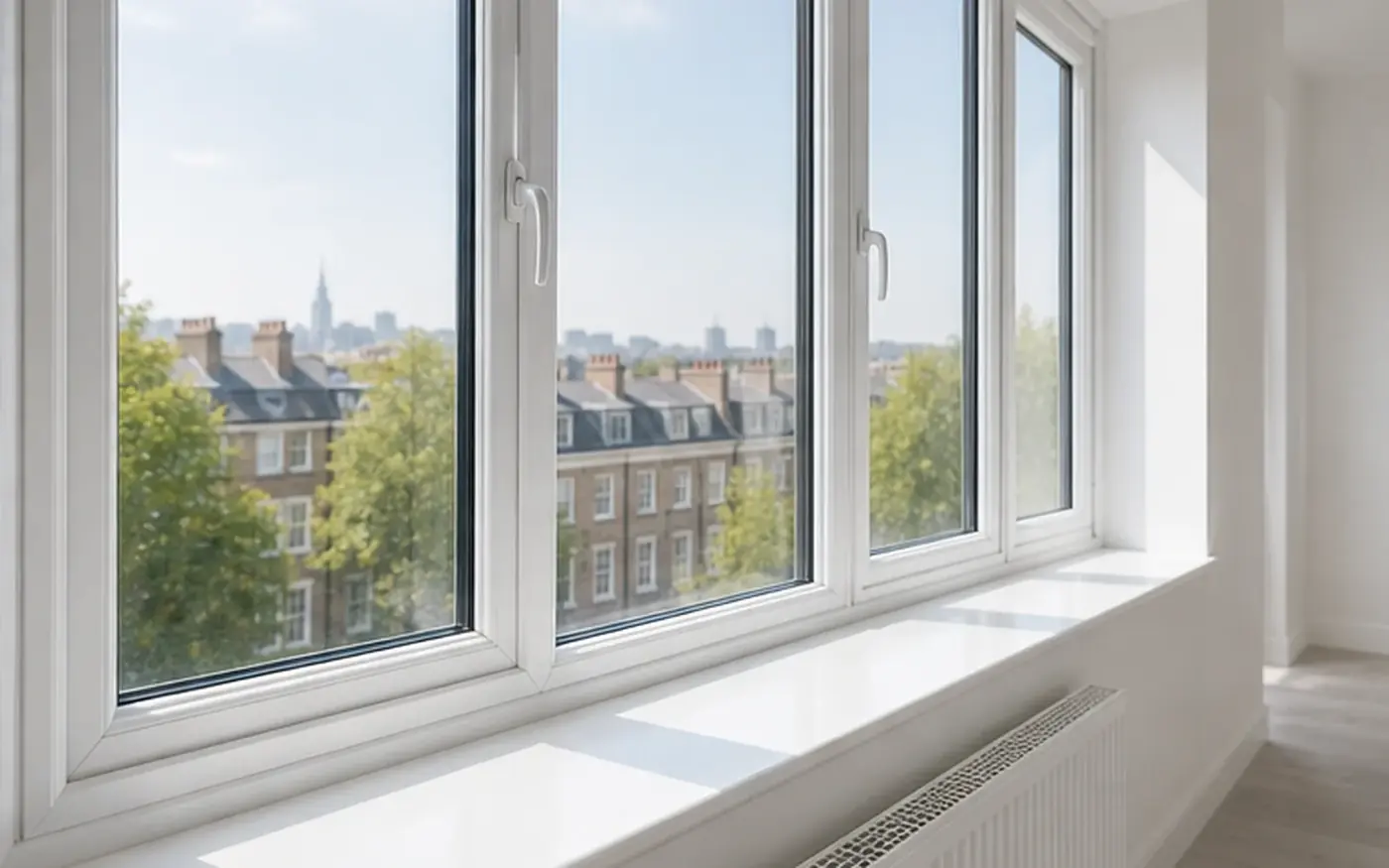
Look at the pane from normal accessible positions and describe whether the mark appears on the inside face, outside face or within the glazing. Send a photograph with enough context to identify the particular pane. Avoid leaning out or forcing an opening merely to investigate a surface.
The window-cleaning service assesses reachable exposed glass and accepted surrounding detail. Fingerprints and ordinary dust differ from scratches, coating deterioration and clouding trapped inside a sealed unit. Cleaning the accessible face cannot repair damage or change a condition within the glazing assembly.
Explain the finish, not just the stubborn mark
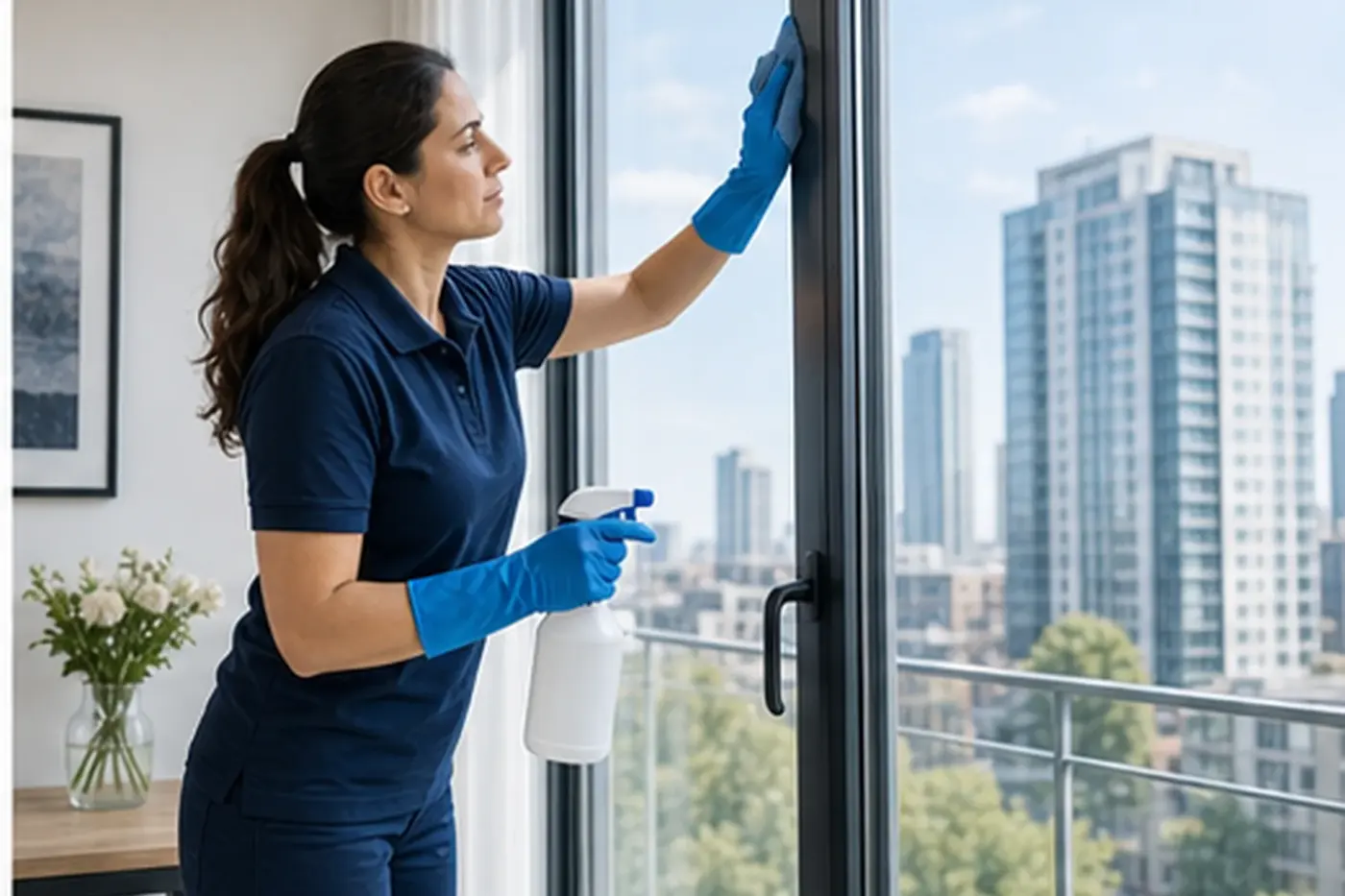
Tell us about known glass coatings or specialist care instructions. If the specification is unavailable, explain that uncertainty. A shiny appearance does not establish which products or tools the surface can tolerate. Include any nearby frame finish that could also restrict the approach.
Paint, adhesive, plaster and cement deposits require separate assessment. Describe when they appeared and any earlier product or scraping attempt. Do not apply stronger abrasives to prove that a mark is difficult. A surface may be unsuitable for a proposed removal even when the residue itself is obvious.
Separate the glass from its surrounding components
| Surface or component | Cleaning question | Different concern |
|---|---|---|
| Pane | Which exposed face and residue? | Scratches or internal clouding |
| Frame | Which reachable edges and material? | Loose finish or failed joint |
| Sill | Which cleared surfaces? | Swelling or permanent staining |
| Track or handle | Which accessible debris or marks? | Operating fault or broken fitting |
Ask which details are accepted in the quote. A general glass-cleaning request is not an agreement to restore the window assembly or repair its mechanism.
Count the work in a way that explains its scale
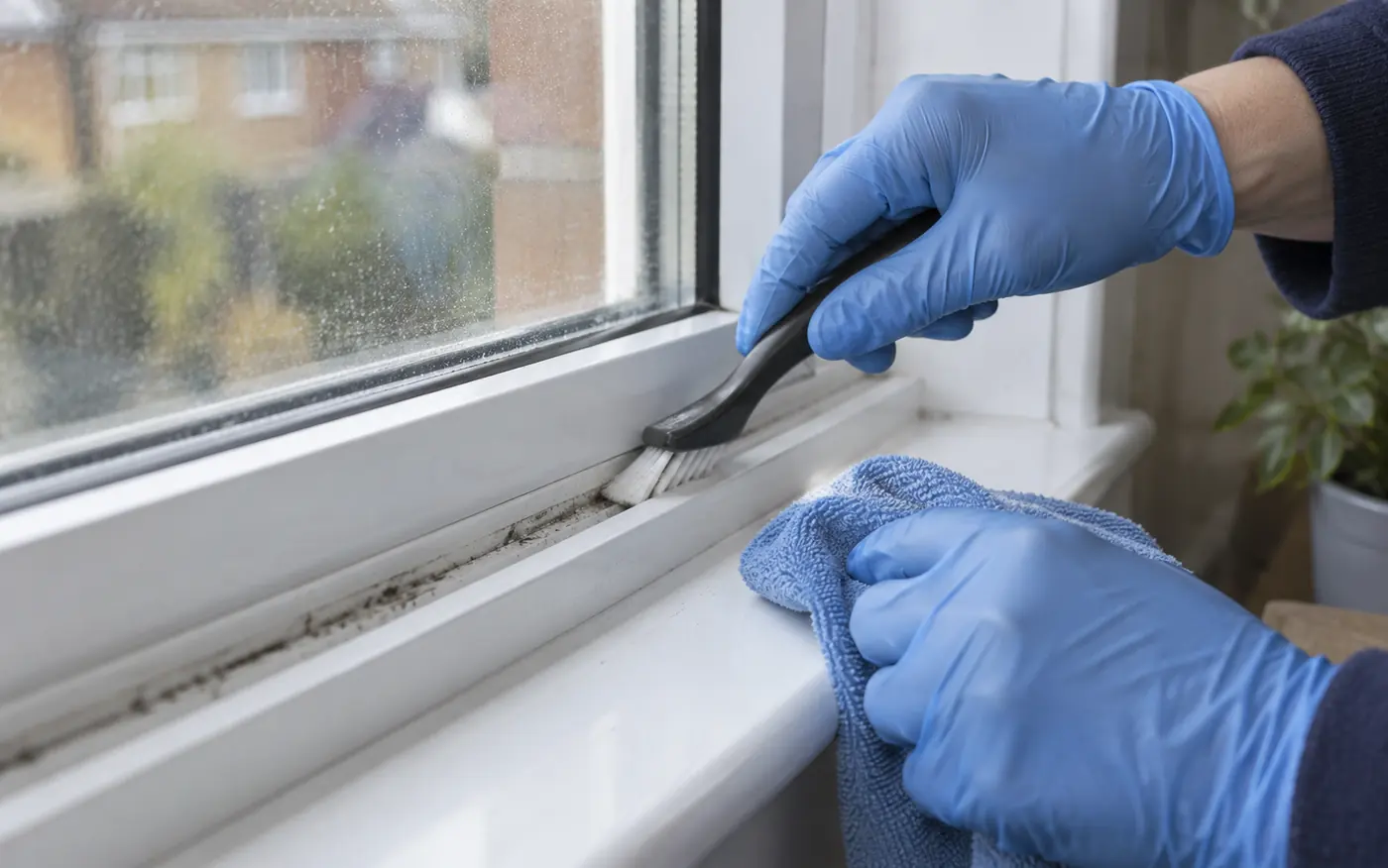
Photograph the complete glazing group and identify the number of panes and requested faces. Include broad doors, separate upper panes and other features that a simple room count can hide. Say whether exterior surfaces are also wanted, with their access considered independently.
Describe curtains, blinds and furniture that obscure the approach. A large accessible internal panel and a smaller obstructed pane create different practical questions. If the room has changed since an earlier visit or inventory photograph, send a current view so the request reflects the layout that actually exists.
Prepare without removing the access limits
Clear plants, ornaments and personal items from the accepted ledges, and remove small floor obstacles. Tell the team about large furniture that will remain. Heavy movement, dismantling blinds and forcing a restricted window should not be assumed necessary or included.
Finish dusty work before the final glass clean where practical. If renovation residue affects more than glazing, discuss after-builders cleaning with a separate glass assessment. A deep clean can address other accepted household surfaces, while tenancy cleaning needs a clear handover list rather than an assumption that every face is covered.
Hampstead: access arrangements and the complete price
For an address in Camden, use the council’s guide to the parking service appropriate to the visit. Share the lawful unloading route and any controlled entrance. A permission for an occupier’s own vehicle should not be assumed to cover every contractor arrangement.
There is no separately verified fixed internal-window tariff for all properties. Ask for the accepted panes, faces and detail surfaces to be priced, with applicable VAT, exclusions and agreed access charges clear. Explain uncertain residue before accepting the amount rather than adding an unassessed specialist task on arrival.
Review against the described faces and finishes
Inspect the accepted glass and surrounding detail by location. If a mark remains, ask whether it relates to a restricted residue, an unaccepted face or damage. Keep the written scope available so that review is based on the surfaces actually agreed.
For outside glazing, confirm a distinct working method and price; no specialist access is promised from the internal request alone. When another property needs attention, use our coverage information and send its own photographs and access details. A similar-looking window elsewhere may have different finishes, condition and restrictions.
Practical answers
Questions about methods and materials
Can cleaning clear moisture trapped between panes?
Cleaning exposed glass does not repair a failed sealed unit. Explain where the clouding sits so a maintenance issue is not treated as ordinary surface dirt.
Does a smaller window always mean less work?
Access, surrounding detail and condition matter as well as size. Show the complete layout and faces requested instead of relying on dimensions alone.
Should I take blinds down myself before booking?
Explain the obstruction and obtain the relevant preparation instructions. Do not dismantle an unfamiliar fitting simply to assume a pane becomes accessible.
What if the paint type is unknown?
Say so and send photographs of the deposit and glazing. Suitability for removal requires assessment rather than an assumed universal scraping method.
Nearby areas
These nearby guides describe the same service in surrounding locations.
See our coverage guide and confirm your full postcode when enquiring.
Your next step
Ask the right questions before treatment.
Explain the materials, condition and access when speaking to End To End.