End To End · Clapham
Upholstery Cleaning Clapham
Treat a room of upholstered furniture as a set of individual items, not one interchangeable fabric. For Clapham, list each seat, cushion and requested panel, then discuss material suitability, wear and drying before confirming a furniture-cleaning scope.
- Separate each furnishing and its construction
- Name accessible faces and component counts
- Keep treatment limits visible in the quote
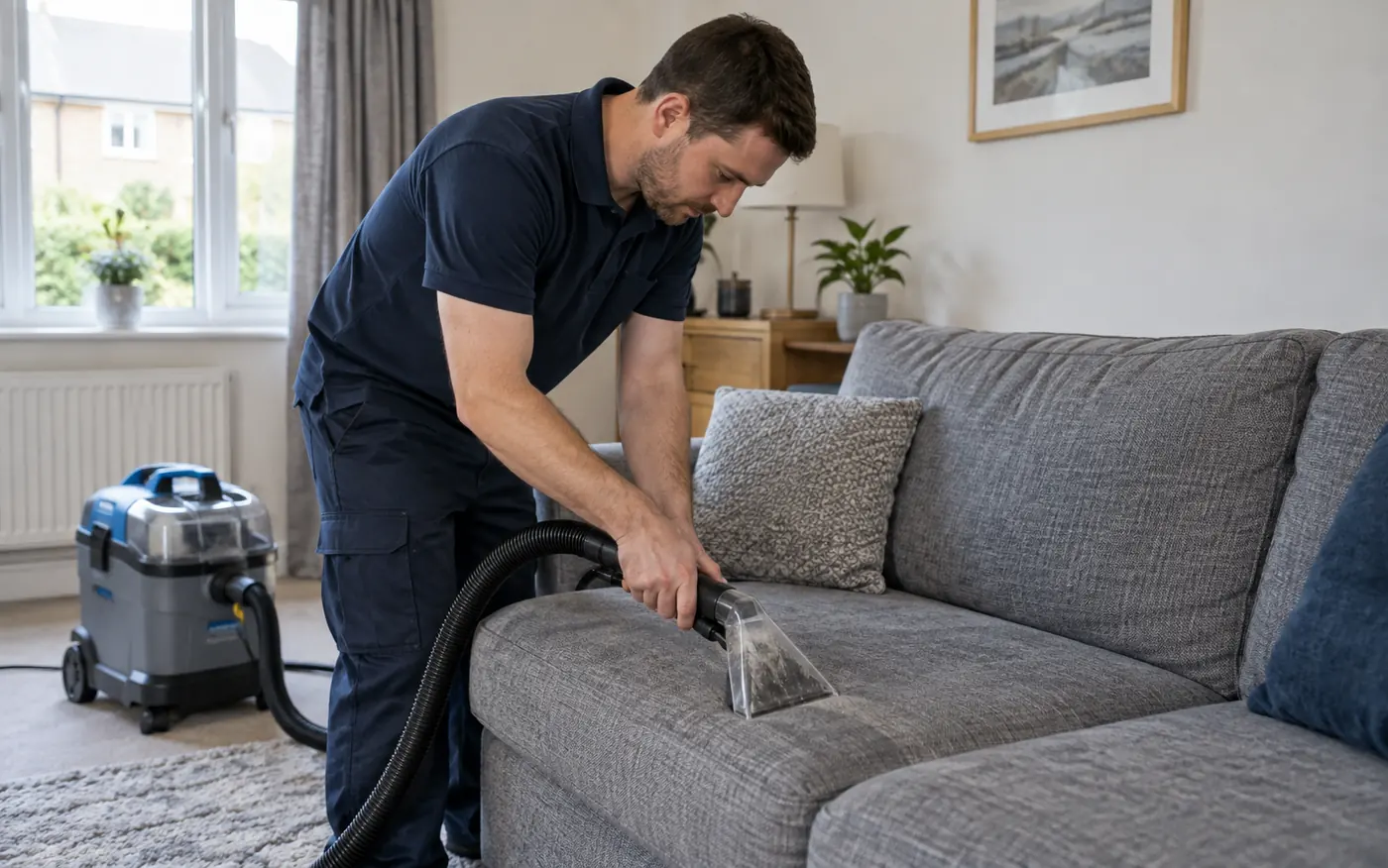
Describe the furniture collection item by item
A sofa and two chairs may look like a matching set while their wear, cushion construction and accessible surfaces differ. Photograph each item separately, including any labels, then show the furniture together in its room. State dimensions for an unusually deep seat, chaise or broad upholstered base.
The upholstery service is assessed against the material and condition of the item being treated. Do not assume a method suitable for one chair applies to every furnishing nearby. Tell us which pieces you want considered and whether any matching item is intentionally outside the request.
Use a component checklist rather than a room count
| Item detail | What to identify |
|---|---|
| Seat area | Quantity, size, fixed or loose construction |
| Back cushions | Faces requested and filling information where known |
| Arms and sides | Visible soil, trim and accessible panels |
| Rear surface | Working space and any movement restriction |
| Separate furnishing | Footstool, headboard or mattress as its own request |
Include removable cushions that are stored elsewhere if you want them assessed. A seat-count quotation needs a clearly understood furniture shape; extra components should not simply appear after the accepted scope has been priced.
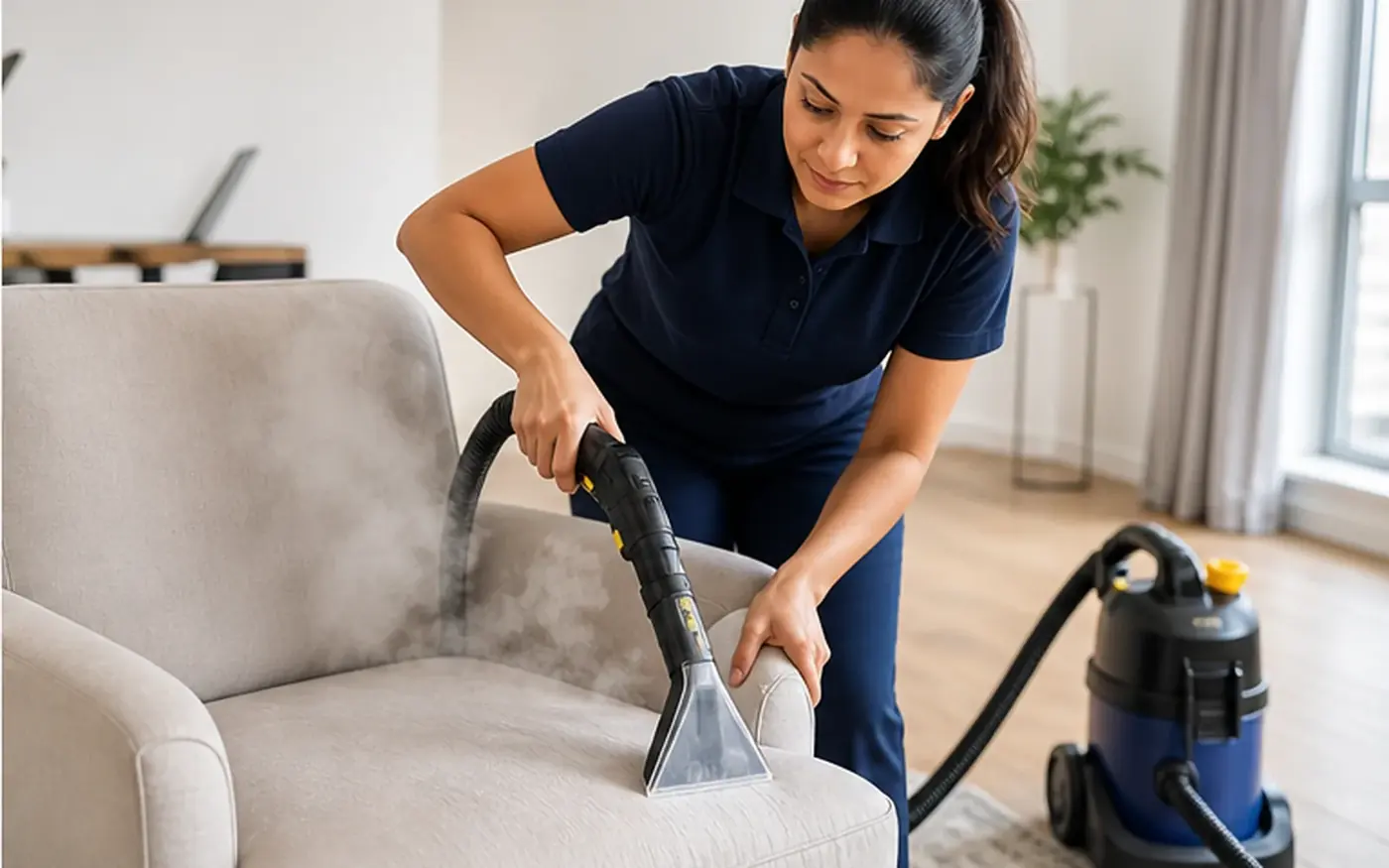
Distinguish the fabric’s appearance from its condition
Photograph worn edges, loose seams and uneven colour alongside stains. Explain whether a mark followed a known spill or whether its cause is unknown. If spot cleaners have been used, identify them and say whether the area dried differently afterwards.
Cleaning cannot reweave worn fabric, replace missing colour or repair a frame. Some staining and odours can remain despite accepted treatment. Discuss realistic boundaries before the visit, particularly where an ageing item has several different problems. A useful enquiry identifies which parts are removable soil concerns and which require maintenance or restoration advice.
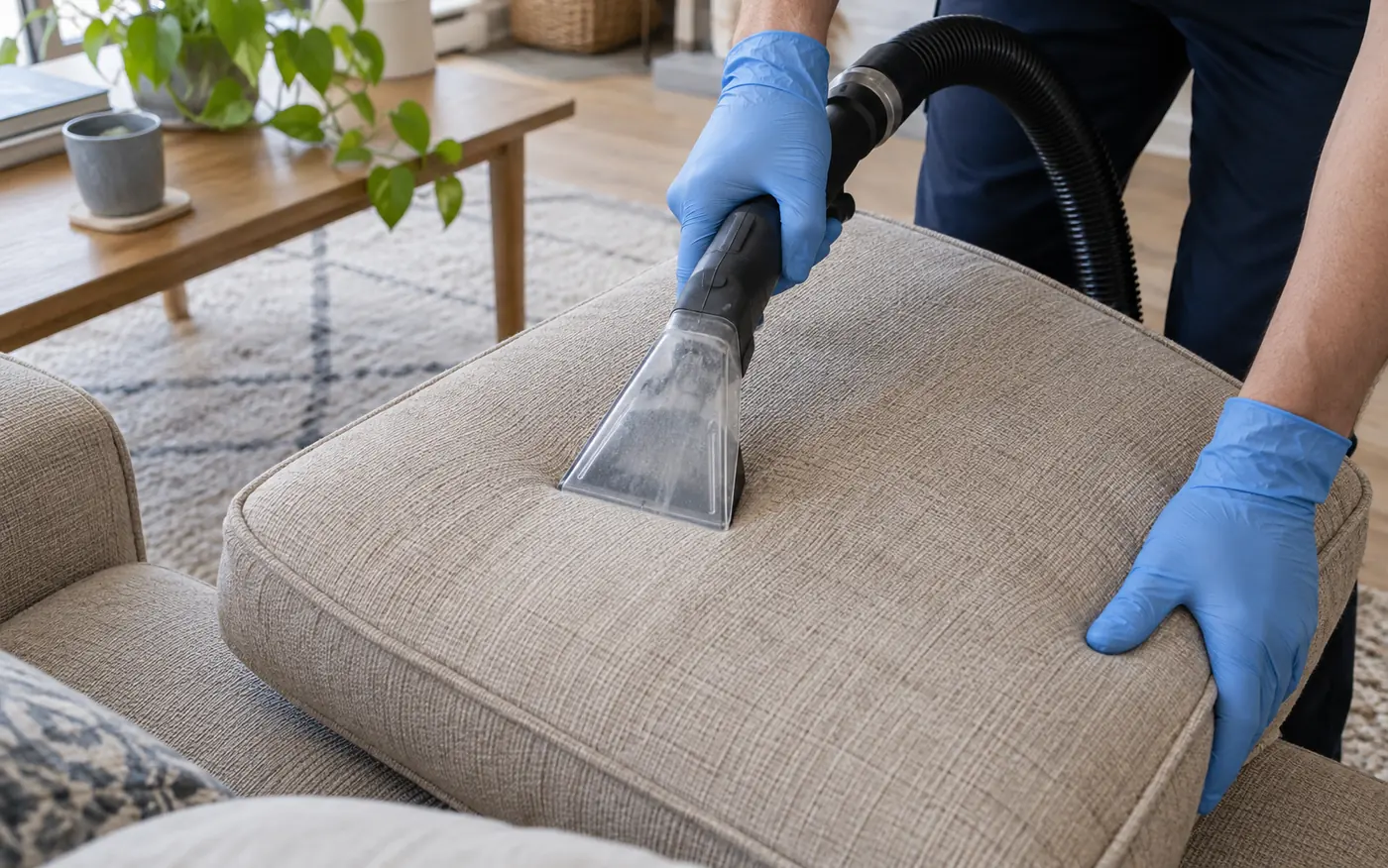
Prepare a working area around the whole item
Remove throws, personal possessions and loose items tucked alongside the cushions. Clear nearby ornaments and the equipment route without attempting heavy furniture movement you cannot manage. Describe how close the item sits to a wall and whether its rear or side panels can be reached.
Keep pets and children away during the work and arrange other seating afterwards. Explain whether the room can remain available while the accepted treatment dries. A busy shared household should agree who will keep the seats out of use; a cleaning appointment does not make damp furniture immediately suitable for ordinary sitting or wrapping.
A per-seat starting figure needs an itemised total
The published entry price is £35 per seat. The quote still depends on dimensions, material, accepted faces and condition. Ask how a chaise section, unusually broad seat or separate cushion will be counted before accepting the booking.
Request applicable VAT, exclusions and agreed access charges in the total. For the floor beneath or around the furniture, ask for a separate carpet-treatment scope. A deep-cleaning visit addresses other accepted room surfaces and should not be mistaken for material assessment of every soft furnishing in that space.
Clapham equipment access depends on the property address
Use the full address to identify the relevant parking authority; the Clapham name alone is not enough. For an address within Wandsworth, consult the official suspension information if reserved space is being considered, and check whether an arrangement applies to the actual vehicle and purpose.
Provide the distance from lawful unloading to the furniture, stairs and controlled entrances. If entry depends on another resident or building contact, agree their availability. Look at coverage information when arranging a second property and supply its own details rather than transferring access assumptions.
Decide aftercare before the upholstery is treated
Ask for guidance on cushion positioning, ventilation and when ordinary use can resume for each accepted item. Filling, material, method and room conditions can differ across a matching set. Do not stack damp cushions tightly together or cover the furniture simply because another piece already feels dry.
For furnished checkout, coordinate these requirements with tenancy cleaning and leave a realistic review interval. Check treated components against the item list, ask about remaining marks and retain the instructions for the next occupier. Cleaning review remains separate from a landlord’s decision about damage or deposit matters.
Practical answers
Questions about upholstery cleaning
Should matching chairs be listed individually?
Yes. Describe each piece, its condition and care information. Matching appearance does not establish identical construction, wear or treatment suitability.
Does a seat price cover a chaise automatically?
Ask how the actual shape is counted and which surfaces are accepted. An extended section should be identified before the complete quote is confirmed.
What if the furniture cannot be moved from the wall?
Explain that restriction beforehand and show the accessible space. The rear panel should not be assumed included where it cannot be reached.
Can all treated items return to use together?
Follow the aftercare for each material and filling. Similar-looking furnishings may dry differently, so one item’s condition should not determine the whole set’s timing.
Nearby areas
For another property nearby, choose the location where the work is needed.
See our coverage guide and confirm your full postcode when enquiring.
Your next step
Agree the work before the visit.
Share the surfaces or items needing attention so the booking can be assessed properly.