End To End · Battersea
Upholstery Cleaning Battersea
A mark on upholstery tells only part of the story. For Battersea furniture cleaning, consider the face fabric, filling, previous products and everyday use together, then agree what can be treated and how the item will dry afterwards.
- Understand cover and filling differences
- Explain stains without guessing their cause
- Include drying conditions in the treatment plan
A removable cover is not a care instruction
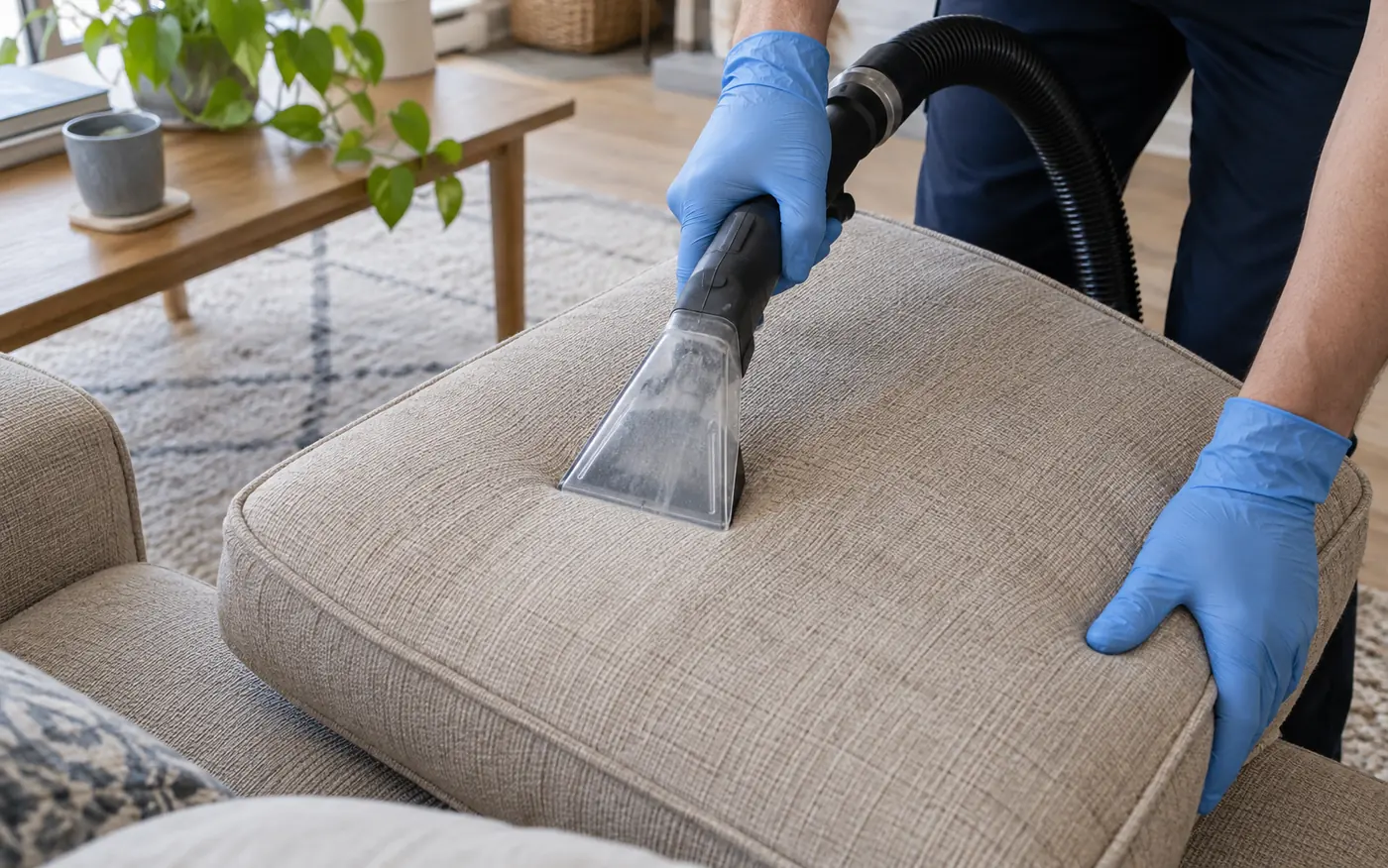
A zip allows access to a cover or filling, but it does not tell you whether the fabric is washable, whether dyes are stable or whether the cover will keep its shape. Look for the actual manufacturer label and share a photograph of its wording. Leave uncertain components assembled until suitability has been discussed.
The upholstery-cleaning service considers construction as well as visible soil. Explain whether seat and back cushions are fixed, loose or attached in another way. If you have already washed a cover, describe that history and any change in fit, colour or texture.
Describe the filling and the way the item is used
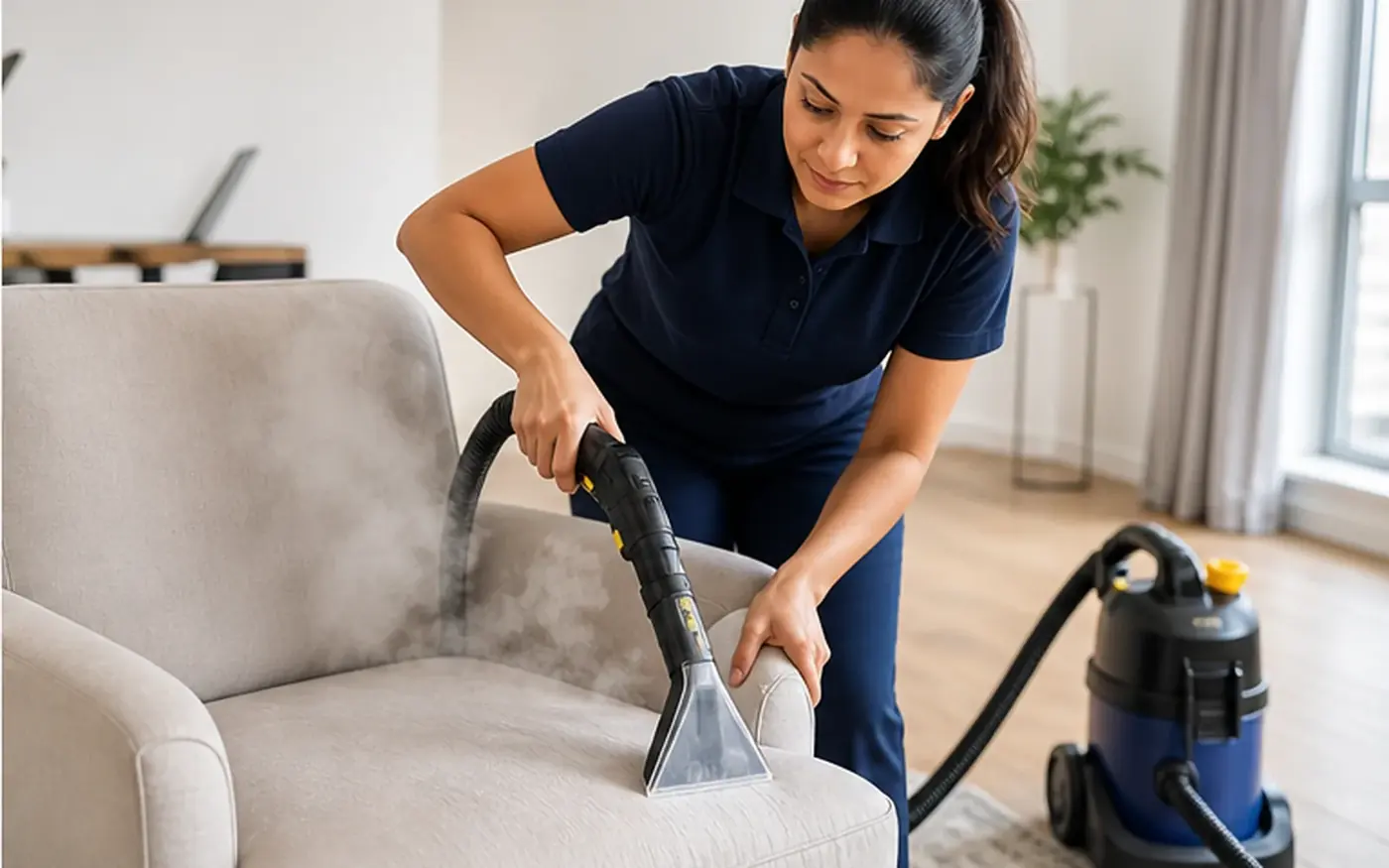
Where known, tell the team what is inside the cushions and whether different parts of the item have different construction. Do not open stitched panels or disturb a lining to find out. Photographs and available care information provide a better starting point than dismantling furniture for an enquiry.
Explain heavily used areas and any surface that must remain unavailable after treatment. A family’s only sofa creates a different practical aftercare question from spare-room seating. That does not change the fabric’s requirements; it means the household needs an alternative arrangement while the accepted work dries.
What a stain description should contain
| Detail | Useful description |
|---|---|
| Location | Exact cushion face, arm, back or side panel |
| Possible source | Known spill or cause uncertain |
| History | Approximate age and prior treatment |
| Appearance | Colour, edge, ring or change in texture |
| Existing wear | Fraying, loose seams, fading or flattened pile |
No label such as “water mark” proves what treatment will achieve. Permanent staining, lost dye and fibre damage may remain; cleaning is not a universal restoration process.
An odour needs an honest source history
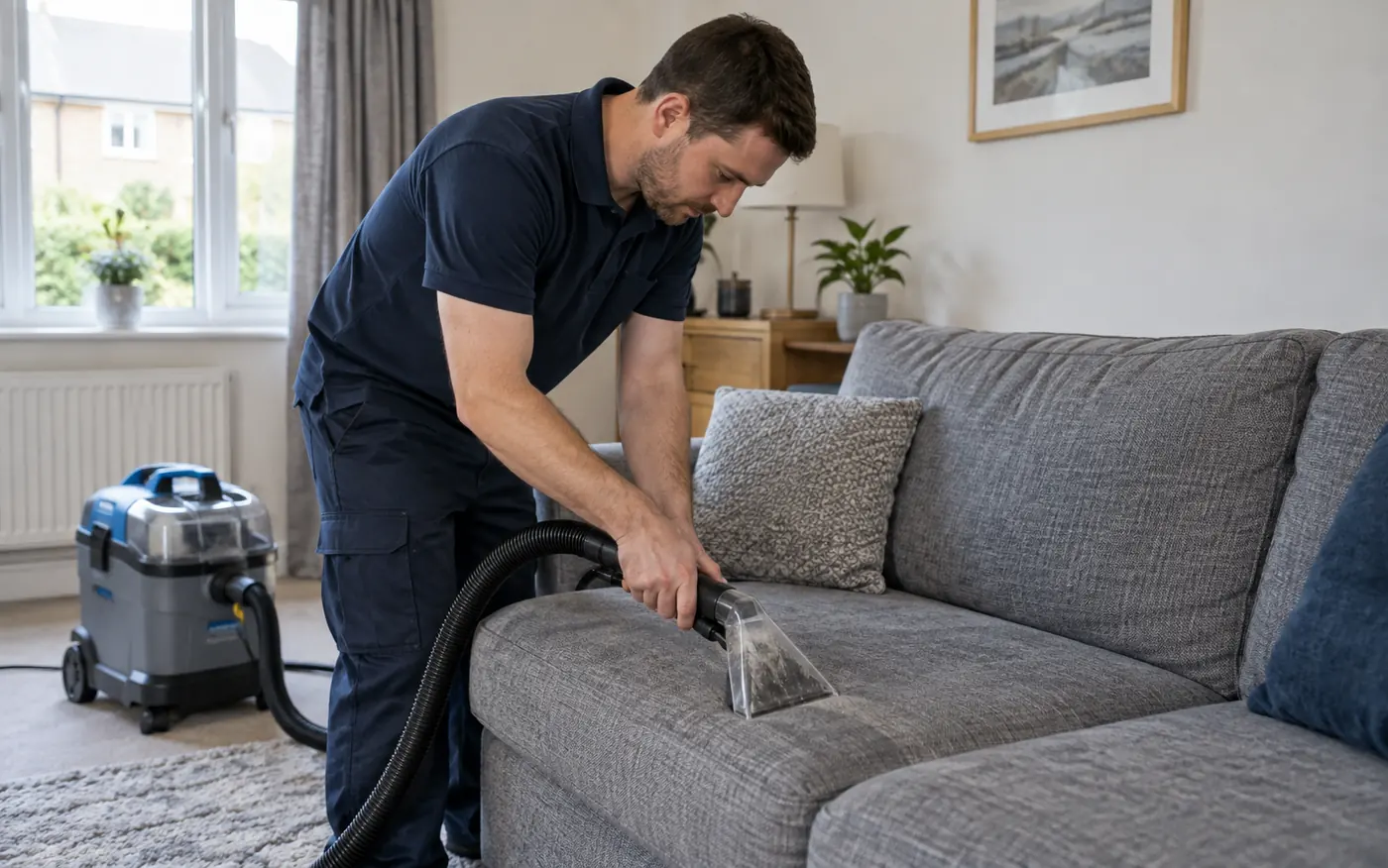
If smell is a concern, explain what you know about its source and whether liquid reached the cushion filling. Mention earlier deodorising products or attempts to mask it. Do not promise the team that the problem is only superficial if you cannot tell.
Assessment may identify limits beyond the accepted surface treatment. No complete odour-elimination guarantee should be inferred from booking a sofa clean. The item’s condition, material and affected components determine what can be considered. Ask how those limitations will be explained and recorded before deciding whether the proposed service addresses your particular concern.
Prepare access and an aftercare space
Take loose possessions and throws off the furniture. Clear the surrounding equipment route, explain any rear surface that cannot be reached and identify heavy movement restrictions. Keep pets and children away from the work area and plan where the household will sit afterwards.
Ask how accepted cushions should be positioned and how the room should be ventilated. Filling, fabric, method and conditions influence drying. Do not tightly stack, wrap or return damp components to use on the basis of a generic elapsed time. If checkout is approaching, incorporate these needs into the tenancy-cleaning schedule.
Price by the item that can actually be treated
The upholstery starting price is £35 per seat. A confirmed quote needs seat dimensions, component count, material, condition and the accepted treatment. Ask how a chaise, footstool or additional cushion is counted. A mattress remains a separate request even when it is in the same room.
Request the complete amount with applicable VAT and agreed access charges. Where floors also need attention, define carpet work by room. A deep clean concerns a different set of household surfaces; it does not substitute for deciding fabric suitability.
Battersea equipment access and the final review
If the visit overlaps with moving arrangements, check the actual permission for each vehicle. Wandsworth’s official bay-suspension information lists removals among possible purposes, but approval and restrictions still govern the arrangement. Give a lawful unloading route and the distance to the furniture.
Review the accepted components and obtain item-specific aftercare before ordinary use resumes. Keep a note of remaining marks and explained limitations. If a second address needs treatment, consult the coverage guide and send new item photographs and access details rather than assuming its furniture matches this brief.
Practical answers
Questions about methods and materials
Does removing a cover make it easier to clean?
Not automatically. Care instructions and construction determine suitability. Do not dismantle an unfamiliar item or wash a cover merely because it can be detached.
What should I say about an unknown smell?
Describe its location, history and previous products, and be clear about uncertainty. Assessment is more useful than assuming every odour has the same removable source.
Can a damaged seam be cleaned back into place?
Cleaning cannot mend stitching or restore furniture structure. Identify existing damage before treatment so it is recorded separately from soil.
Can I set one drying deadline for every cushion?
Ask for guidance for the actual fabric and filling. Different components and room conditions can affect timing, so a single universal deadline is unreliable.
Nearby areas
These nearby guides describe the same service in surrounding locations.
See our coverage guide and confirm your full postcode when enquiring.
Your next step
Ask the right questions before treatment.
Explain the materials, condition and access when speaking to End To End.