End To End · Acton
Upholstery Cleaning Acton
Before treating a mark on fabric, establish what the upholstery can tolerate. This practical guide to upholstery cleaning in Acton helps you describe fibres, construction and earlier treatments, then plan an assessed service with appropriate drying arrangements.
- Start with the label and construction
- Explain previous products and uncertain stains
- Protect access around each accepted item
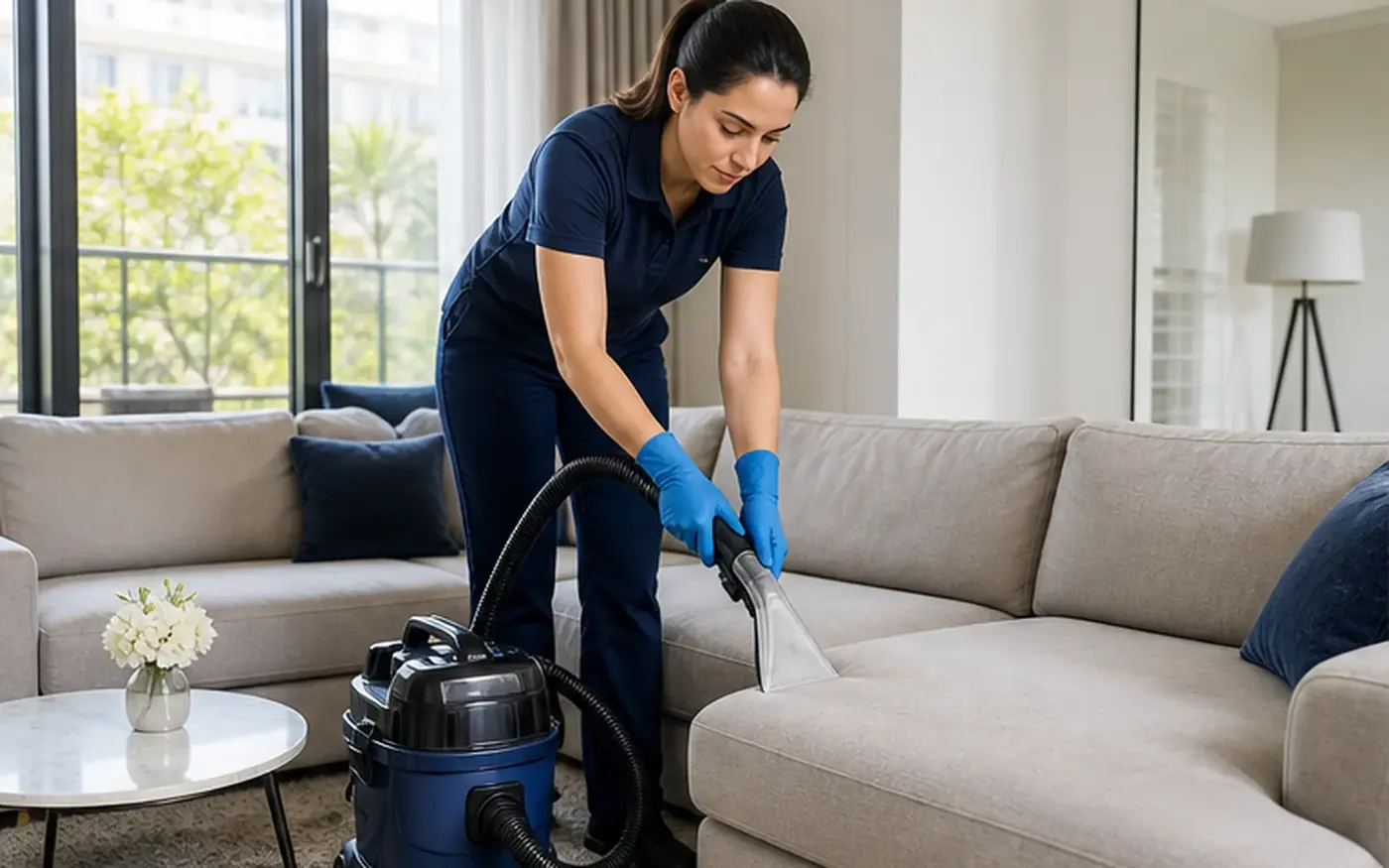
Fabric identification comes before stain treatment
Look for the manufacturer care label beneath an accessible cushion or on the furniture’s normal label position. Photograph the wording rather than summarising it from memory. If the label is missing, say so and provide clear pictures of the material and construction. The colour or softness of a fabric does not establish its fibre content.
Our upholstery-cleaning service requires an assessment of suitability. Unknown fabrics, delicate trims and damaged surfaces may restrict the available method. Do not test a strong household cleaner on a visible patch simply to discover whether the colour will change.
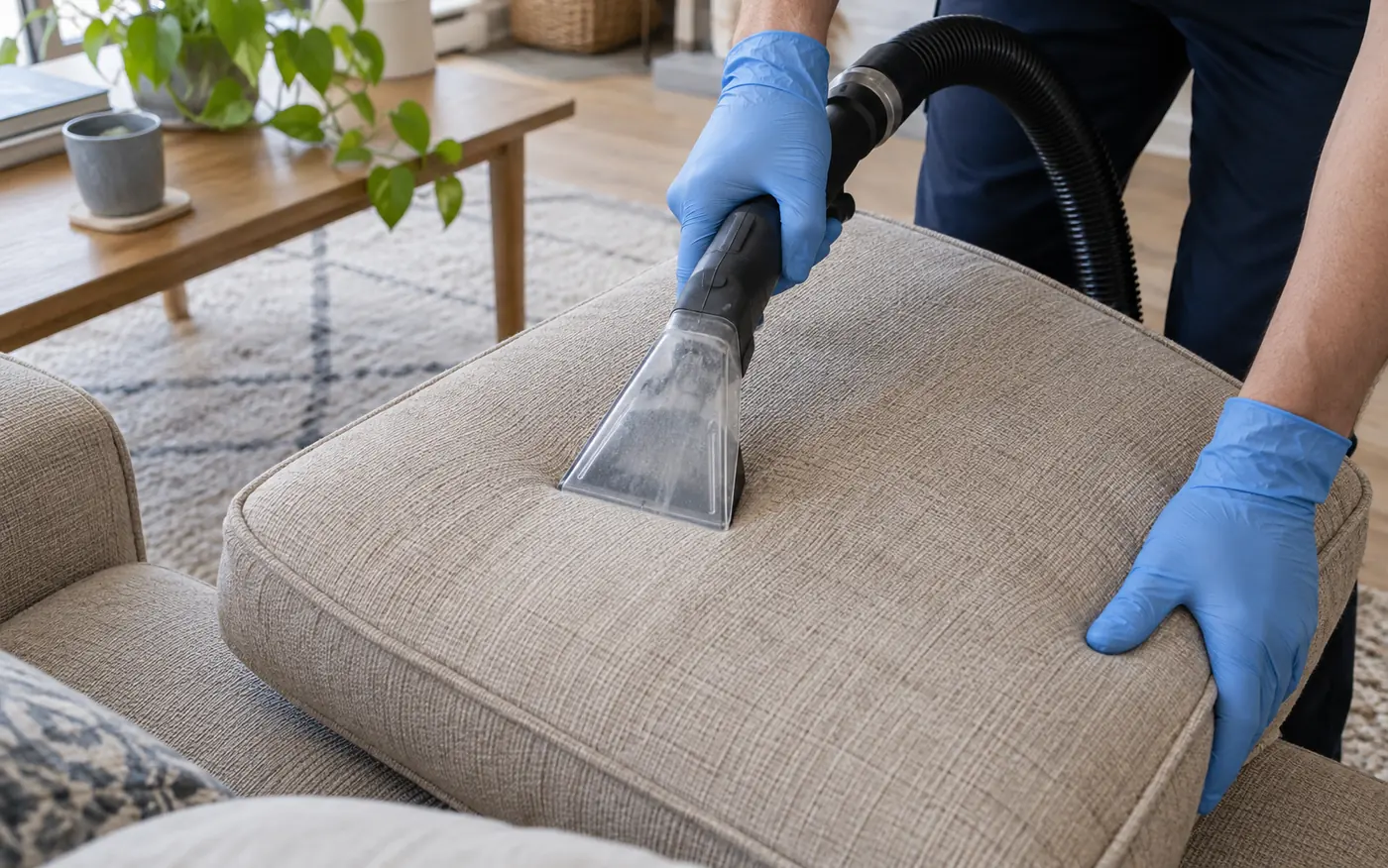
A seat has several layers to consider
The face fabric, backing, padding and cushion filling form one item but may respond differently to moisture and treatment. Explain whether cushions are fixed or removable, whether covers have zips and whether the furniture has a separate upholstered base or reclining mechanism.
Removable does not mean machine washable. A loose cover can change shape or behave differently from the material underneath it. Leave any uncertain cover in place for assessment and share its care instructions. If you have already washed or treated part of an item, describe what happened, including shrinkage, colour change or a visible ring around the treated area.
Read a mark without promising its removal
| What you notice | Useful information for assessment |
|---|---|
| Dark seat patch | Frequency of use, possible spills and previous products |
| Light armrest area | Wear, sunlight exposure and any colour loss |
| Ring after spot cleaning | Product used, amount applied and how it dried |
| Persistent smell | Likely source and whether fillings were affected |
No appearance alone proves the cause. Cleaning can address accepted soil but cannot reconstruct worn fibres, mend seams or guarantee elimination of every stain or odour.
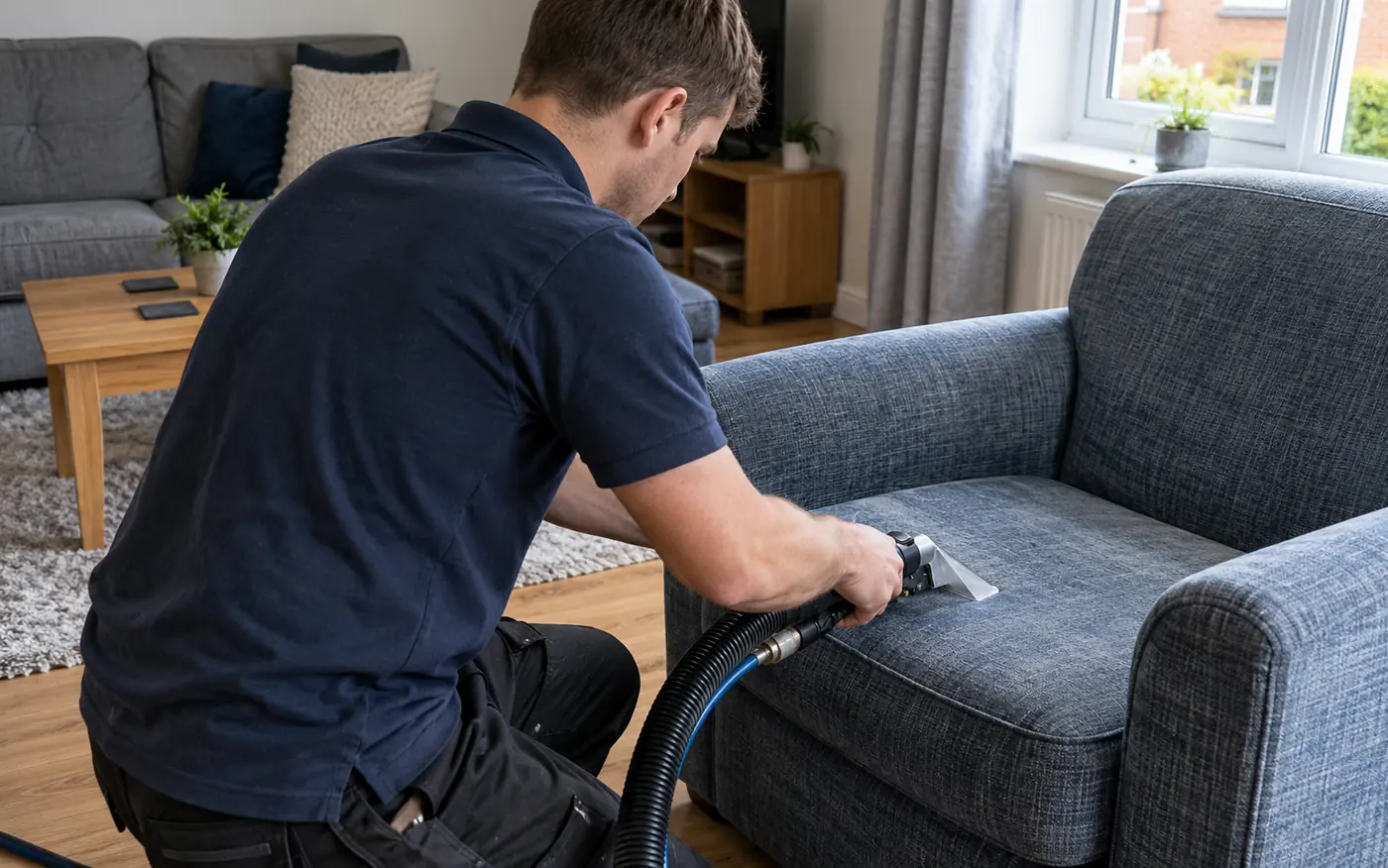
What to clear before the team arrives
Take off throws and remove possessions from the seats. Clear nearby ornaments and small objects that could obstruct equipment. Describe access behind and beside the furniture, including any narrow route into the room. Discuss heavy furniture movement in advance instead of expecting it during the appointment.
Make an alternative place to sit available and keep pets away from the working area. Explain whether windows can be opened appropriately for ventilation and whether the room will remain accessible after treatment. If you are moving out, share the checkout date early; fabric work needs a drying plan alongside the wider tenancy clean.
Drying is part of the result you need to plan
The time before ordinary use depends on the material, method, filling and room conditions. Ask for instructions for your actual item, including cushion positioning and ventilation. Do not wrap, stack or tightly replace damp components unless specifically instructed to do so.
Where several seats are treated, plan how the household will use the room while they dry. A general promise that every sofa will be ready within the same number of hours would ignore these differences. Report a concern with photographs and the treatment details rather than immediately applying another product to a still-damp surface.
Price by the accepted furniture, not just its label
The advertised upholstery starting price is £35 per seat. Seat count is only one part of the quote. Item dimensions, fabric, cushion faces, accessible arms and back sections, condition and additional furnishings all need defining.
Request the full written price with applicable VAT, exclusions and agreed access costs. A mattress, headboard or footstool should be named as a separate requirement. For suitable carpet areas, compare a combined fabric-cleaning request. A deep clean covers a different list of household surfaces; it does not remove the need to assess upholstery independently.
Acton equipment access: confirm the actual address
For addresses in Ealing, the council’s parking suspension guidance says bins and cones cannot be used to keep road space free. Check the relevant authority for your Acton address, then arrange lawful unloading rather than improvising on arrival.
Tell us about stairs, entry systems and the distance equipment must travel to the furniture. Keep an authorised contact available for questions about material or scope. Use our coverage guide for another property and give the full postcode when asking about availability.
Practical answers
Questions about methods and materials
Does a zip mean the cushion cover can be washed?
No. Check the care information and construction. A removable cover may still have restrictions and should not be machine washed based only on the zip.
Should I scrub a stain before the appointment?
Explain the stain and products already used, then ask for advice. Further unassessed treatment can complicate the condition and should not replace fabric assessment.
Can cleaning fix faded fabric?
Lost colour and worn fibres are outside cleaning repair. Treatment may address removable soil, but the underlying appearance can remain uneven.
How should I arrange the cushions afterwards?
Follow the instructions for the accepted method and filling. Ask about positioning, ventilation and ordinary use rather than relying on a generic drying time.
Nearby areas
These nearby guides describe the same service in surrounding locations.
See our coverage guide and confirm your full postcode when enquiring.
Your next step
Ask the right questions before treatment.
Explain the materials, condition and access when speaking to End To End.