End To End · Ealing
Upholstery Cleaning Ealing
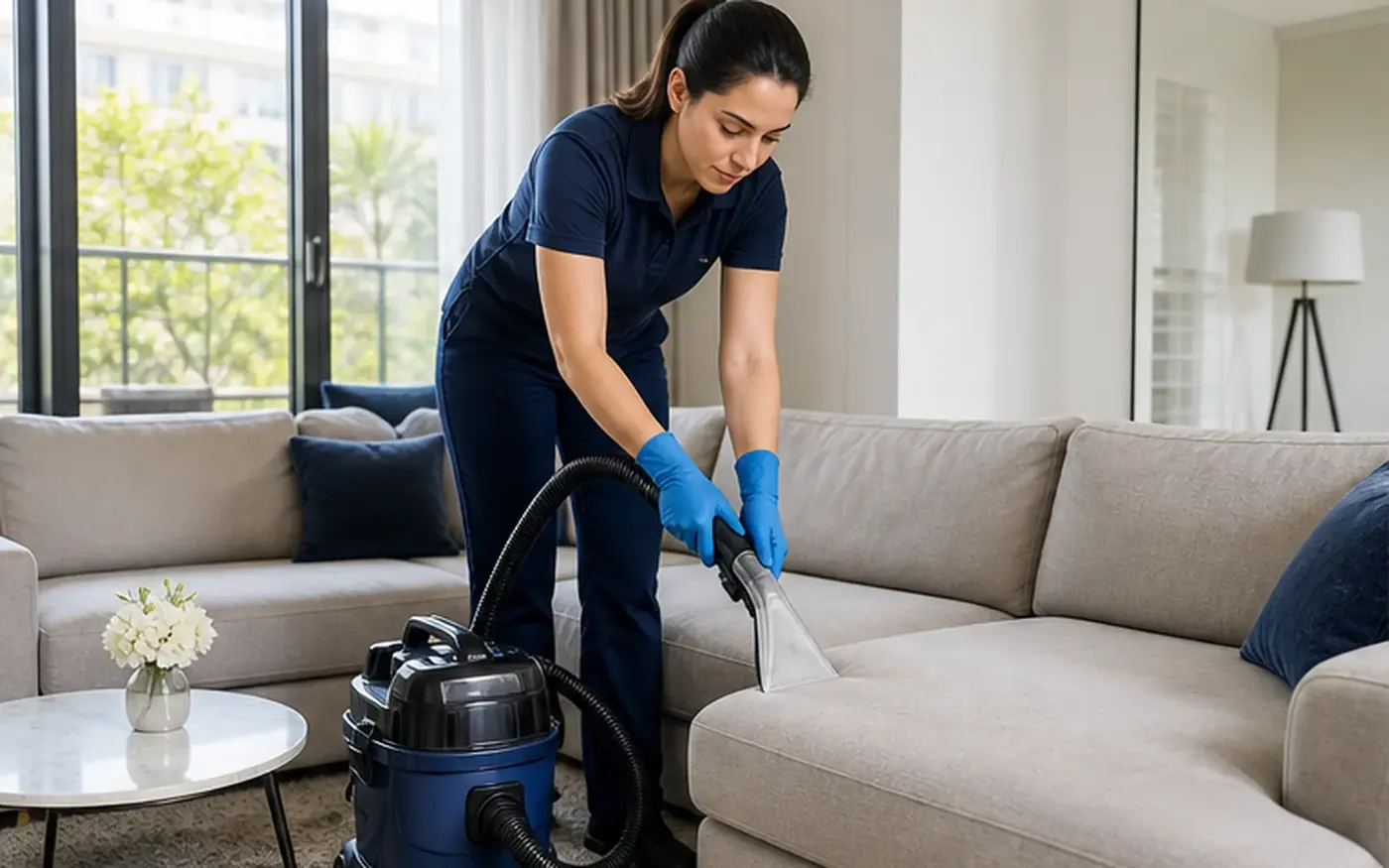
Furniture treatment needs more planning than a final wipe before keys change hands. Arrange upholstery cleaning in Ealing around the inventory, the items staying at the property and the time those fabrics need before normal use or inspection.
- Identify furniture that belongs in the handover
- Keep fabric treatment separate from repair
- Leave a drying interval before checkout
Check what stays before deciding what to clean
Use the inventory to identify furniture supplied with the property and distinguish it from belongings that will leave with you. Photograph the remaining sofa, chairs and upholstered items once throws and possessions have been removed. Include any noted pre-existing marks for context.
Compare those records with current condition. A liquid mark, a torn seam and a faded patch are different issues; an upholstery clean is not a repair service. Describe the actual concerns rather than simply asking for furniture to be returned to its original appearance. No universal stain-removal result can be promised.
Place fabric treatment on the moving timeline
- Confirm which furnishings remain and obtain any care information held by the landlord.
- Remove possessions and clear access around the accepted items.
- Schedule treatment while the property still has utilities and ventilation.
- Keep treated seats out of normal use until the supplied drying guidance permits it.
- Arrange the checkout review after the relevant work and drying requirements have been considered.
Share the inspection deadline before booking. Do not assume a late treatment can be fitted between removals and key return, particularly where another contractor also needs to work in the furnished room.
A useful furniture condition record
| Record for treatment assessment | Keep separate from cleaning expectations |
|---|---|
| Drink or food mark and earlier products used | Bleached area or permanent dye loss |
| Soil on accepted seat surfaces | Flattened or worn pile |
| Marks near cushion edges | Split stitching or damaged zip |
| Accessible armrest residue | Broken frame or loose structural parts |
Tell the booking team where the cause is unknown. Guessing at a stain history can be less helpful than clear photographs and an honest description of the products already applied.
Prepare the furnished room after packing
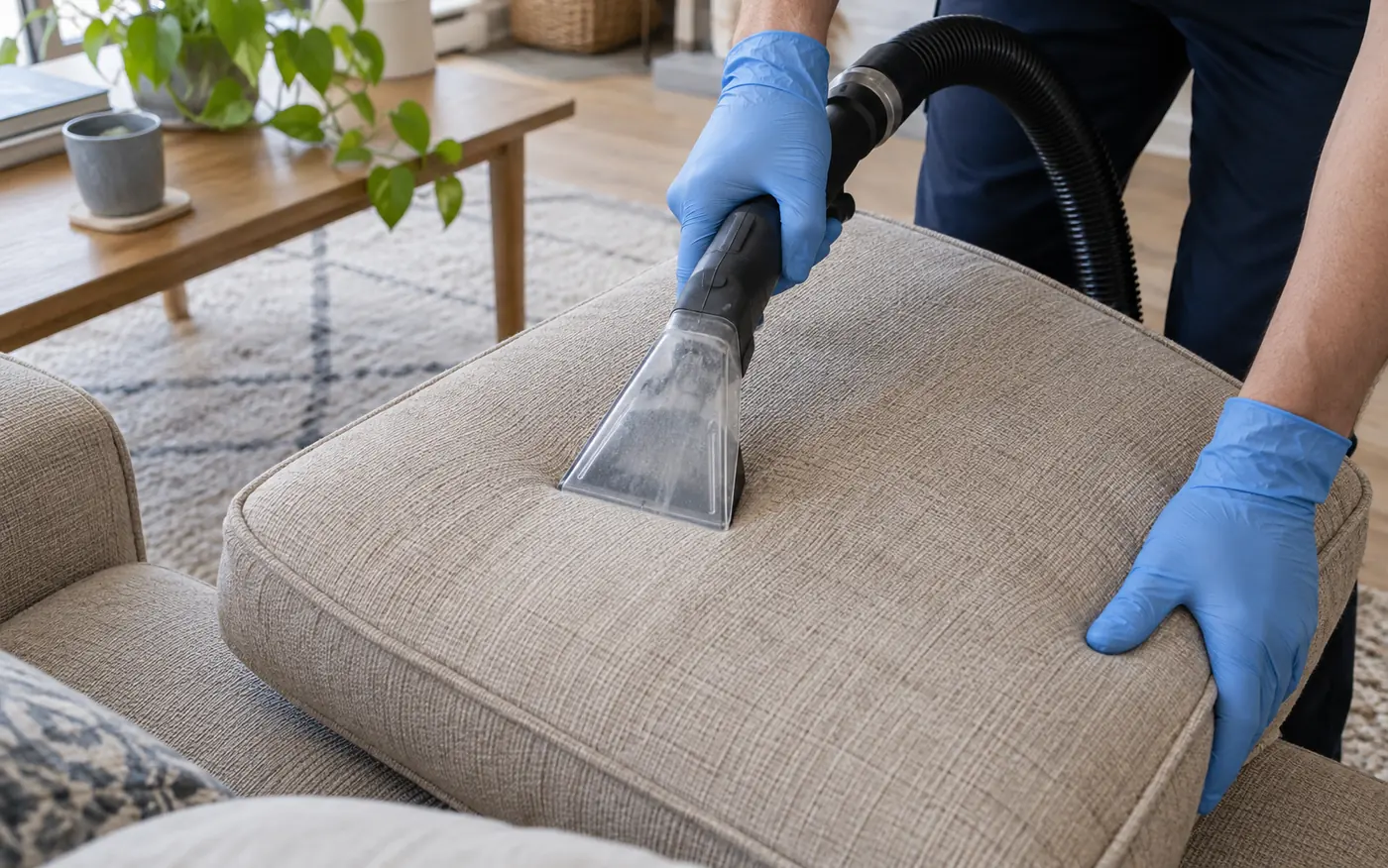
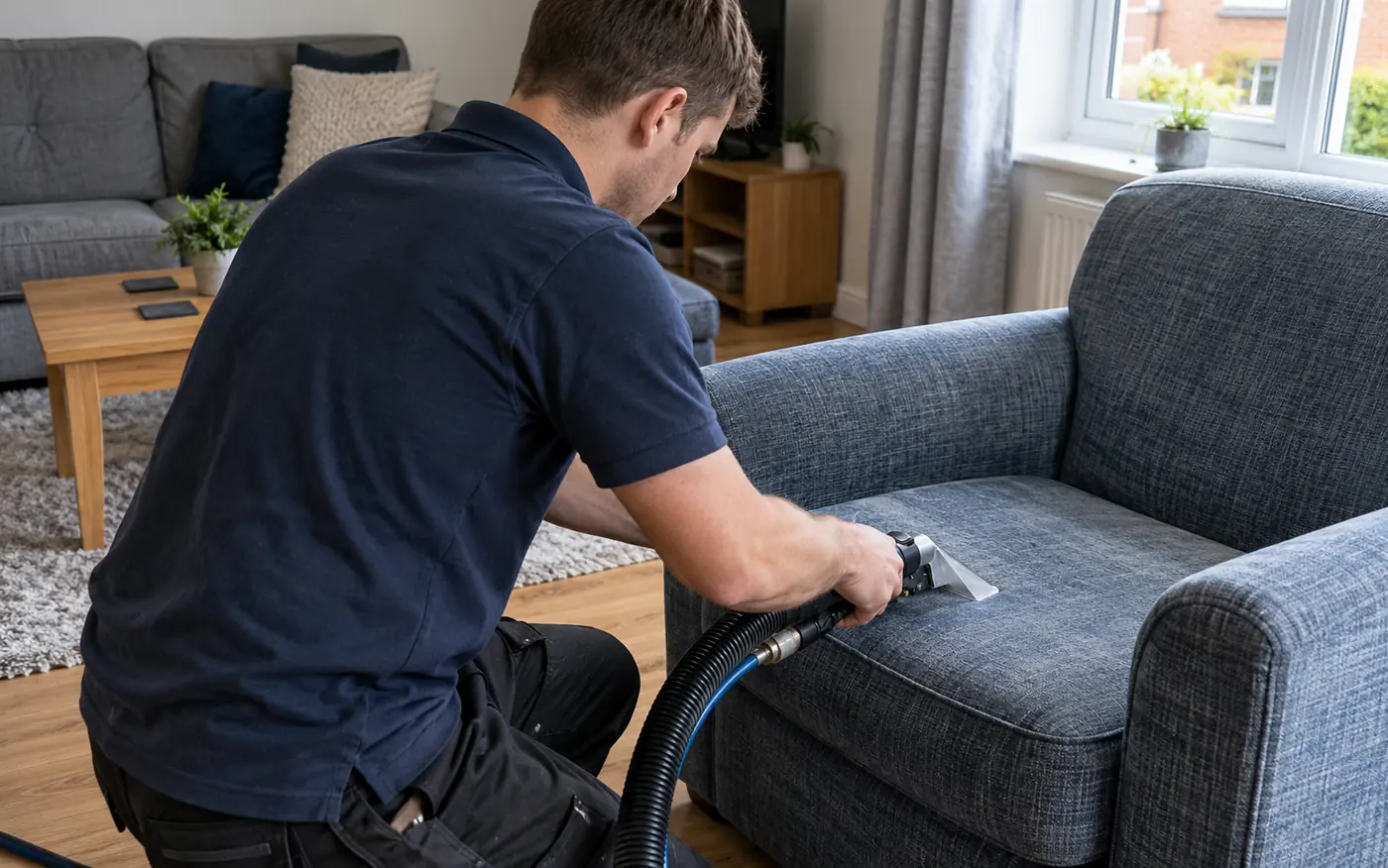
Clear loose cables, ornaments and small tables from the working route. Remove items tucked beside or beneath the seating without moving heavy furniture beyond your ability. Tell the team about fixed cushions, a chaise section, a sofa bed or fragile trim so access can be assessed.
Find the care label without cutting, unfastening unfamiliar panels or damaging the item. Send its photograph with the whole-item views. Do not machine-wash a removable cover merely because it can be unzipped; the fabric, lining and filling may have different restrictions. Keep any manufacturer guidance available on the day.
Avoid confusing a seat price with a full-item quote
Upholstery cleaning is advertised from £35 per seat. Ask how the actual furniture is counted and which cushions, arms and back surfaces are accepted. Large sections, unusual fabrics or additional components can change the work and price.
Get the complete total, applicable VAT and any agreed access costs before confirming. If you also need carpet treatment, identify each room separately rather than assuming the furniture quote covers the flooring. Check any material limitations and ask what happens if on-site assessment shows the item cannot be treated as originally expected.
Coordinate the whole-property handover
A tenancy-cleaning appointment addresses an agreed room-by-room scope. Fabric treatment needs its own item list and drying arrangement within that plan. Ask the team to explain the sequence if both services are requested, and keep packing or removal traffic away from finished areas.
A separate deep clean may help with accumulated soil on other household surfaces. It should not be presented as a substitute for material assessment of a sofa. Likewise, an inventory review records condition but does not establish that every mark can or should be removed by cleaning.
Ealing access and the final furniture review
Ealing Council’s suspension guidance says road space must not be reserved using bins or cones. Check any lawful loading arrangement before the visit and explain the route equipment must take into the furnished room, including stairs and entry controls.
At completion, review accepted components and ask about remaining marks, drying and ventilation. Keep the written scope and aftercare available for whoever receives the property. Cleaning does not determine deposit decisions or fix upholstery damage. For a different property, consult coverage information and supply the exact address details when requesting a quote.
Practical answers
Checkout planning questions
How close to checkout should fabric cleaning happen?
Give the deadline before booking and discuss the material and drying needs. Leave time for review rather than treating key return as a guaranteed finishing point.
Does tenancy cleaning include a sofa automatically?
No inclusion should be assumed. List the furniture, components and treatment request, then confirm its scope and price with the wider booking.
What if the care label is missing?
Send clear photographs and explain that the composition is unknown. Suitability needs assessment; missing instructions should not be replaced by a guess.
Will cleaning settle a furniture deduction dispute?
No. Condition records and other tenancy matters remain separate. The service only addresses accepted cleaning tasks with the stated limitations.
Nearby areas
Planning visits at more than one address? Check the page for each property.
See our coverage guide and confirm your full postcode when enquiring.
Your next step
Leave time for the final review.
Discuss the handover deadline and the accepted work before confirming your appointment.