End To End · Wandsworth
Upholstery Cleaning Wandsworth
A sofa is more than its visible seat cushions. Plan upholstery cleaning in Wandsworth by identifying the fabric, accessible components and marks you want assessed, with a drying plan for the room where the furniture will remain.
- Describe fabric, filling and every accepted component
- Show wear separately from removable soil
- Plan clear access and realistic drying
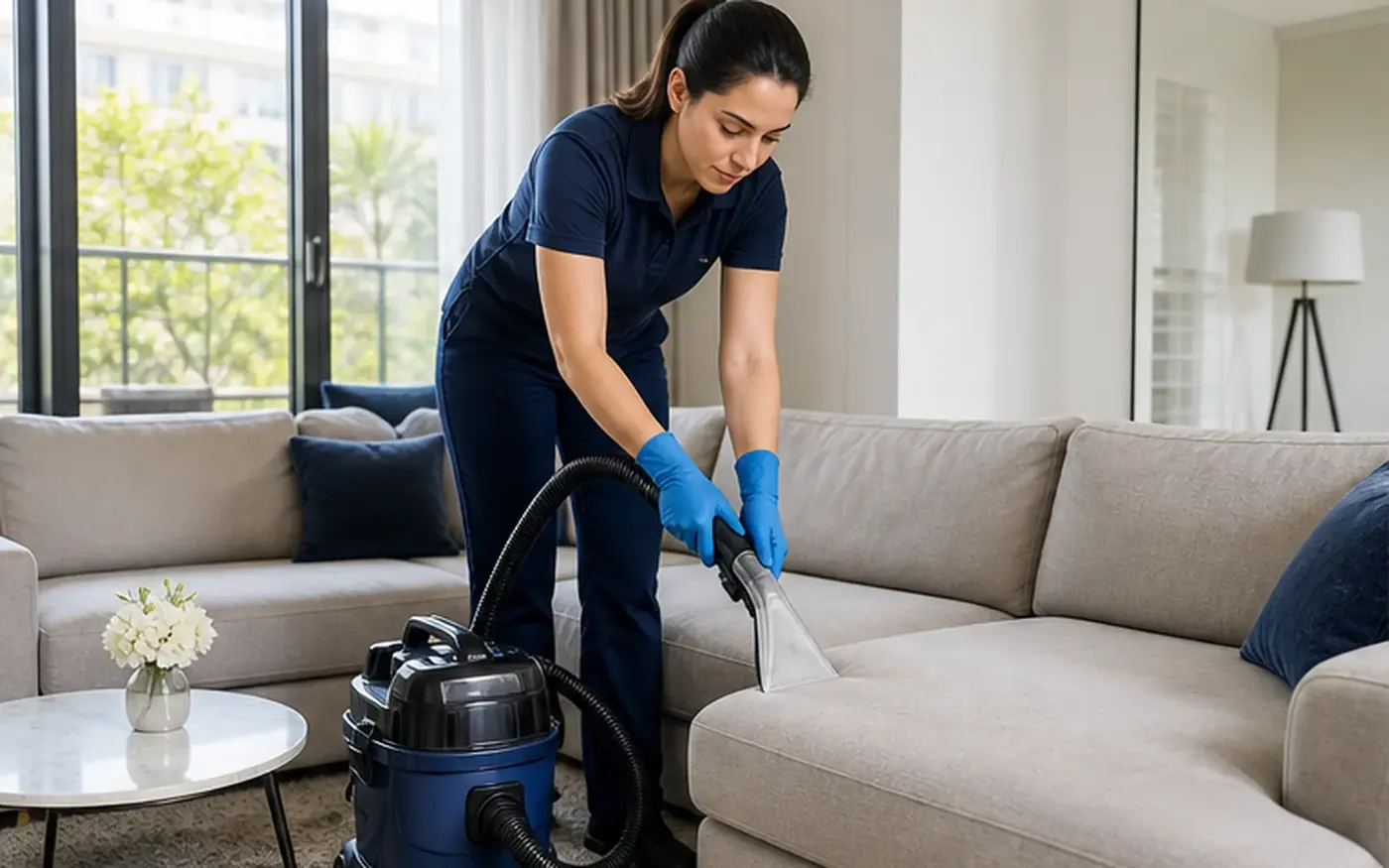
Identify the furniture before choosing treatment
Send a photograph of the whole item, the care label and closer views of problem areas. Describe the item as a sofa, armchair, dining chair or another furnishing, then add its size and construction. A three-seat description does not explain a chaise, deep cushions or separate upholstered panels.
The upholstery service depends on material suitability and current condition. Explain uncertain fabric composition, loose stitching, worn piping and previous treatments. A removable cover is not proof that the cover can be washed or that every part beneath it can tolerate the same cleaning method.
Define which components you want assessed
| Component | Describe | Check before acceptance |
|---|---|---|
| Seats | Number, dimensions and wear | Fabric and filling suitability |
| Arms and back | Frequently touched areas and marks | Accessible faces and fragile trim |
| Cushions | Loose or fixed, faces requested | Care restrictions and drying arrangement |
| Rear panels | Position and available working space | Whether furniture movement is possible |
List footstools and extra cushions separately. Do not rely on their visual match to a sofa as evidence that the fabric or accepted price will be identical.
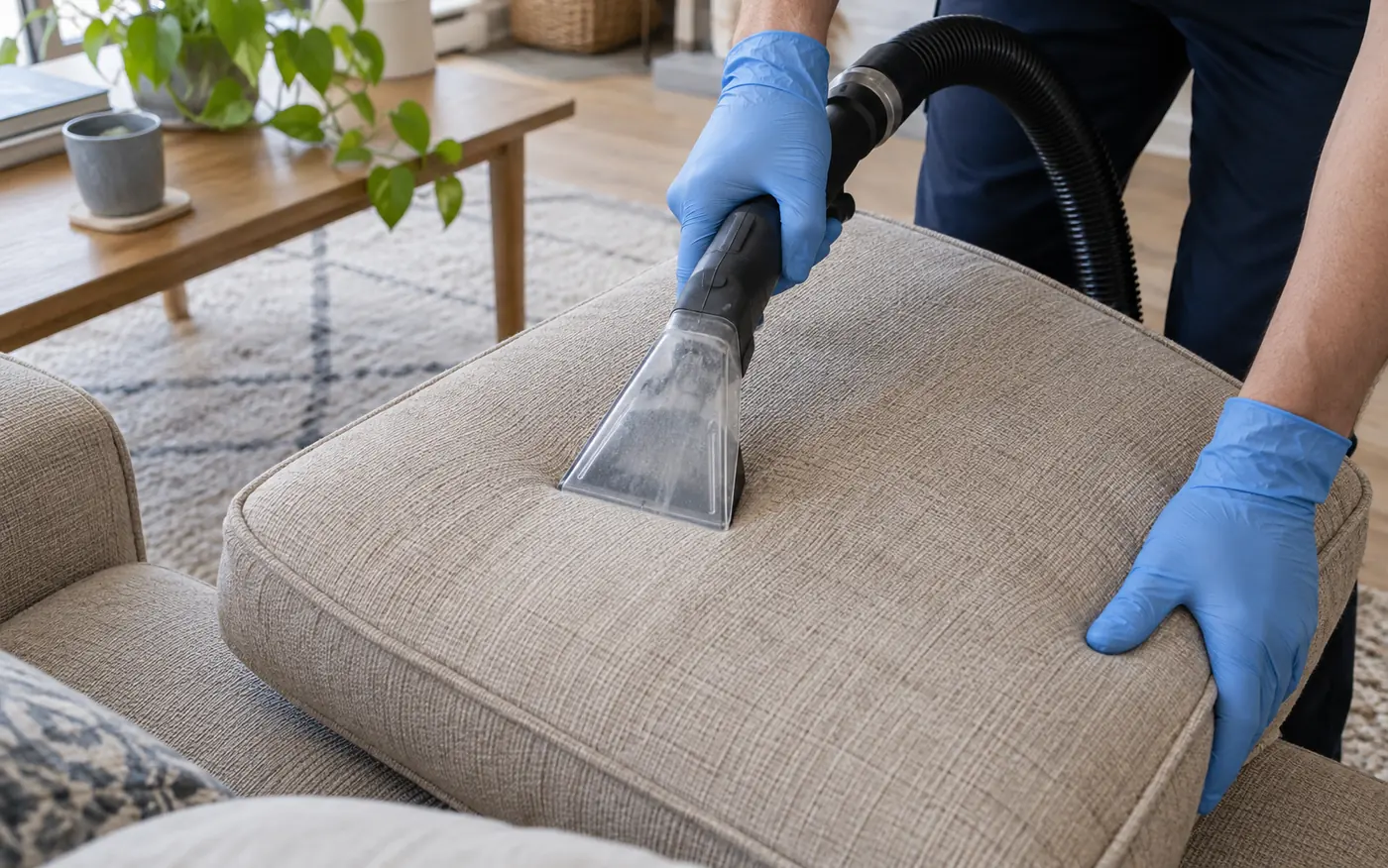
Give stains a useful history
For each mark, explain the likely cause and approximate age if known. Mention food, drink or transfer from clothing without claiming certainty where you do not have it. Describe any earlier spot treatment and send the product name or a photograph of its container where practical.
Different colour on an armrest can be soil, worn pile or lost dye. Cleaning cannot repair damaged fibres, restore faded colour or promise complete odour removal. Discuss the likely limitations before work starts rather than expecting a cleaning method to reverse every visible difference across an ageing piece of furniture.
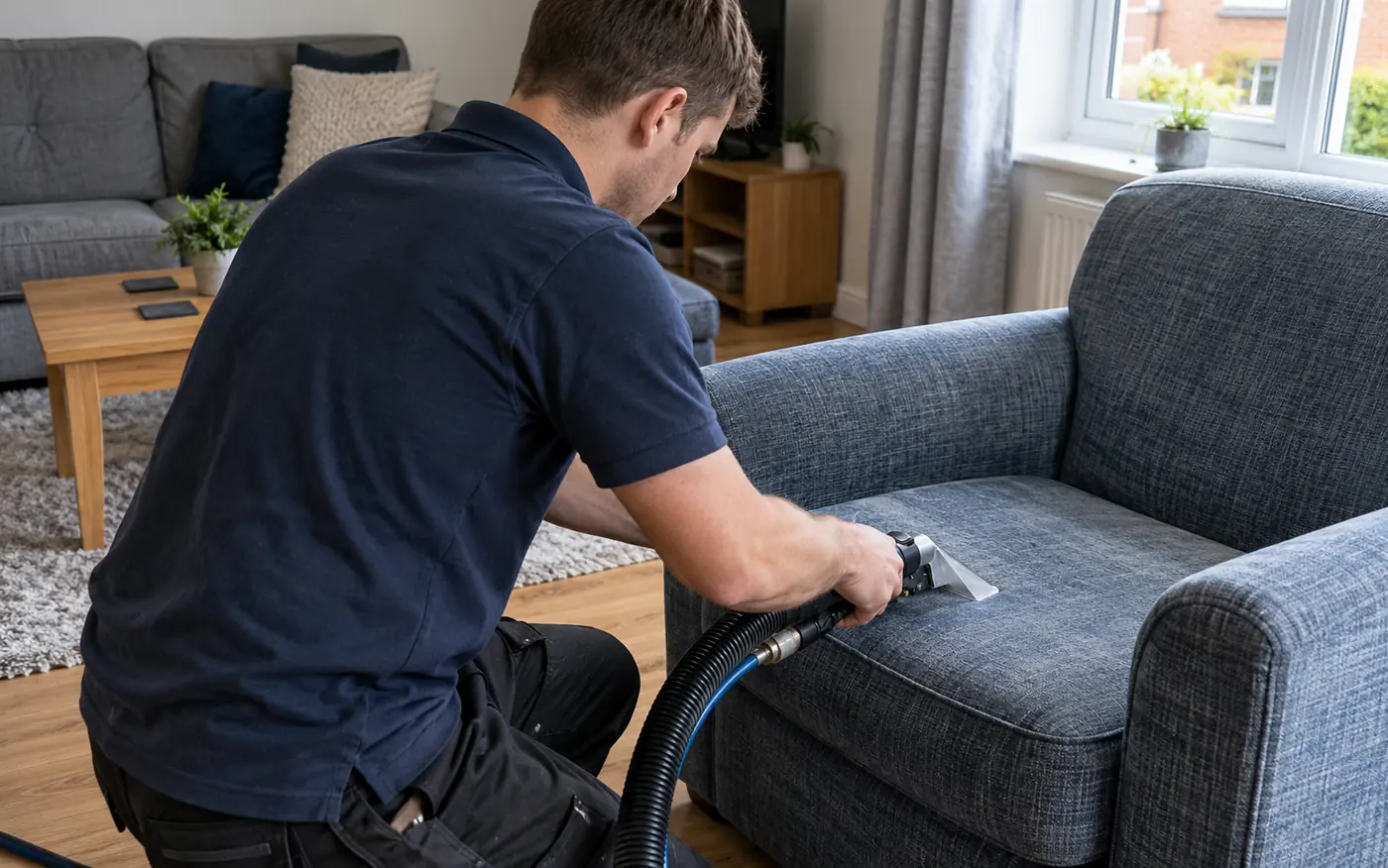
Clear the working area, not just the seat
Remove throws, toys and personal possessions from the furniture. Clear breakables from adjacent tables and leave an unobstructed route for equipment. Explain narrow doors, stairs and any restriction on reaching the back or sides. Heavy furniture movement should be discussed instead of assumed.
Keep pets and children out of the working area and make an alternative seat available for the period after treatment. Tell the team whether ventilation is possible and whether another contractor will need the same room. A crowded room can restrict both accessible work and the practical arrangement needed for drying.
Understand the per-seat starting price
The published upholstery-cleaning price starts at £35 per seat. This is not a fixed figure for every furniture shape or fabric. Size, components, condition and the treatment that can be accepted all influence the quote.
Ask for the itemised total, applicable VAT and any agreed access charge. Confirm the number of cushions, arms, back areas and separate items covered. A mattress or unusual furnishing needs its own request. If suitability cannot be confirmed from photographs alone, ask how the assessment and any decision not to treat would be handled before accepting the appointment.
Make aftercare part of the booking
Ask how the treated furniture should be arranged while drying and when it can be returned to ordinary use. Fabric, filling, method, ventilation and room conditions matter, so a universal number of hours would be misleading. Follow the instructions for the actual item rather than stacking damp cushions together.
For carpets in the same room, a separately assessed carpet and upholstery booking can coordinate equipment and drying routes. A deep clean addresses different household surfaces. Explain which work should happen first so dust and foot traffic do not undermine the agreed finishing sequence.
Wandsworth access and property handover
If the furniture clean accompanies a move, give the tenancy-cleaning team the fabric treatment and drying requirements as a separate part of the brief. Do not schedule inspection or furniture removal as though treated upholstery is immediately ready to sit on or wrap.
Wandsworth’s suspension guidance includes domestic removals, but an arrangement for a removal vehicle should not be assumed to cover cleaning equipment access. Check restrictions and describe a lawful unloading route. Use the coverage guide for another address and confirm its postcode when enquiring.
Practical answers
Questions about upholstery cleaning
Is the back of the sofa automatically included?
Specify which rear and side surfaces you want treated and whether they are accessible. The accepted scope should name them rather than relying on a sofa description.
Can a worn armrest be restored by cleaning?
Cleaning may address removable soil, but it cannot replace worn fibres or lost dye. Send close photographs so those limitations can be discussed.
Can I put damp cushions back immediately?
Follow the aftercare instructions for the fabric and filling. Ask how the cushions should be positioned while drying instead of closing them tightly together.
Do matching dining chairs need individual details?
Yes. Give the number, upholstered parts, condition and any care labels. Matching appearance does not establish identical wear or construction.
Nearby areas
For another property nearby, choose the location where the work is needed.
See our coverage guide and confirm your full postcode when enquiring.
Your next step
Agree the work before the visit.
Share the surfaces or items needing attention so the booking can be assessed properly.